How to Keep Your Students From Fizzling Out Onstage

You’ve likely seen it happen time and time again: Students start out a piece with impressive energy and dynamism. But as the choreography goes on, they start to fade. Their dancing loses some of its clarity and precision, and their focus begins to falter. In other words, they start to fizzle out.
How can you help your dancers avoid this all-too-common fate? We asked a handful of experts for strategies that can keep your students dancing strong right up until the final bow.
Rehearse Strategically
It’s not uncommon to rehearse the beginning of a piece more often than later sections, particularly when you’re creating new choreography. You might keep “taking it from the top,” but then stopping before the end to polish something, unintentionally rehearsing earlier sections more thoroughly than later ones.
To avoid giving the end of a piece the short shrift, Trisha Brown Dance Company’s rehearsal director Cecily Campbell suggests intentionally practicing “section D” or “section C” at the beginning of rehearsals, when the dancers are still fresh. “Give the hard later sections their own space to be really roaring and as full as they can possibly be,” she says. “Then, when dancers are in the belly of the beast in performance, their bodies can have a reference of what it feels like to do without fatigue.”
That said, Campbell adds that you don’t want fatigue to catch dancers off-guard onstage, so it’s also helpful to rehearse challenging late sections in context of the full piece, as well. “You need to rehearse in a way that gets dancers to that really tired place, so they can develop strategies of how they’re going to approach that,” she says.
Put simply: Repeat the tricky sections over and over until the dancers nail it, but also embrace the excitement of running the whole thing and challenging their stamina. Deciding which approach to take on which days is a matter of reading the room, says San Francisco Ballet School faculty member Karen Gabay, who has choreographed for the school’s annual Spring Festival for the past 10 years. “Some days you can push them. Other days, you have to see how their body is reacting,” she says.
Coach Energy Conservation
Not every moment of choreography requires a full-throttle approach. When setting a piece, teach students where there are moments that they can give the steps a softer touch, Gabay suggests.
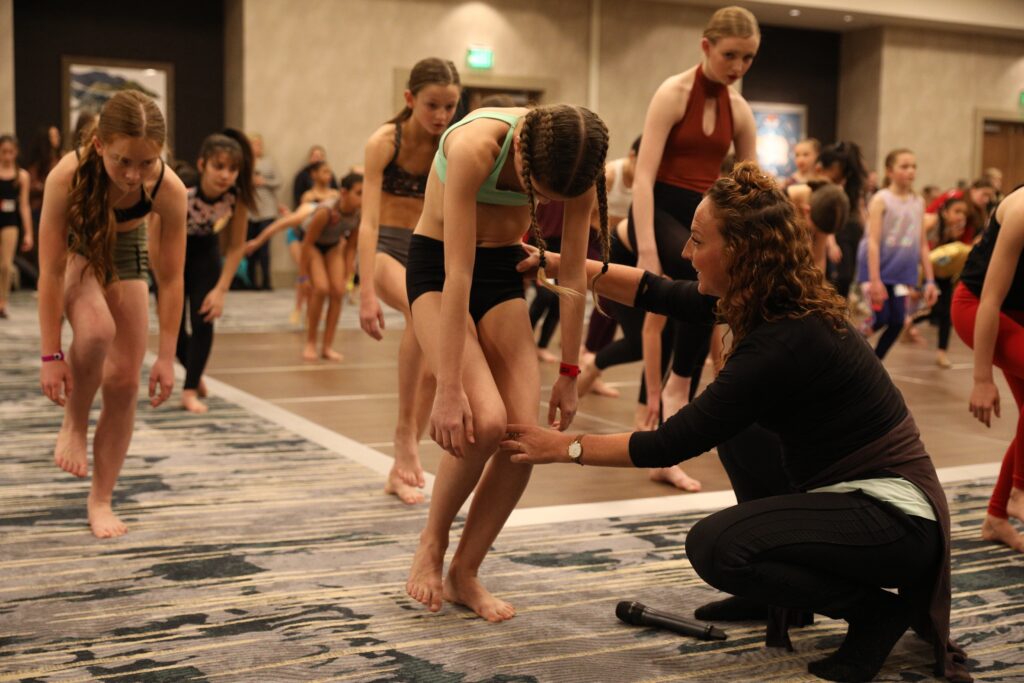
Rachel Kreiling, a former contemporary faculty member for New York City Dance Alliance who teaches and choreographs for studios across the U.S. and Latin America, adds that this kind of strategy starts in class. By emphasizing skills like proper alignment, breath, and how to harness gravity and momentum, dancers learn how to move more efficiently rather than muscling through every phrase. “You want to make sure that the technique and precision of the muscular effort is so ingrained that their body can default to it,” she says.
Have Dancers Visualize the Piece
Gabay likes to have students listen to the score and think through each moment of a piece when they’re not dancing. This can help in a couple different ways. First, the students can actively listen for places in the music that might call for a lighter, easier approach that saves their energy for later parts. It also gives them a chance to mentally rehearse without feeling any physical fatigue, which can build their confidence. “They can take a step back and see themselves doing it without physically pounding the ground,” she says.
Teach Teamwork
Campbell says that when she was dancing extra-tiring pieces with Trisha Brown Dance Company and Shen Wei Dance Arts, she learned to lean on her fellow dancers whenever mental or physical fatigue started to build up. “You can draw on the energy of other bodies around you,” she says. Teaching dancers to make eye contact with one another can help build a sense of camaraderie that helps boost their energy and refocus on the piece when they start to zone out.
Make Sure Everyone’s Properly Fueled and Hydrated
As mundane as it might sound, having the right preshow snack can make the difference between bringing fireworks to the finale and slowly fading away. “Make sure that dancers are fueled and hydrated,” Gabay says, adding that this is particularly important with dance students who might be self-conscious about their bodies and mistakenly try to limit their intake, sapping their stamina. Stock the dressing room with easy-to-digest, energy-boosting simple carbs, like bananas or crackers, and have every dancer keep their water bottle on them backstage.