How to Help Students Feed Off—Not Fear—Pre-Performance Adrenaline

Beyond technique, artistry, facility, and commitment, there’s another important factor that’s probably determining how successful your students are during performances: how they handle adrenaline.
Adrenaline “is a hormone our bodies release in scary or stressful situations that’s connected with the fight-or-flight response,” says therapist Kelsey Fyffe, LPC-S, CEDS-S, who works with students at the Houston Ballet Academy. “It’s responsible for things like speeding up our heart rate and speeding up our breathing.”
When channeled into excitement, energy, and focus, adrenaline can elevate a good performance into an electric one. But when adrenaline makes students feel out of control and panicked, they might experience shakiness or tunnel vision, or feel off-balance—it can derail even the most polished performers.
Teaching students to harness their adrenaline to enhance, rather than hamper, their dancing, can be tricky—it’s a physiological response, after all. But as their teacher, you have a role to play in empowering them to own their adrenaline rush rather than letting it dictate their dancing.
Make a Plan
When preparing your students for a performance or competition, you likely talk through every element of their dancing a hundred times. But you might not think to talk through what it’s going to feel like before they step onstage, and the way that adrenaline might impact their performance.
Fyffe recommends having conversations with dancers about these feelings, as well as any overall concerns or worries they have. Teachers can support their students by having individual or small-group check-ins a few days before performances to discuss areas of concern and their anxiety or fears about the performance, and to create a plan for managing mistakes if they happen onstage. You can help put them at ease, share advice, and make a plan for how they’ll handle that adrenaline rush.
Be prepared to offer tools like visualization, breathing exercises, and pre-show rituals. You might even make a plan to pair students who experience stress related to adrenaline with students who tend to handle it with excitement, a strategy that Justin Allen, assistant director of The Rock School’s professional division, says has been helpful in getting students to go from nervous jitters to excitement.

Practice the Rush
Allen says that the biggest difference between dancers who know how to channel their adrenaline and those who don’t is simply performance experience. And while it’s difficult to manufacture the high stakes that tend to trigger adrenaline, you can have students practice a version of what it feels like in lower-stakes scenarios. At The Rock School, for instance, students perform an in-studio Youth America Grand Prix preview show for a small audience. “That’s really helped them get those nervous vibes out in the comfortable space of the studio before going to a stage they’ve never danced on before,” says Allen. “We try to give as many of those opportunities as possible to navigate those emotions involved with going onstage.” This might also look like signing your students up to perform at casual community events, adding “practice” competitions to the calendar before the real thing, and having them perform their solos for each other.
Prepare Their Bodies
If your dancers don’t properly prep their bodies to go onstage, the pre-performance adrenaline rush that suddenly has their hearts racing can feel jarring and destabilizing. That’s why it’s all the more important to prioritize a true warm-up, says longtime Steps on Broadway and New York City Dance Alliance jazz teacher Suzi Taylor, which can both ease dancers into the excitement of performing and help them get out of their heads and into their bodies. “It’s all muscle memory, so if you don’t have your muscles ready for what’s coming, then all you have is your thoughts,” she says. If you can, give dancers a full class before a performance. When there’s no time or space for that, teach dancers how to do their own warm-up backstage that gets the heart rate up.
Exude Positivity and Calm
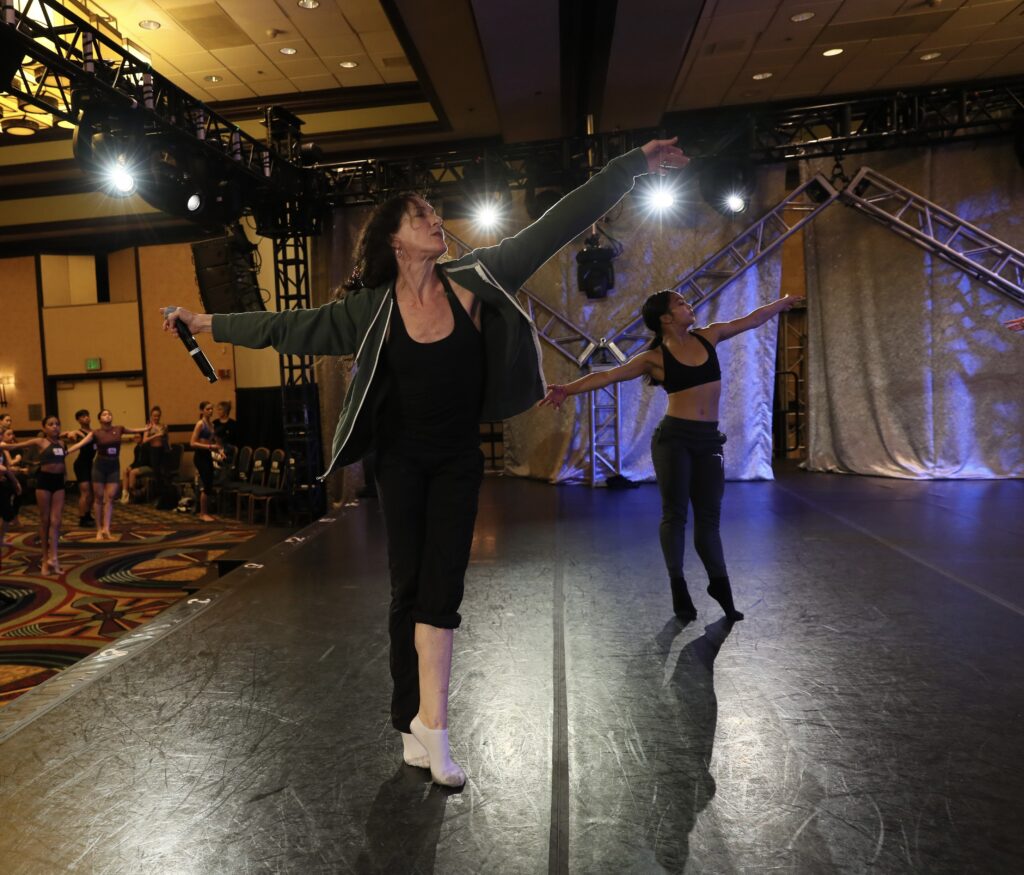
As their teacher, you have the power to set the tone for how students are experiencing a performance environment. It’s crucial to be intentional with your words and your energy to ensure that you aren’t stressing them out. For one, it’s long past time for any corrections or criticisms, says Taylor. “Be incredibly positive with them before they go out onstage. It’s too late for corrections. Tell them that you know they’re going to be great, that they’ve worked really hard—every last positive thing you can say.”
And regardless of whatever else you’re managing at that moment—maybe you’re running a recital and the lighting is a disaster or the tiny dancers are misbehaving—maintain an energy of calm, says Fyffe. “If dancers see their mentor running around panicked, that’s not going to put them at ease,” she adds. “Show through your body language that you are calm and okay with whatever happens, and even if there’s a problem, try to remain nonreactive.” Similarly, try to set a boundary with parents who want to be backstage, who have good intentions but may inadvertently be adding stress. “Have a good talk with those parents beforehand,” says Taylor. “Encourage them to go be a great, supportive audience member.”