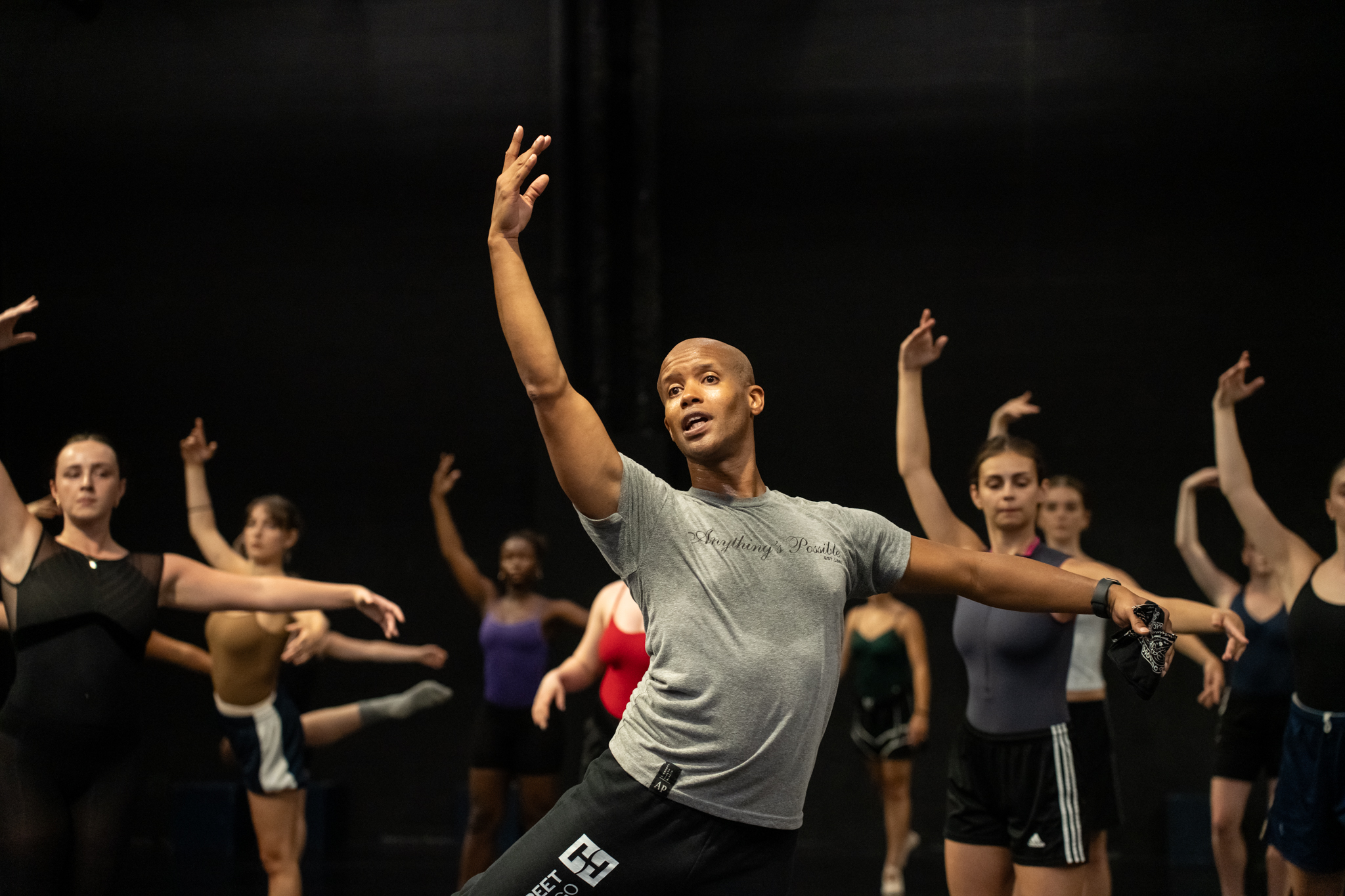
Navigating Turns With Your Students

Do you regularly see your students in the corner of the studio practicing pirouettes again and again (perhaps repeating the same mistakes)? Do they push to increase their turning ability but end up frustrated?
Dancers dream of having the capacity to perform multiple turns with ease, but achieving this can be a struggle. Fortunately, there are ways to help your students increase their turning “sweet spot,” while helping them maintain control, placement, and consistency.
Dance Teacher talked with experts in the field to help you instill confidence in your students and help them build the skills they need to improve their turns.
Finding Students’ Turning Sweet Spot
Dancers usually get to a point where they can consistently perform a set number of turns (though, for each individual, the number varies). Patti Cavaleri, DPT, is a physical therapist at NYU Langone Health’s Harkness Center for Dance Injuries and works with dancers on achieving their potential while turning. “Many dancers have a sweet spot for the number of turns they know they can consistently hit, but I don’t think this number is set in stone,” she says.
Your students may find they hit a plateau with turns, so helping them push through is important. Arcadian Broad, a dancer featured in the TV series Étoile and West Side Story at L.A. Opera, notes: “I would say that eight turns is my ‘norm,’ but I didn’t magically start that way. For a long time, I was stuck at six. Even after you fine-tune the details, you have to keep striving to push your body’s limits in a healthy capacity.”
Knowing When to Ask for More
When is it time to challenge a student to attempt more turns? First, some foundations need to be in place.
Students should be able to finish a turn with control, for instance. Jonathan Alsberry, senior rehearsal director and director of summer intensives at Hubbard Street Dance Chicago, asks dancers to “focus on the end of the pirouette. The turn should finish up,” he says, adding that dancers should be able to complete a turn on balance and then come down.
Broad agrees, and says that “in a properly executed pirouette, you see a definite beginning, middle, and end to the turn.” As a student, he “challenged [himself] to control however many pirouettes [he] was working on by maintaining a clean position and finishing on relevé three times in a row.” Once he achieved that, he increased the number of turns.
Foot and ankle strength play a big role in turning, too. “Strong, high relevés achieved by ankle stabilization and calf/shin strengthening will create a foundation for successful pirouettes,” Broad adds. It would also be beneficial for your students to practice TheraBand exercises for foot/ankle strength, or even do them together at the end of class.
Cavaleri also explains that focusing on balance, as well as core control and coordination, is important. When dancers aren’t on their center line of balance, “the torso isn’t stacked, and it can keep them from finding their balance point.” To get your students to focus on placement and core strength, have them practice planks and core-centered conditioning.
Increasing the Number of Turns
Once your dancers are ready to attempt additional turns, here are a few things to keep in mind. Alsberry recommends asking students to hone in on head spotting. “Release tension from the neck and shoulders and zero in on focus,” he says. He also asks dancers to use their eyes with intention: “Be sure they’re not just looking in a direction, but they’re actually seeing their spot.”
Finding the center line of balance is also crucial. “Balancing should be active, not stagnant,” Alsberry adds. He encourages students to feel lifted into a turn and think of creating length. In the preparation, “they should root both feet and feel the elevation of the core.” He also asks students to consider timing: “How quickly can you arrive in the form of the pirouette? It should be immediate.”
Using the Right Imagery
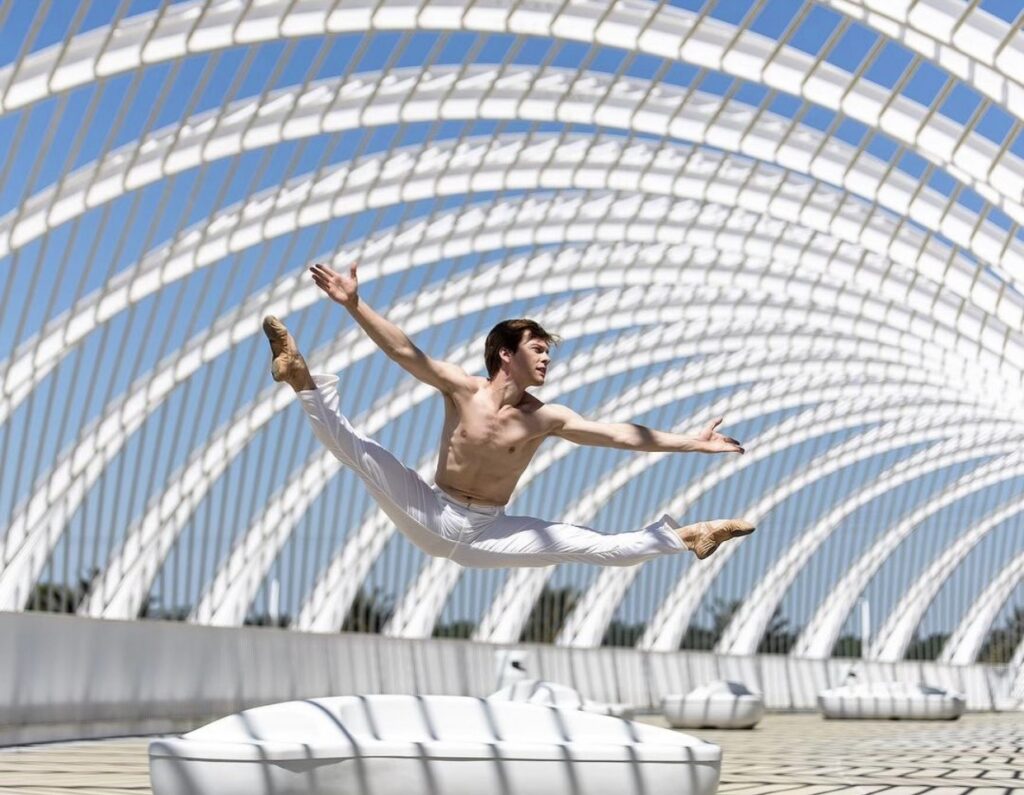
When helping students feel the correct sensation of turning, imagery can be useful. For instance, to find their center line of balance, you could ask students to think of a puppet on a string where the string must pull directly up to the ceiling without any tilt. Or get them to think of their center line as the pole on a carousel horse. This can help them feel aligned and not pull off their supporting leg.
To help them maintain control, encourage your students to think of balancing more than revolving, reminding them that the turn should resemble a spring breeze rather than a hurricane.
Building a Confident Mindset
Self-confidence plays a huge role in turning. Many students develop a fear of turning from overthinking. “When we are scared of something, we tend to tense our muscles more and can’t always move efficiently,” Cavaleri says, adding that this makes it difficult to attain the push-off and spring to full relevé that’s needed.
If you see this happening in class, ask your students to take a break, either for that moment or for the day. Moving on to a new exercise may help.
When students lack confidence, it can also help to work in small increments and ramp things up gradually. For example, rather than asking dancers to go from a double turn to a triple, give a combination of two and a quarter turns. Once that feels comfortable, you can increase it to two and a half, and so on.
As a student, Broad felt encouraged by a teacher who told him, “When you prepare for pirouettes, just believe you can do it, and you’ll do it.” The bottom line: A teacher’s support and belief can make a positive difference. Dancers spend countless hours in the studio, and “there’s an endless repetition of technical exercises. At some point you simply have to believe in yourself,” says Broad. Instill this thinking in your students, and remind them that it’s all part of the dance journey.
Exercises for Turning, Courtesy Patti Cavaleri, DPT
- Holding relevé in a retiré balance: “Ask students to stay on balance for a few seconds longer than the turn they are working on to make sure they have the endurance to hold themselves up.”
- Springing up: “Have students focus on the spring from the preparation to the turning position without the revolution, to consistently find their balancing point. To make the spring up harder, have them wrap a TheraBand around the pelvis/hips, pulling them slightly backwards and resisting that as they shift their weight up and forwards.”
- Pallof presses: “This is a great anti-rotation exercise to help build core strength and keep the torso stacked over the pelvis. Pallof presses help simulate the control needed to keep the torso stacked without having to turn.”