
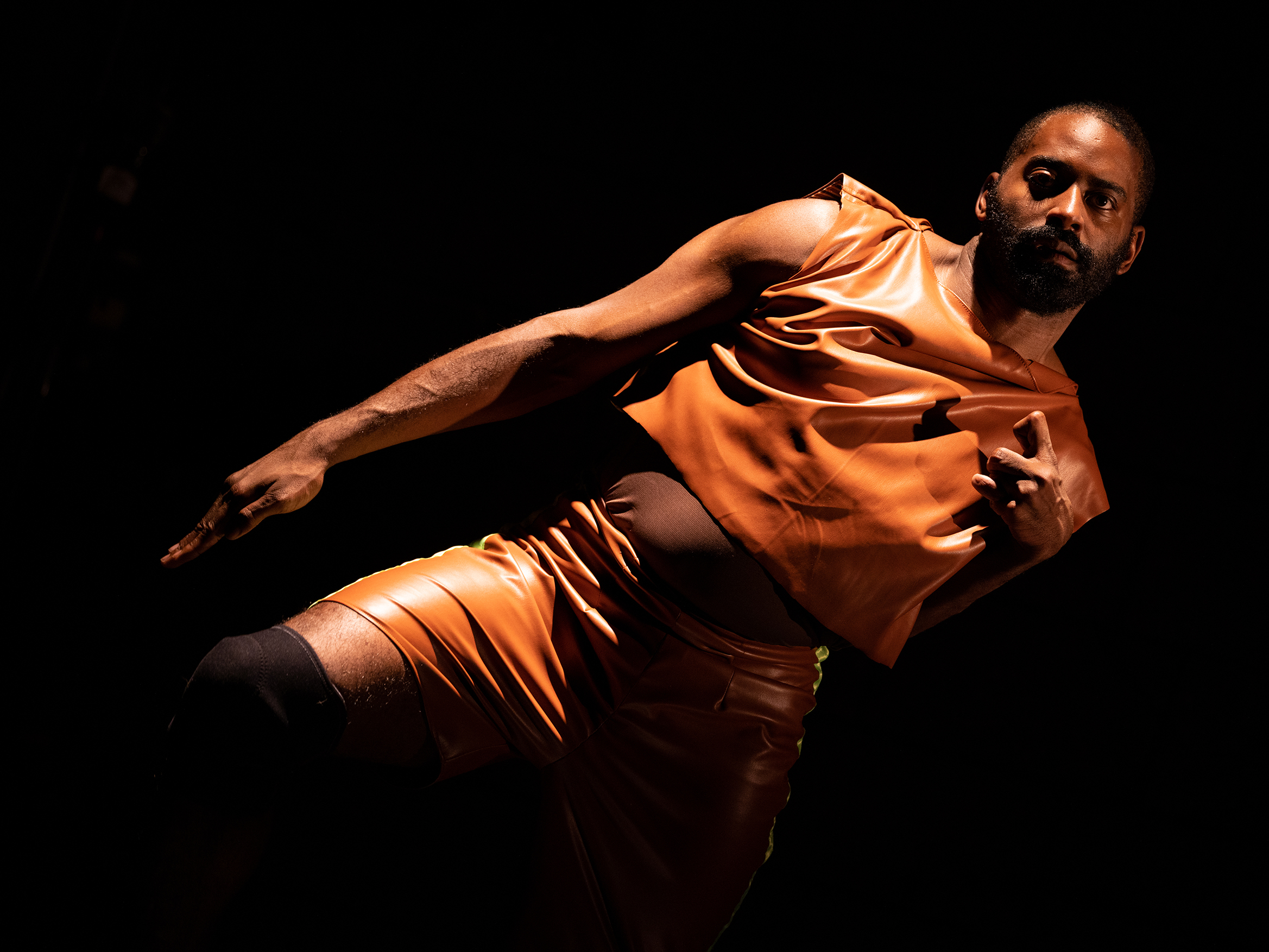
How Jerron Herman Helps NDI’s DREAM Students Turn Mistakes Into Magic

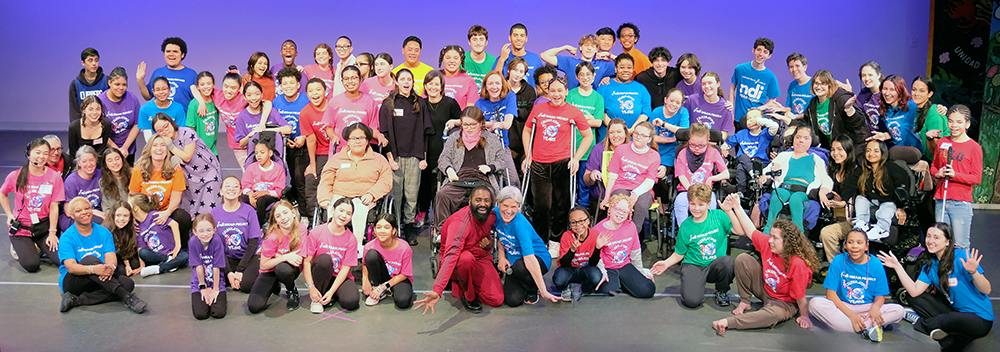
When I walked into the NYU Skirball Performing Arts Center a few weeks ago, the space felt alive with the sounds of National Dance Institute’s DREAM students laughing during rehearsals. The environment was energizing and exciting—just like that of a typical dance studio a few days before opening night.
National Dance Institute’s DREAM (Dancers Realize Excellence through Arts & Movement) program, though, is anything but typical. It’s designed for young people with and without disabilities to perform together, form lasting friendships, and foster a sense of belonging. And its peer-to-peer partnership structure provides built-in stability for students. For many participants, the community becomes as meaningful as the training itself.
At the center of it all is Jerron Herman, DREAM’s artist in residence, whose teaching methods are, in his words, equal parts choreographer and what he jokingly calls “chaotic uncle.”
“I don’t think of myself as the capital-‘C’ choreographer,” he explains, “I might have an idea, but I want us to have an idea.” Rather than viewing himself as the sole director in the rehearsal room, he sees the space as a workshop environment. If there’s a mistake in class with Herman, it’ll likely end up in the final piece.
Raised in Alameda, California, Herman began his performing career in theater, developing an appreciation for storytelling while discovering, often the hard way, that he wasn’t considered for certain roles as a result of his cerebral palsy. This led him to seek out places where he could create his own artistic worlds, rather than fit into somebody else’s.
This desire brought Herman to an education apprenticeship at the New Victory Theater, where Seán Curran introduced him to the dance world. Herman recalls an exercise in which Curran directed him to write his name with his nose and consider what story could be told through that small motion. It was exercises like this that opened up Herman’s idea of what movement could be. “Dance was like an intervention for me,” he reflects. “I was finally being told that my body had value onstage.”
Later, Curran introduced Herman to Heidi Latsky Dance, a physically integrated company that features dancers both with and without disabilities. Here, Herman was celebrated for what his disability brought to the work—the different layers and textures that he brought out in the movement. “I found that the way I moved had something to contribute to the dance conversation,” Herman says of his experience with Latsky. This experience gave him the confidence he needed to move forward with his professional career.
As a teacher and an artist in residence, Herman hopes to teach his students what people like Curran and Latsky taught him—exploring the natural way their bodies move without fear of failure.
For Liv, a rising ninth-grader going on her fourth year with DREAM, contributing to the choreographic process is extremely valuable. “It’s taught me to learn as I go,” she tells me.
Jack, a seventh-grader who completed his first year with DREAM, agrees, saying, “Dance is always evolving. You can make a mistake, and sometimes that makes the dance better.”
I’m struck by the way Herman’s students speak with such confidence about collaboration and choreography, which emphasizes the success of DREAM’s mission to create great performers and great people. Herman’s influence on these kids is apparent as well, and it’s clear that he brings positive energy to their rehearsal space, allowing his students to feel free to explore.
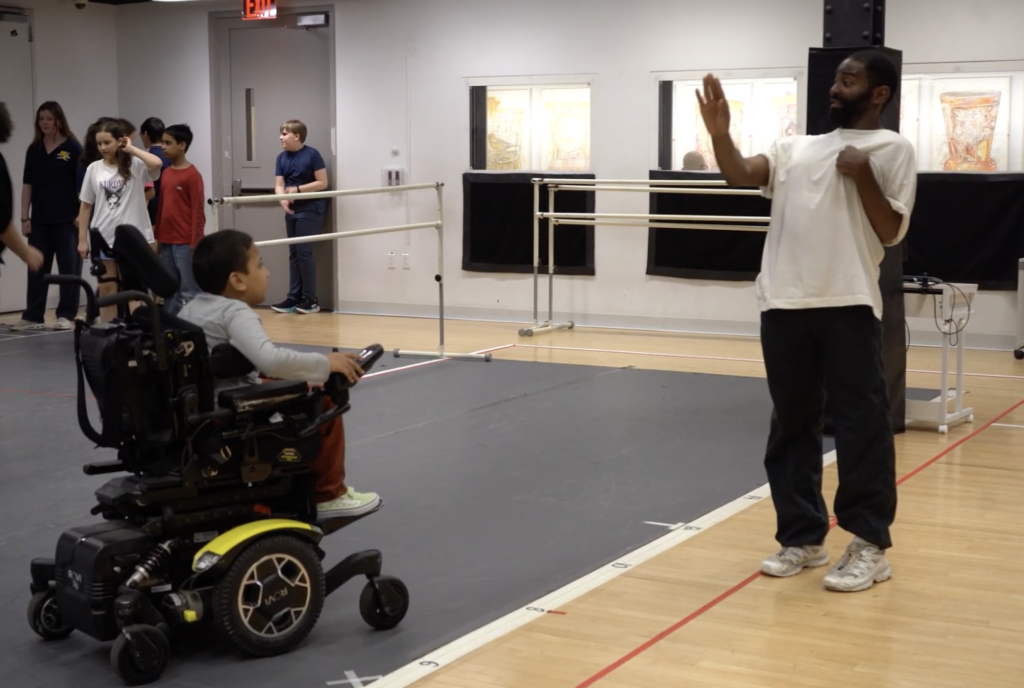
This sense of community is extended not just to students but to faculty as well. While working with DREAM, Herman injured his Achilles tendon, and during his recovery the program became a safe space for him to show up exactly as he was. “I taught and facilitated in a roller chair, and that was completely fine. I didn’t have to be here perfect, just there in the body I had at the moment.”
This experience reinforces the importance of rest in his practice, he says. “Diligence towards rest and self-care has permeated dance conversations but isn’t really valued or discussed as an important part of being a performer. That’s why I always emphasize to the students that they’re allowed to do what they need to do to feel good.”
When I asked Herman what teachers can do to create more inclusive training spaces like DREAM, he was careful not to provide a formula. Instead, he encourages educators to interrogate why they want to create that space.
“What is your relationship to disability?” he asks. “You need to understand disability as a culture, with its own interpersonal intricacies, and work to integrate those pillars into your facility before a person with a disability even walks into the building.” Without an understanding of disability culture, inclusion can easily become performative—seeking to fill a position rather than focusing on creating a safe environment for the students themselves.
Herman encourages curiosity and a willingness to invest deeply in a community and its artists. “That investment also means inviting artists with disabilities into their spaces, listening to them, and creating opportunities for genuine collaboration.”
His impact at DREAM is clear—it can be found in the students who now treat mistakes as opportunities and in a community culture that values care as much as achievement. These are pillars Herman hopes to integrate into the rest of his work, including a full-length piece coming in 2028/2029 called Many Ways to Raise a Fist.


