2026 Dance Teacher Awardee Sheela Ramanath Builds Community and Connection Through Indian Classical Dance

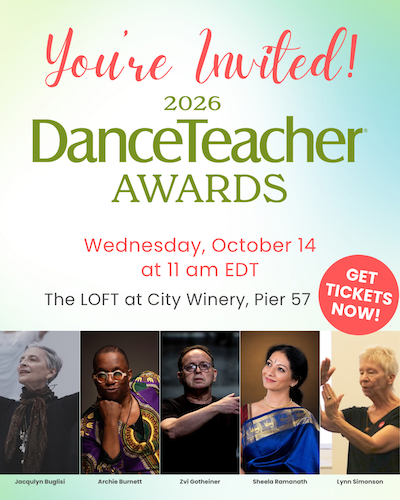
You’re invited to the 2026 Dance Teacher Awards ceremony on Wednesday, October 14, at 11 am at The Loft at City Winery, Pier 57 in New York City. Get your tickets here—we’d love to have you join us to celebrate these remarkable teachers and all they have given to the dance community!
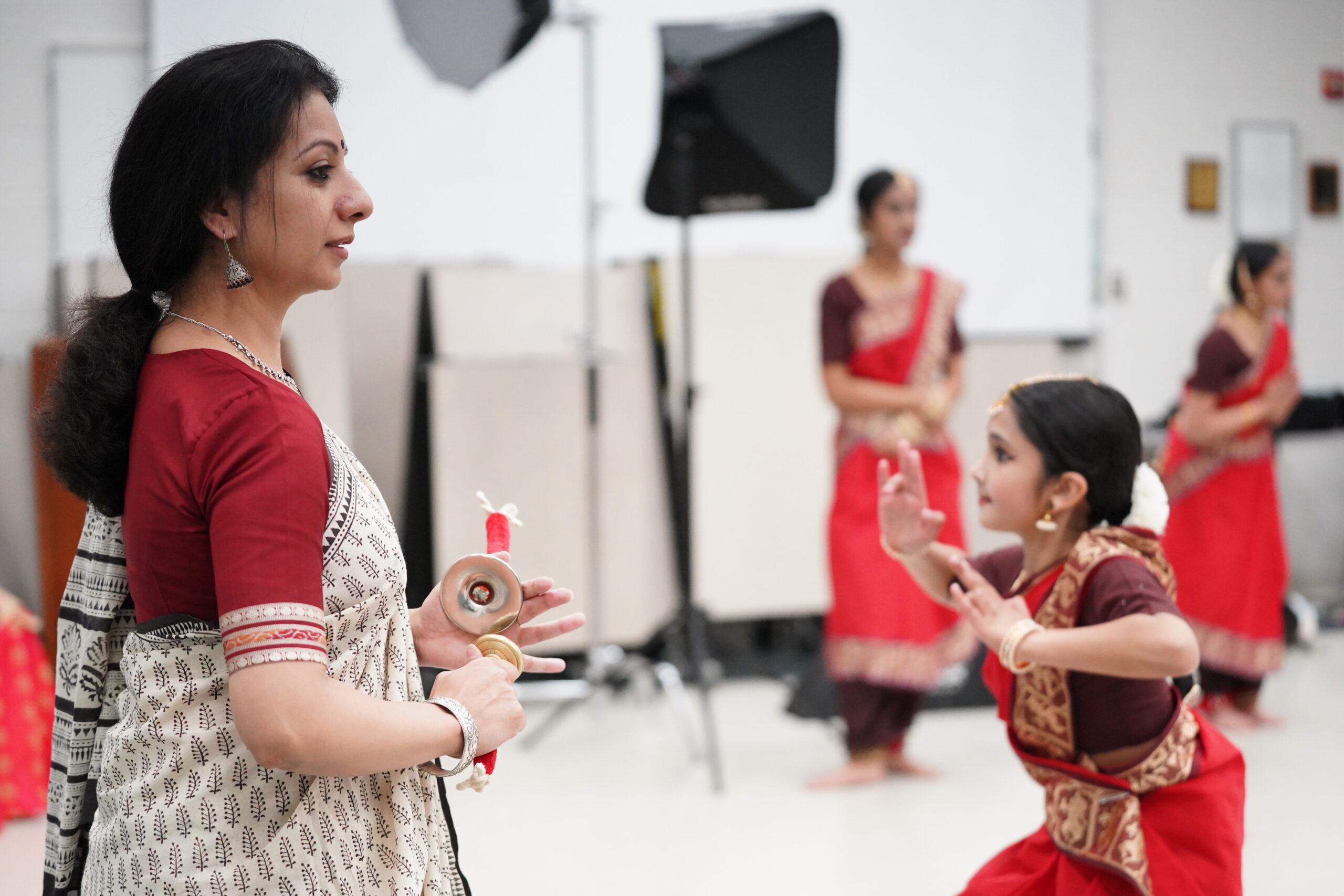
When students and peers speak about Sheela Ramanath, the artistic director and founder of Kalavaridhi Center for Performing Arts in Virginia, several words come up over and over: “humility,” “community,” “dedication” (to name only a few). These are values they say Ramanath not only practices every day but also imparts to her pupils—passed down in tandem with the technique and artistry of bharatanatyam that she inherited from her own teacher, Guru B. Bhanumati.
“The core principles of Indian philosophy—commitment, consistency, respect, empathy—all these elements are infused while I teach,” Ramanath tells Dance Teacher. “And this need not be just Indian culture. This is universal.”
In bharatanatyam, a form of Indian classical dance, the relationship goes much deeper than a typical teacher–student dynamic. The pedagogy that Ramanath follows is the guru–shishya parampara, in which the guru, or mentor, passes on not only technical skills but also the nuances, principles, and ethics of the art form to their shishyas, or disciples, in a continuous line of succession going back generations.
But to many of her students, Ramanath is also “Sheela Aunty”: a term of endearment implying not only mentor, but family.
“Growing up, we’ve always called her Sheela Aunty,” says Vaidehi Cheruppoyilam, a member of the faculty and a student of Ramanath’s for 17 years. “She’s more than just a teacher. She’s very much a member of our life.”
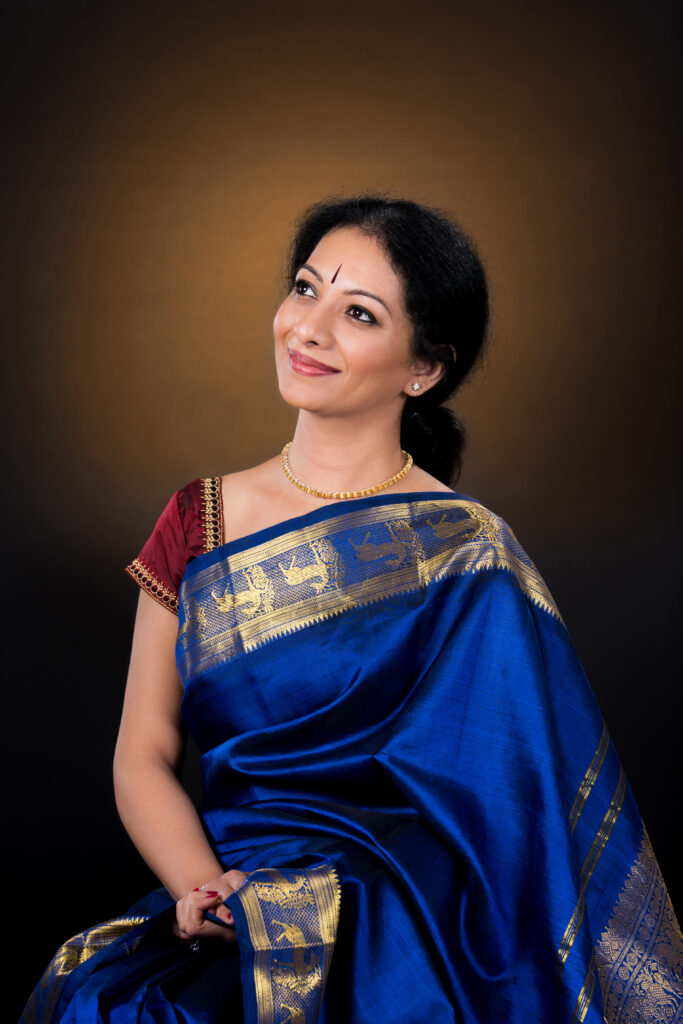
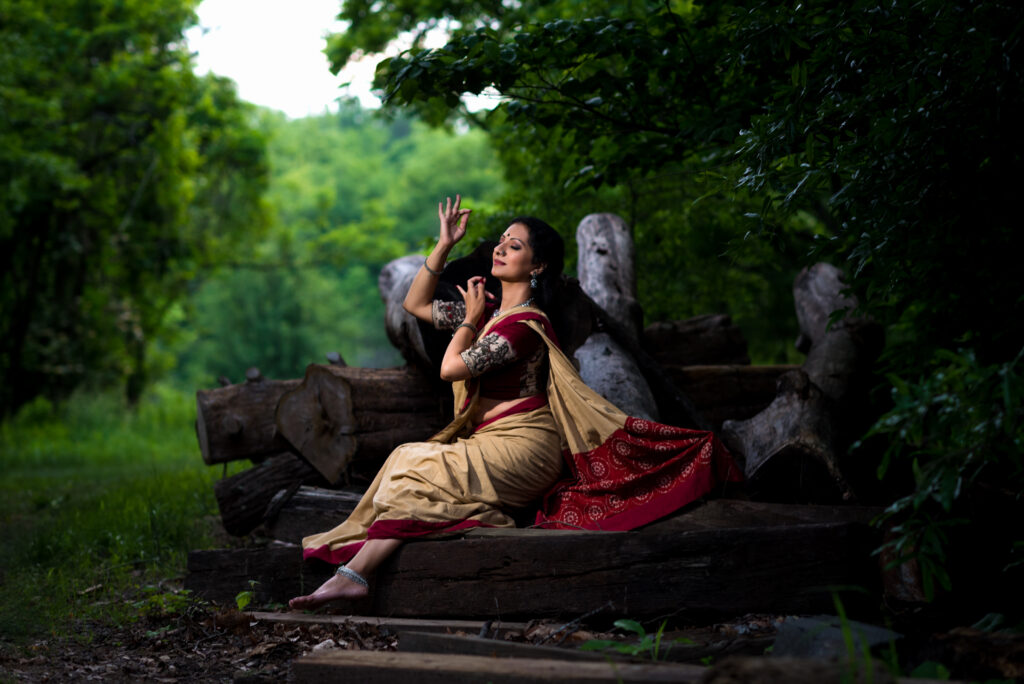
Ramanath grew up in Bangalore in southern India, where she started taking dance classes when she was 5. She went on to perform internationally with the dance troupe Bharatanjali founded by Bhanumati, who helped pioneer group choreography in what’s traditionally a solo-centric dance form.
“[It was] as if we were one unit performing, not just individuals,” Ramanath recalls. “That unity and that kind of camaraderie helped me [become] the kind of person I am today.”
After moving to the U.S. in 2001, Ramanath began sharing her knowledge about dance as a way to keep in touch with her art and meet new people. “I never thought I would be teaching as a professional,” she says. “I just taught it as a hobby for the longest time, and, slowly, when the school started to grow, it started to dawn on me that maybe people really want to learn.”
Kalavaridhi, which is celebrating its 25th anniversary this year, has since become not only a dance studio but also, parents and students say, a cultural lifeline for first- and second-generation Indian Americans to stay connected to their roots and heritage through dance.
“[Ramanath] really teaches us about Indian mythology and all of these principles that our parents grew up with,” Cheruppoyilam says. “She explains the stories, the thought process, the reason why we learn the art form.”
While Ramanath’s choreography is faithful to the fundamentals of Indian classical music, she is open to incorporating fusion music into her choreography as long as it does not deviate from the traditional classical music components. At a recent performance at Carnegie Hall, for example, her students danced to a traditional Indian song that had some Western instruments in it, creating a “semi-fusion soundtrack.”
“She’s constantly evolving our dance form and taking it to new places while still keeping our core values true,” says Vismaya Vasanth, who began training with Ramanath when she was 8 years old, and now assists her with teaching and choreography.
Ramanath also finds ways to incorporate contemporary themes that her students and audiences can relate to, tackling those subjects through Indian mythology. Topics that revolve around societal issues including inequalities are raised by portraying characters like Durga—a powerful mythological goddess who vanquishes enemies to protect her devotees and her children, thus establishing female empowerment. Ramanath is currently working on a new piece about anxiety—something she sees her students and many young people struggling with.
That kind of creative thinking is a reason why Ramanath was recognized earlier this year with the 19th annual Del Kieffner Award, presented by the nonprofit Performing Arts Educators at Carnegie Hall.
“What we look for is people that are doing things out in the field, and innovating, and trying to step outside of the normal box,” says Carrie Straub, board chair of Performing Arts Educators, on why Ramanath was selected for the award. “Having Sheela as a friend or a business partner or a teacher, she’s the type of person that helps everybody become better.”
When Ramanath and Straub met, Ramanath expressed interest in developing a credential for bharatanatyam, something that would formally acknowledge the years of dedication and hard work her students had put into mastering their craft. Ramanath’s efforts led to the development of the internationally recognized Bharatanatyam Conservatory Credential—an accomplishment for which the Council of Educators recently bestowed Ramanath with an International Thought Leader Endorsement in Lisbon.
Despite her many accolades, Ramanath also encourages her students to extend their artistry and talents for causes beyond themselves. Kalavaridhi has organized productions raising money for charitable causes in the U.S. and internationally, such as the nonprofit Uplift a Child (which supports education for underprivileged children), the NGO Belaku Trust (which helps fund educational and socioeconomic opportunities), and the American Cancer Society.
“She is an exceptional teacher, but I also want to emphasize that she’s a great human being,” says Ramya Ganesh, whose daughter has been training with Ramanath for almost a decade. “She has raised awareness among these kids that it’s not just coming to a class and dancing or performing onstage. You also have equal responsibility to give back to the community.”
Ramanath says her emphasis on community traces back to the ideals and principles imparted by Bhanumati. Bhanumati passed away several years ago, but Ramanath says not a day goes by that she doesn’t think of her and her impact on her students.
“In a nutshell, she has single-handedly changed the course of my life,” Ramanath says. “If I’m the kind of teacher that I am, it’s all because of her.”
It’s a sentiment that now echoes amongst the pupils under Ramanath’s own tutelage—where that flow of information and values, her students say, is pouring into the next generation.
“She’s really helped me become the person I am today,” Vasanth says of Ramanath. “The morals I have, the way I approach any type of conflict, that’s 100 percent because of being a part of this dance school and having Sheela Aunty as my teacher.”