How Erika Sandre Built a Career Through Curiosity

It may be tempting to assume someone in an inspiring position walked a simple, clearly marked road to success. Erika Sandre’s journey to becoming principal of the Colorado Ballet Academy Children’s Division is a prime example of how curiosity, passionate focus, and a willingness to shift lanes can be valuable in realizing one’s dreams.
Growing up in Ontario, Canada, Sandre aspired to dance professionally. But as she entered a pre-professional program with hopes of launching a career, a car accident stopped her in her tracks. “The accident changed my body,” Sandre says, reflecting on this life-altering event. “It just didn’t work as it had previously.”
Determined to keep dance in her future, Sandre had to look beyond her own hopes of performing. “Alongside my training, I also taught the youngest students in my school and would coach my peers. I noted how helping others achieve milestones in their training and observing their aha moments brought me great joy.”
With a new direction emerging, Sandre moved to Toronto to pursue a career in teaching when she was accepted into an immersive three-year teacher-training diploma program at Canada’s National Ballet School (NBS).
As part of the program, Sandre continued taking ballet classes, but her focus was now on studying pedagogy. She learned the NBS, RAD, and Cecchetti curriculum, developed and taught lesson plans, and applied her growing knowledge at the front of the classroom. Yet, as her new career came into focus, she had an unexpected aha moment of her own.
When her cohort’s studies transitioned to national character dances commonly found in classical repertoire, Sandre discovered a new passion. “We began studying dances from Spain when I caught the flamenco bug—the style felt so raw and honest!,” she exclaims. “I immediately recognized ballet and flamenco were quite relatable, and especially appreciated how both genres were built from a clear technique.”
Beyond this, Sandre also connected with flamenco’s philosophy: “As a woman, in the context of ballet, I may be seen as geriatric. Flamenco, instead, values maturity. I found this very empowering. From love to grief, its dances and songs portray things we experience throughout life. The more one has lived, the more they can bring forth in their interpretation.”
Inspired by this discovery, Sandre pursued private flamenco instruction alongside her teacher training. After graduating from NBS, she moved west to Victoria, British Columbia, where a teaching position allowed her to immerse herself in the city’s thriving flamenco community.
Two years later, Sandre met her husband. As their long-distance relationship grew, her personal life presented the next fork in the road. “I chose to leave Victoria to build a relationship with the man who would become my husband,” she shares. “But moving to Alaska with him was always meant to be a temporary stop.”
Upon arriving in Anchorage, Sandre felt limited by her U.S. work visa. She also found herself in a city with a nearly nonexistent flamenco scene. Knowing it would take time before she could spread her wings again, she patiently waited for one year until tying the knot offered more freedom.
“Marriage allowed me to apply for a green card,” she states. “This granted me access to pursue more opportunities.” She soon joined Alaska Dance Theatre (ADT) as an instructor and the University of Alaska Anchorage Department of Theatre and Dance as adjunct faculty. Her impact was quickly recognized at ADT, and, within three years of teaching, she was promoted to school director there.
While her teaching career flourished, Sandre still longed to develop as a flamenco artist. She frequently traveled for out-of-state workshops to deepen her training. Once she felt ready, she began cultivating a flamenco community of her own by offering group lessons. This venture would eventually grow into a business, Flamenco North.
Sandre’s husband began working remotely, which would allow the couple to leave Alaska. “As we prepared to leave, we sought a home in a city with greater opportunity, a robust flamenco community, and easier access to visit family. This led us to Denver, where I accepted a faculty position with Colorado Ballet Academy.”
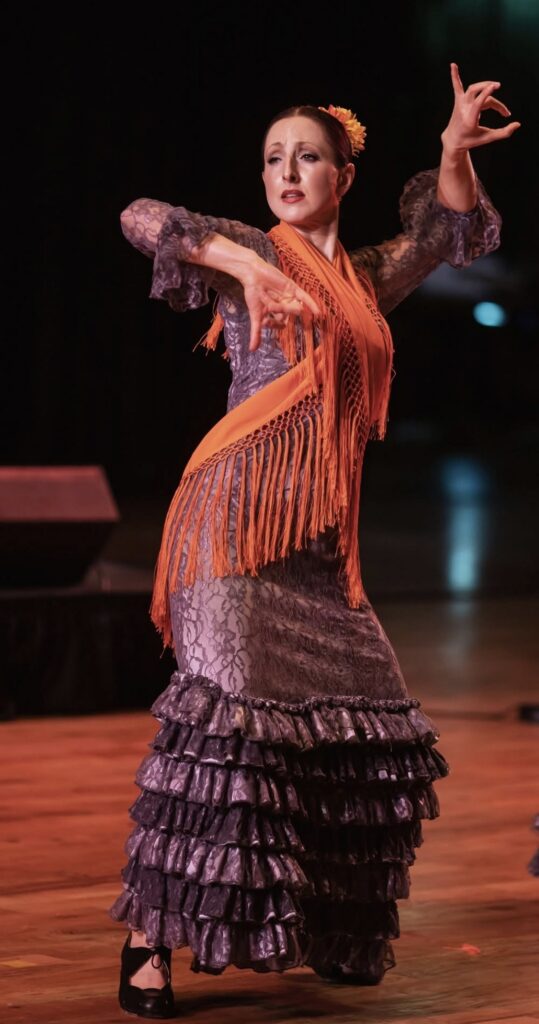
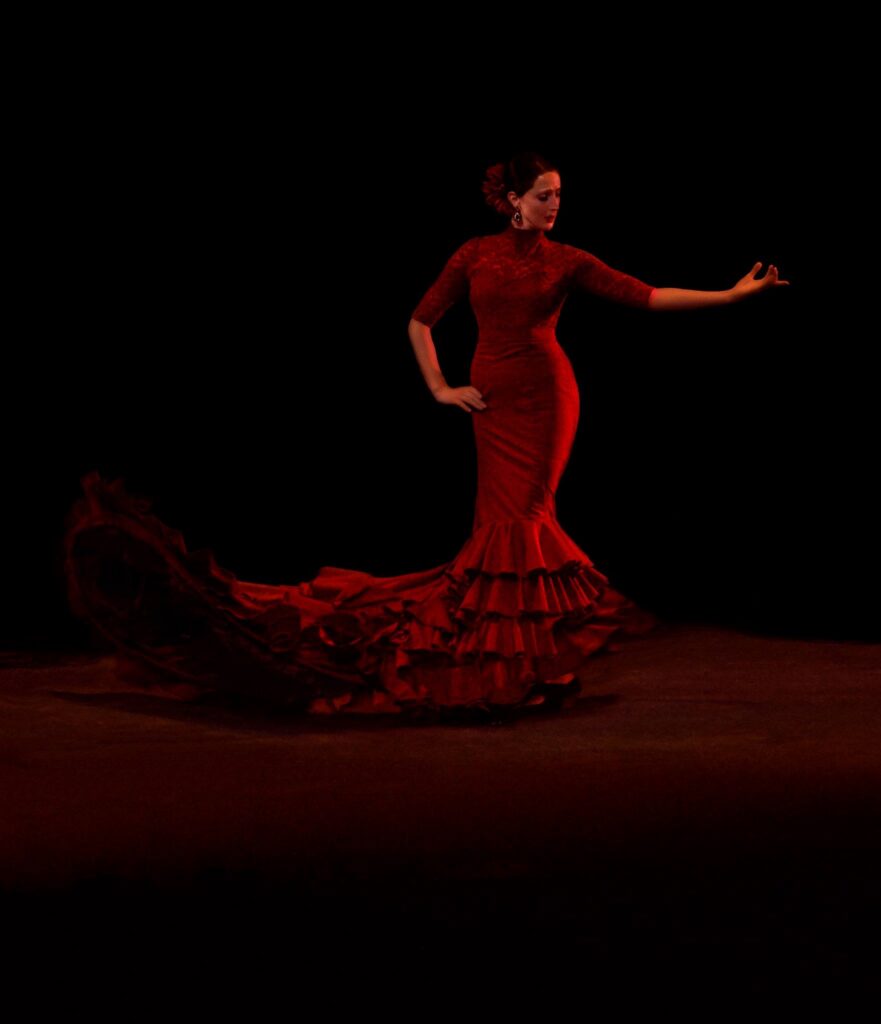
More than a decade later, Sandre’s flexibility and determination have helped her rise from faculty member to Children’s Division principal. But she hasn’t just left her mark on her students; she also realized the performance career that once eluded her. “Once we got settled, I continued my studies at Flamenco Denver with executive and artistic director Maria Vázquez. After some time working with her, she invited me to dance in her company.”
Balancing teaching with this opportunity to perform, Sandre found herself occasionally requesting time off from teaching. Realizing why she was stepping away, Colorado Ballet Academy recognized her dual passions, embracing this new dimension of her career by incorporating flamenco into its curriculum.
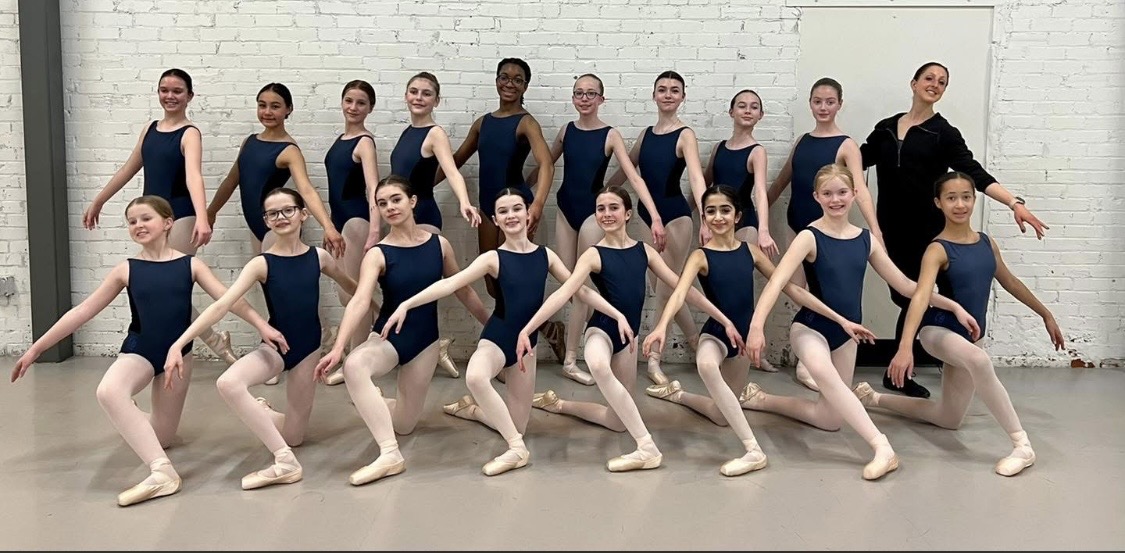
Today, Sandre continues to balance teaching and performing. In the studio, she shares her passion across genres with dancers of all backgrounds. And while she may not have had the ballet career she once envisioned, her curiosity for learning, her willingness to pivot, and her calm resilience ultimately led her to the performance career she had once dreamed of.
On sharing flamenco with ballet dancers:
“There is certainly crossover between ballet and flamenco, but they are very different in terms of rhythm and style. While flamenco can be difficult to pick up, knowing how a ballet brain works, I can break things down for classically trained dancers in a more palatable way.”
On teacher trainings:
“Beyond my NBS Diploma with the National Ballet School of Canada, I also hold an AISTD (Associate of the Imperial Society of Teachers of Dancing), and an Associate Diploma with the Cecchetti Society of Canada. I don’t feel short seminar-style teacher trainings really set you up for success. Instead, I recommend seeking out programs where you gain some degree of experience working in the classroom.”
Finding her way:
“Fresh into teaching and working at the standards we had at NBS, I felt there wasn’t much room for personal interpretation. At first, I put a lot of pressure on myself to impart a degree of perfection via my instruction. I quickly learned everyone doesn’t have the intention of working professionally. It became clear I needed to modify my approach based on each student’s individual abilities.”
Working with others’ preferences:
“All instructors have preferences in how to approach technique. But as somebody working for an organization, I must work in their preferred style and methodology. While I feel comfortable expressing my opinion, regardless of whether it is accepted, I’ve learned to make my approach my own to honor what teaching means to me.”
Most valuable exercise:
“Just like in ballet, plié is always being utilized in flamenco.”
On branching out:
“It is important for students to be willing to branch out, and not just in terms of varying their training. Dancers need to cultivate a willingness to be open to different teachers and styles. Whether you love a class or not, there is always something you can take from it.”