2026 Dance Teacher Awardee Lynn Simonson Built a Technique for Every Body

You’re invited to the 2026 Dance Teacher Awards ceremony on Wednesday, October 14, at 11 am at The Loft at City Winery, Pier 57 in New York City. Get your tickets here—we’d love to have you join us to celebrate these remarkable teachers and all they have given to the dance community!
“I never wanted to develop a technique,” says Lynn Simonson with a smile. Speaking over Zoom from the beach house where she’s vacationing in Baja California, Mexico, the 83-year-old radiates the same warmth and curiosity that has defined her decades-long career. “It wasn’t a game plan.”
Yet Simonson went on to create one of the most influential approaches to jazz-dance pedagogy of the past half-century—one rooted not in aesthetics but in anatomy, injury prevention, and an unwavering belief that every body can move more freely.
The foundation for what would become the Simonson Technique was laid in 1967, when, at 23, she found herself teaching a jazz class for adult beginners in Amsterdam. “I walked into a room without a mirror or ballet barre, and it was like, ‘Wow, this is a huge responsibility. How do I start with bodies that already are impacted by muscle patterns, holding patterns?’ ”
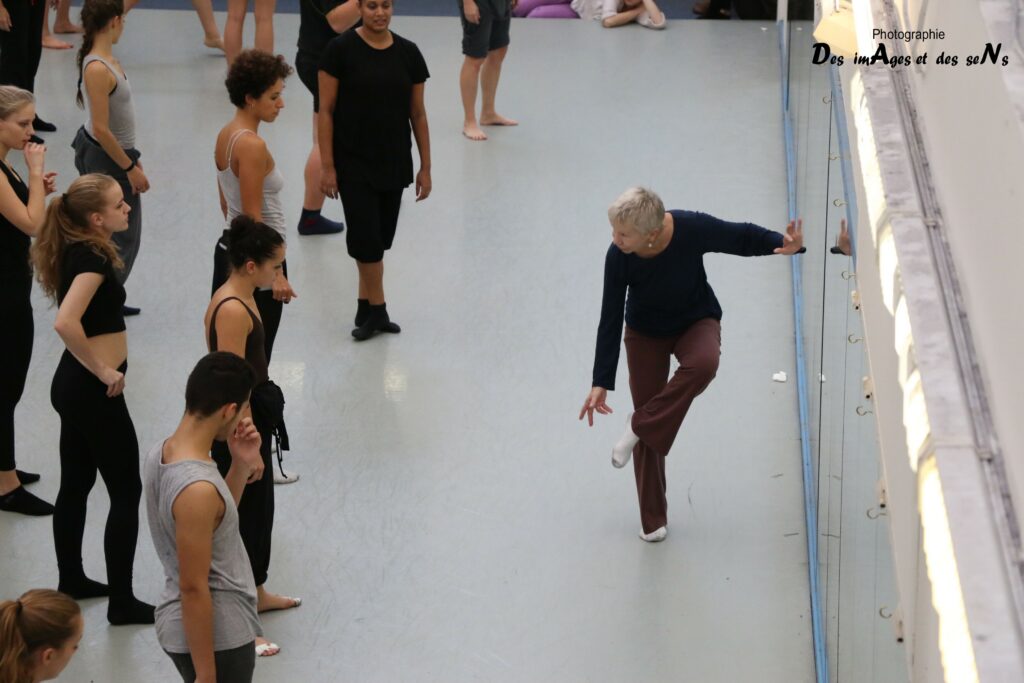
As a child growing up in Seattle, Simonson trained in classical ballet. But she was drawn to jazz music and liked to improvise movement in her mother’s dance studio. Once she got to New York City, she joined the corps de ballet of the Radio City Music Hall, while also studying jazz dance with Luigi, Jaime Rogers, and Claude Thompson. That day in Amsterdam, Simonson quickly realized she couldn’t rely on the advanced classes that she’d taken in New York with her own teachers. “Those were for bodies that already were developed,” she says. “As my students progressed from beginner to higher levels, I started progressing a syllabus.”
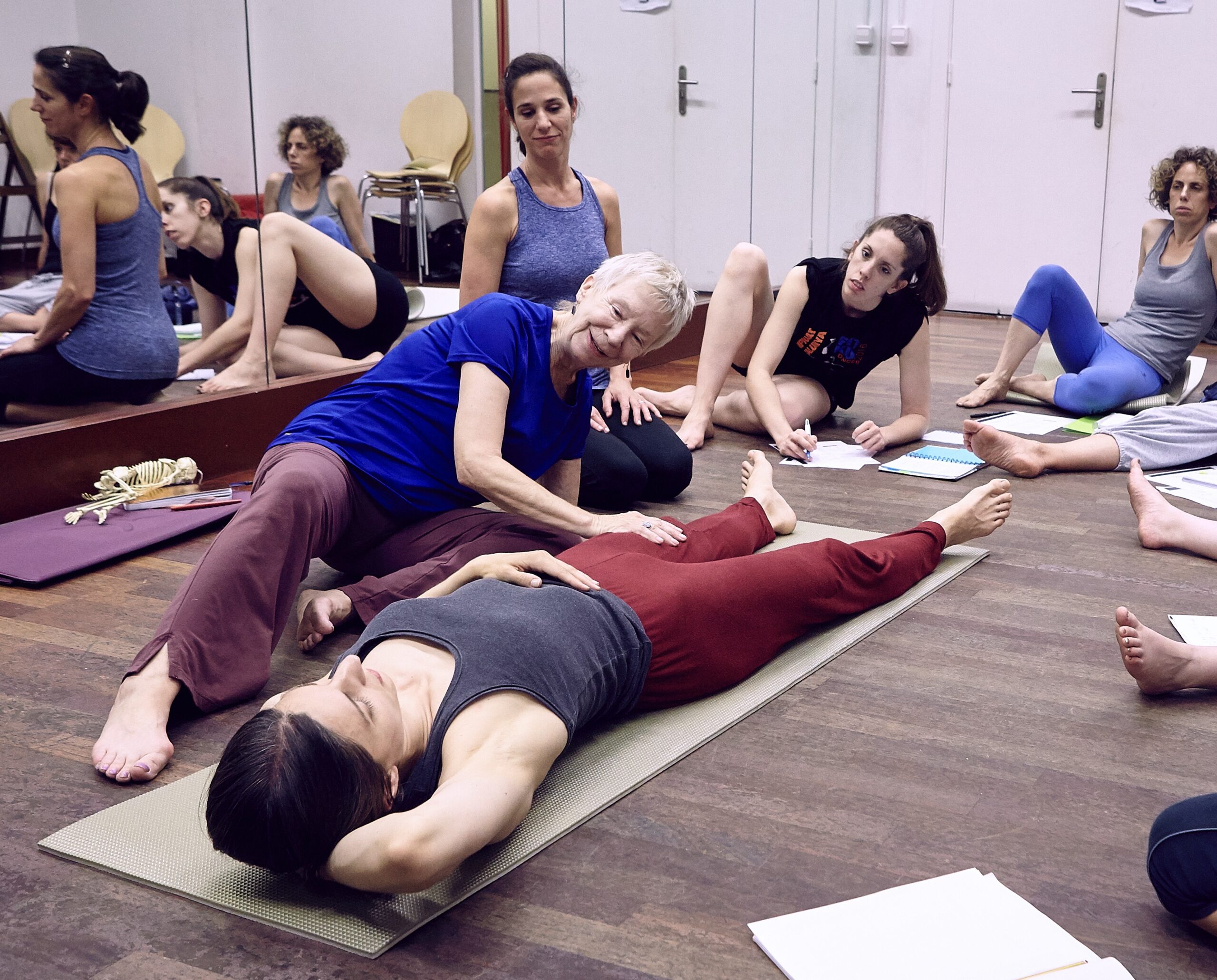
Simonson’s ideas developed during countless hours spent witnessing the unique anatomy of each dancer who stood before her—and in observing her own patterns, injuries, and habits. “I was always curious as to why the injuries happened. Why did I blow my knee out? Because I was hyperextended—my Russian ballet training wanted me to push my knees back,” she says. “I just believed there was a way you could train a body without injury.” Her pioneering practices are now considered among the fundamental standards in dance education. She continues to direct the Simonson Method of Teacher Training, begun in 1970 and now taught in 20 countries across the world.
Among Simonson’s other career-defining achievements is the co-founding of Dance Space Center (later called Dance New Amsterdam), which operated as a popular hub for the Manhattan dance community for 30 years. For Jacob’s Pillow Dance Festival she developed the Jazz Project, Teachers’ Workshop (which she directed alongside Bessie Schönberg), and New Vision for Dance. “When I’m looking at a student, the first thing I see are possibilities,” she says. “Then I see what the movement challenges might be. And then I’m able to formulate a game plan, like what steps are needed, A, B, C, D, to get to that place of more freedom.”
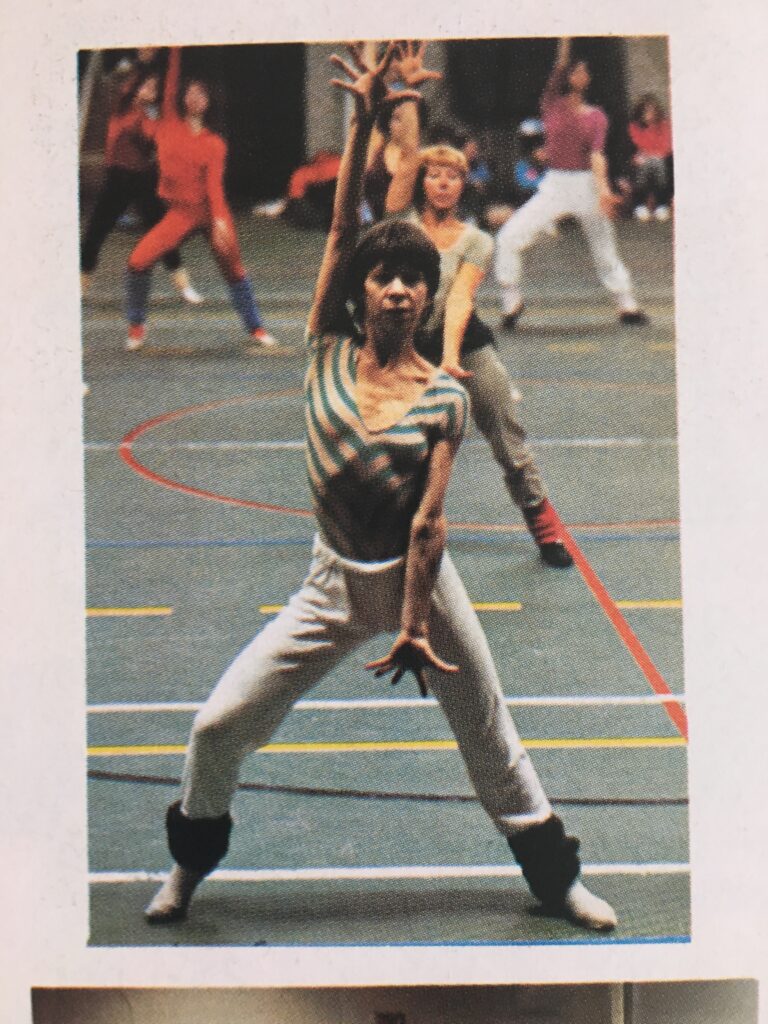
Jeanne Donohue, author of The Simonson Legacy, a coffee-table biography, met Simonson first as an 18-year-old student at Dance Space. “I’m now 54, and Lynn never fails to surprise and delight me in the energetic way she embraces life and, without fail, makes me want to be the best version of myself as a dancer, as a teacher, and generally as a human,” she says. “Like a bright red helium balloon, one light tap of inspiration sends Lynn’s spirit soaring through the atmosphere, and you can join the adventure or be left behind.”
Donohue goes on to say that when writing the book, she interviewed approximately 100 people from all over the world. “Everybody mentioned one of the two same things: ‘I would not have a dance career if I had not met Lynn’ and ‘I was saved by her tech principles or by her spirit of heart.’ ”
One reason behind the popularity of Simonson’s method is her focus on the community. “She brings a humanitarian and community element that is so much bigger than her,” says Donahue, citing an example from when AIDS was spreading in the late 1970s. “We didn’t yet know what was going on and everyone was afraid. Lynn had a ritual that if there was blood on the dance floor, she would stop the music and she would clean the floor herself. We’d then take a moment before she started the music again.”
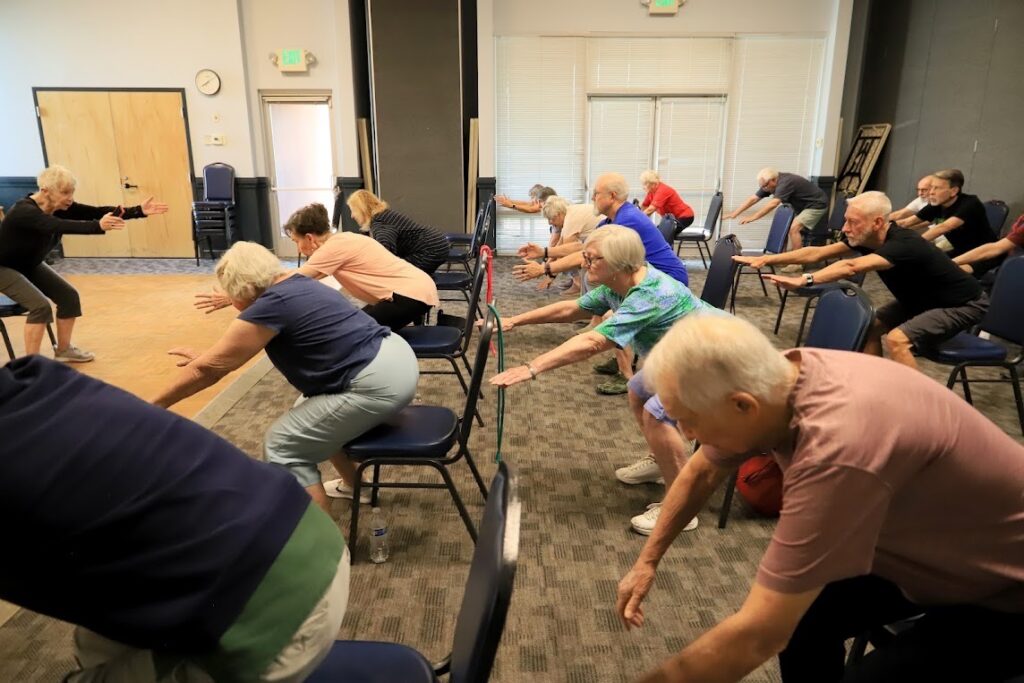
Today, Simonson has expanded her focus to include a new population: seniors who are noticing changes in cognition and balance. In 2018, she launched Better Brain & Balance, a program of exercises done seated, which, as Simonson describes it, “shoot blood flow into the brain, which creates the birth of new neurons.” Donohue notes how, in the dance studio, seniors and 18-year-olds benefit from Simonson’s teaching equally: “Lynn meets them right where they are. She conducts a room full of students and is present with each one.”
“I really believe change can happen at any age,” says Simonson. “What’s exciting is they walk out of the room different. Somebody comes in with a cane, and walks out and forgets the cane.”