How Billy Barry Is Pushing the Gaga Practice

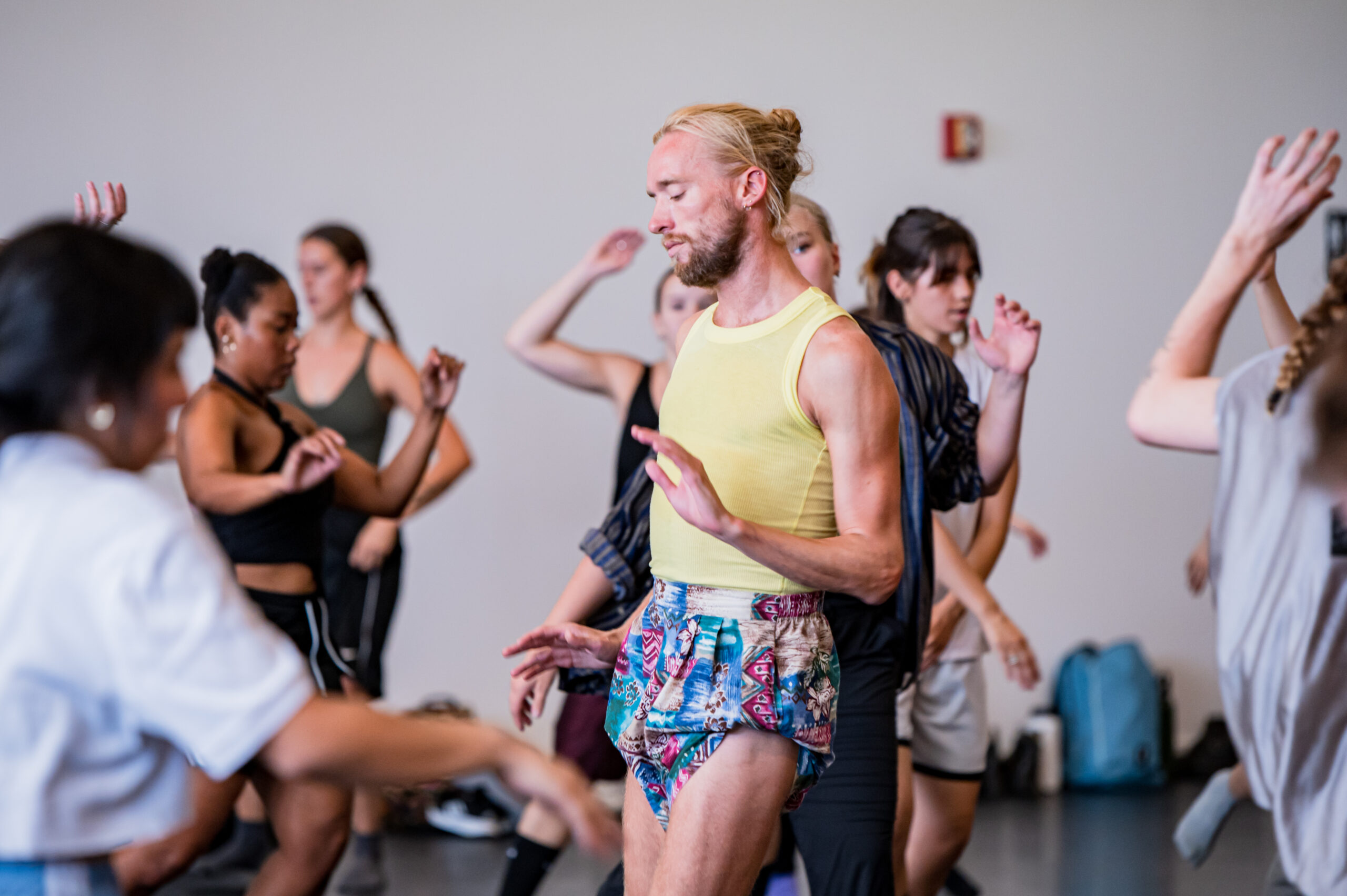
Watching freelance artist and educator Billy Barry lead a recent GagaLab, it’s clear he doesn’t lean into predictability. Guiding dancers through the wildly dynamic movement of Batsheva Dance Company’s house choreographer, Ohad Naharin, Barry suddenly lets out a startling squeal. In this moment, he simultaneously creates a safe space for experimentation while encouraging students to follow his lead and let loose. Together, they release inhibitions and dive into the trademark quirkiness of Naharin’s work.
Growing up on Long Island, Barry’s only predictable step was moving to New York City to broaden his training. After attending the Professional Performing Arts School, he continued his education at Juilliard, where he first met Naharin. Upon graduation, Barry moved to Tel Aviv, joining Batsheva’s junior ensemble and soon advancing into the main company, where he danced until 2024.
This move to the Middle East not only launched his performance career, it shaped his choreographic voice while providing the foundation to become a holder of Gaga, Naharin’s improvisation-based movement language. Exploring pleasure within personal movement impulses, Gaga is taught in formats for professionals and pre-professionals (Gaga:dancers) and for anyone curious about movement (Gaga:people), making it a widely embraced practice for dancers and nondancers alike.
While not required, most Gaga teachers spend some portion of their careers at Batsheva. “When I first joined the company, the certification process was less complex,” Barry shares. “Company members would benefit from certification, as it opened doors for supplemental income.”
Despite the draw, Barry deliberately delayed certification. “I found myself asking more questions than others,” he notes. “It wasn’t my intention to challenge Gaga’s foundations. But there were things that made sense quickly and other elements that took longer to understand.”
His persistent questioning left some to wonder whether it might prevent him from sharing the movement language as intended. Today, it’s clear his patience and need for clarity served him well.
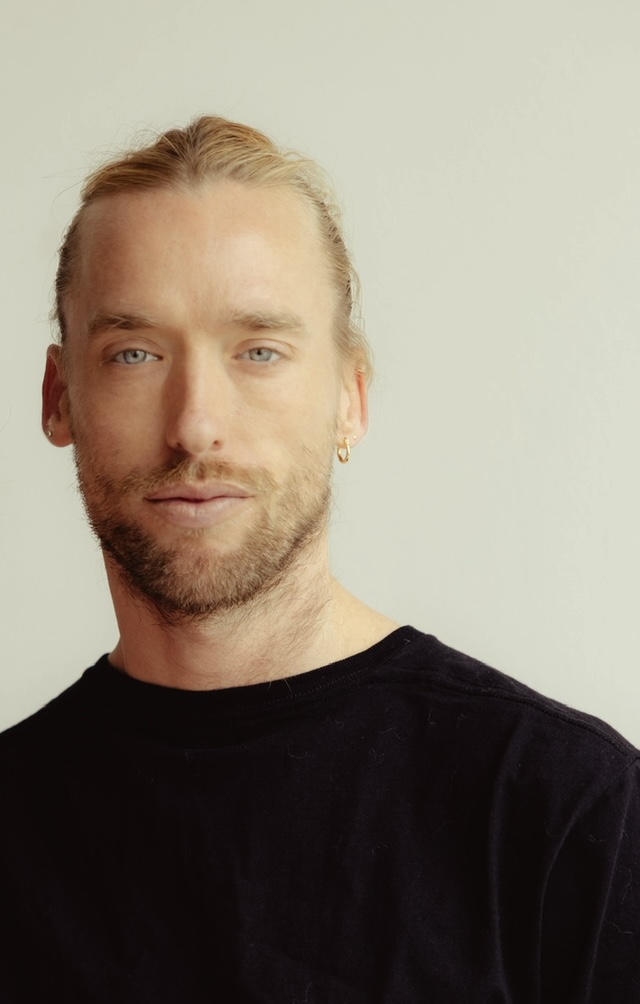
Reflecting on his decision to immerse himself before pursuing certification, Barry says: “I am very happy with my decision to live in Gaga for five years before becoming a teacher. Once I became certified, I knew I was ready to share what I had learned.”
Now back in New York City, Barry divides his time between teaching classes and labs, performing, and choreographing. “Since moving home, it has been an adjustment not being onstage all the time,” he says. “Though I have found sharing my experience is very rewarding and can still feel like performing.”
Watching Barry teach, this blend of sharing, observing, and performing is evident: “I enjoy guiding others through improvisation side by side. Exploring and sharing how our bodies can move, I see people’s minds expand in the same way mine did when I first discovered Gaga.”
No longer immersed in Naharin’s work daily, it’s no surprise that Barry is still asking questions. Alongside former Batsheva colleague and frequent collaborator Gianni Notarnicola, he is investigating how concepts typically avoided in Gaga might expand the practice. Tentatively named “Movement and Emotions,” the two are examining how stories and feelings influence movement impulses.
Discussing the foundation of their method, Barry explains: “Gaga is loyal to physical information. As vast and alive as its research is, there are rules and boundaries.” While Movement and Emotions is inspired by Gaga, it incorporates language usually avoided in Gaga practice.
“We use fantasy and emotion as guiding tools to influence movement. Cuing dancers with prompts, like imaginative stories or human feelings, we observe their impact on movement,” he says. “It is exciting to bridge all of the research we’ve done with something that expands both our understanding of the practice and teaching vocabulary.”
Stepping away from Batsheva and into his own light, Barry is eager to share what he has learned through tireless research of the physical form. With his blend of curiosity and fearless self-expression, observers can hardly predict his next step. Yet, whether beside him in the classroom or viewing from the audience, it’s hard not to be inspired by his vivid example of the body’s expressive potential.
Here, he tells us about his teaching energy, valuable lessons, and more.
On Being One of 30: “In my second year at Juilliard, I was miffed when I wasn’t cast for a Twyla Tharp trio. Instead, Ohad picked me for a piece with 30 dancers. I thought I would rather be one of three onstage versus one of 30. It’s funny how Ohad’s choice set me on my path to Tel Aviv.”
Preferred teaching energy: “Flamboyant and loud! It’s just unavoidable. I can’t stay subtle for too long.”

On staying unpredictable: “I challenge myself not to fall into recycling. In defense of the principles of Gaga, I could give the same class five days in a row and still find new things. But I like to challenge myself to not become predictable.”
On making space safe for experimentation: “As an extrovert who has adopted many introverts who feel safe with me, I try to lead by example. Watch me feel safe with you and be ridiculous. Then, maybe I offer a friendly challenge to top it. I like to make a game out of it.”
On keeping his cards close: “Dancers often give me cards at the end of our labs. I’ve saved every single one. I carry them when I travel. If I need a boost, I whip them out and read them.”
Most valuable lessons: For Dancers: “Take what you do seriously, but don’t take yourself seriously.” For Educators: “You don’t need to understand it right away.” For People: “Connect to pleasure. Life is hard. We don’t need to make it harder than it is.”