Jazz Teacher Lisa Biagini on Luigi Jazz, Family Legacy, and Longevity in Dance

On Sunday afternoons and Tuesday evenings at Steps on Broadway, dancers of all ages gather for a classic Luigi-jazz warm-up. The warm-up is recognizable by its emphasis on épaulement and its incorporation of Luigi’s “invisible barre” version of second position, with palms down as if pressing on a ballet barre during tendus and frappés in center.

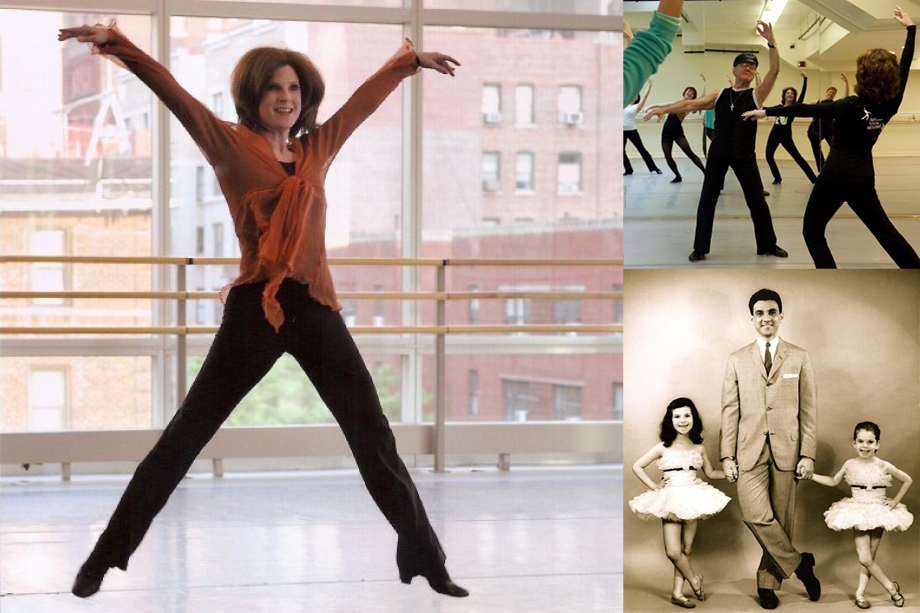
The slightly abridged warm-up is led by Lisa Biagini, a lifelong student and friend of Luigi’s.
“Luigi,” born Eugene Louis Faccuito, grew up on the vaudeville circuit and served in the U.S. Navy during World War II. After the war, he moved to Hollywood to pursue a film career but was injured in a car accident that left him partially paralyzed. Through dance, he was able to rehabilitate himself, regain his movement, and go on to have a career in films like On the Town and Singin’ in the Rain. His jazz-class warm-up is based on the exercises his body needed after his injury.
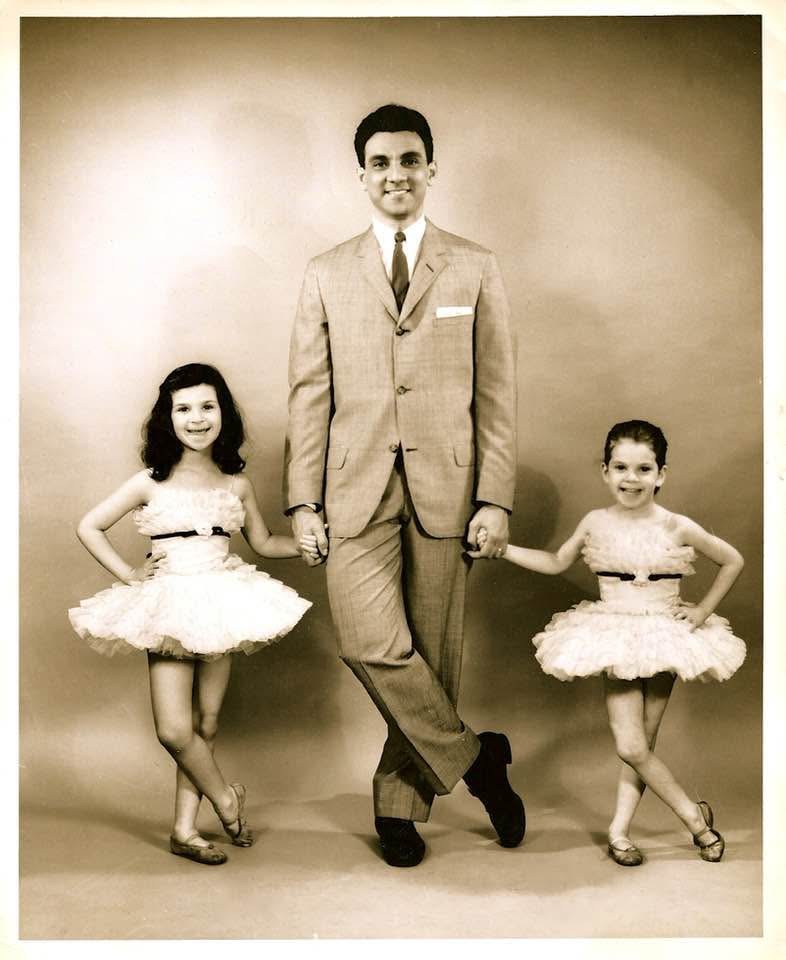
Like Luigi, Biagini’s father, Tony Bevinetto, served in the Navy during World War II and studied ballet on the GI Bill in his native New Orleans and in New York City, at which point he met Luigi. Bevinetto married Biagini’s mother, a fellow dancer, and together the couple moved back to New Orleans. There, Bevinetto choreographed and performed on his own local television show, “Harmony Hall,” during the earliest days of widespread television ownership. Later, Biagini’s parents started a dance school and raised Lisa and her sister in the dance studio.
“When you grow up in that environment, you learn by osmosis,” Biagini says. “The studio is your home. We did our homework in the waiting room and watched my dad teach and rehearse. He was a phenomenal dancer and an incredible teacher.” Biagini recalls a childhood spent watching her father train with Luigi during visits to New York City (“I’d ask my mother, ‘Can’t we go to the zoo instead?’ ”) and how her family grew close with Chita Rivera and her daughter, Lisa Mordente, who became Biagini’s best friend.
Biagini began her own career as a teenager, performing with Chita Rivera in Bye Bye Birdie at Pittsburgh Civic Light Opera. She later performed with iconic artists including Gene Kelly, Donald O’Connor, Tommy Tune, and Dick Van Dyke. Living in New York, she recalls taking classes from Phil Black, Bob Audy, and, of course, Luigi.
Working as a dance captain taught her the skills she uses today as a teacher, but it wasn’t until after she hung up her character shoes and started a family that Biagini found herself at the front of the studio. “After 15 years of Equity contracts, I ended up later finding myself back at Luigi’s Jazz Centre, and it was an amazing thing,” she says. “My dad had passed away, sadly, but I was there, dancing with Luigi, just in a blissful state, because I wasn’t trying to book a job anymore. I wasn’t trying to impress anyone. I was expressing, as Luigi always talked about.”
But when a teacher at the center needed a sub, Biagini filled in, which led to her teaching small private classes. A student from her private classes suggested she apply at Steps on Broadway, and after subbing constantly at Steps for a year, she finally got her own regular class. “When you’re subbing, it’s really tough, but if I had a class of four people, I was going to teach the best darn class to them and have a wonderful time.”
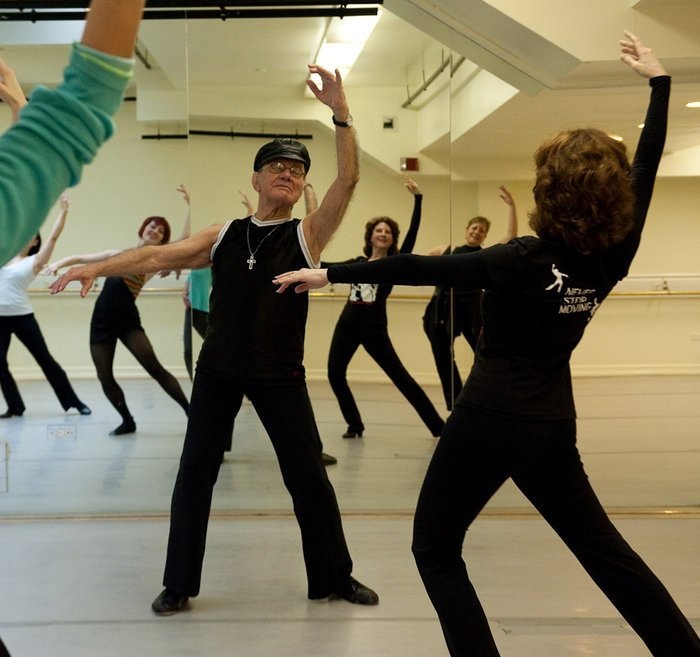
Now, Biagini’s class is popular with dancers of her generation who also knew Luigi, as well as young musical theater performers getting their feet wet in the city and ballerinas adjusting to dancing in heels. “I have older dancers who were on Broadway and were Rockettes. Some people are now choreographing themselves, and I have a lot of fellow teachers. I also have people who are still performing that sometimes say, ‘Bye, I’ll be back in four months after tour!’ ”
She sees the diversity among the dancers in her class, especially in age, as a positive thing. “I think the older dancers can show the young ones “You know what? That’s how that stuff should look.’ And they also can see ‘Dance isn’t gonna end for me when I’m 30,’ ” she says. “I want my class to be the one where you come to remember why you dance, love to dance, to begin with, in that purist sense.” It’s a lesson she learned from her beloved father, and, of course, Luigi.