Brazilian Social Project Inspires Young Dancers From Chile to Dream Big

In the town of Pucón in southern Chile, at the foot of one of the most active volcanoes in South America, a kind of artistic shift is changing the creative landscape: A group of ballet visionaries is changing the lives of young dancers in one of Chile’s most economically challenged regions, one inspiring step at a time.
At Escuela de Danza Pucón, director Rebeca Lopes and her team of mostly Brazilian teachers have built a strong artistic training program for students, despite a number of limitations. “Our school is located in one of the poorest regions of Chile, where high levels of poverty and cultural inequality deeply affect opportunities for children and teenagers,” Lopes says. “The lack of performing arts infrastructure limits access to culture and forces many families to travel to Temuco, the regional capital of Chile’s La Araucanía Region, in search of artistic opportunities. This creates significant gaps, especially for students from public and rural schools.”
Lopes has been filling those gaps with enthusiasm, tenacity, and grit; she and her team have trained dancers who have traveled abroad to Europe, Argentina, the U.S., and Brazil—participating in several festivals, competitions, and workshops to further their dance education and pursue scholarships at major schools.
Still, Lopes has felt that many of her students could benefit from even more rigorous, international training. That’s when a collaboration with Projeto Pé de Moleque Ballet—a social initiative based in Uberlândia, Brazil—began.
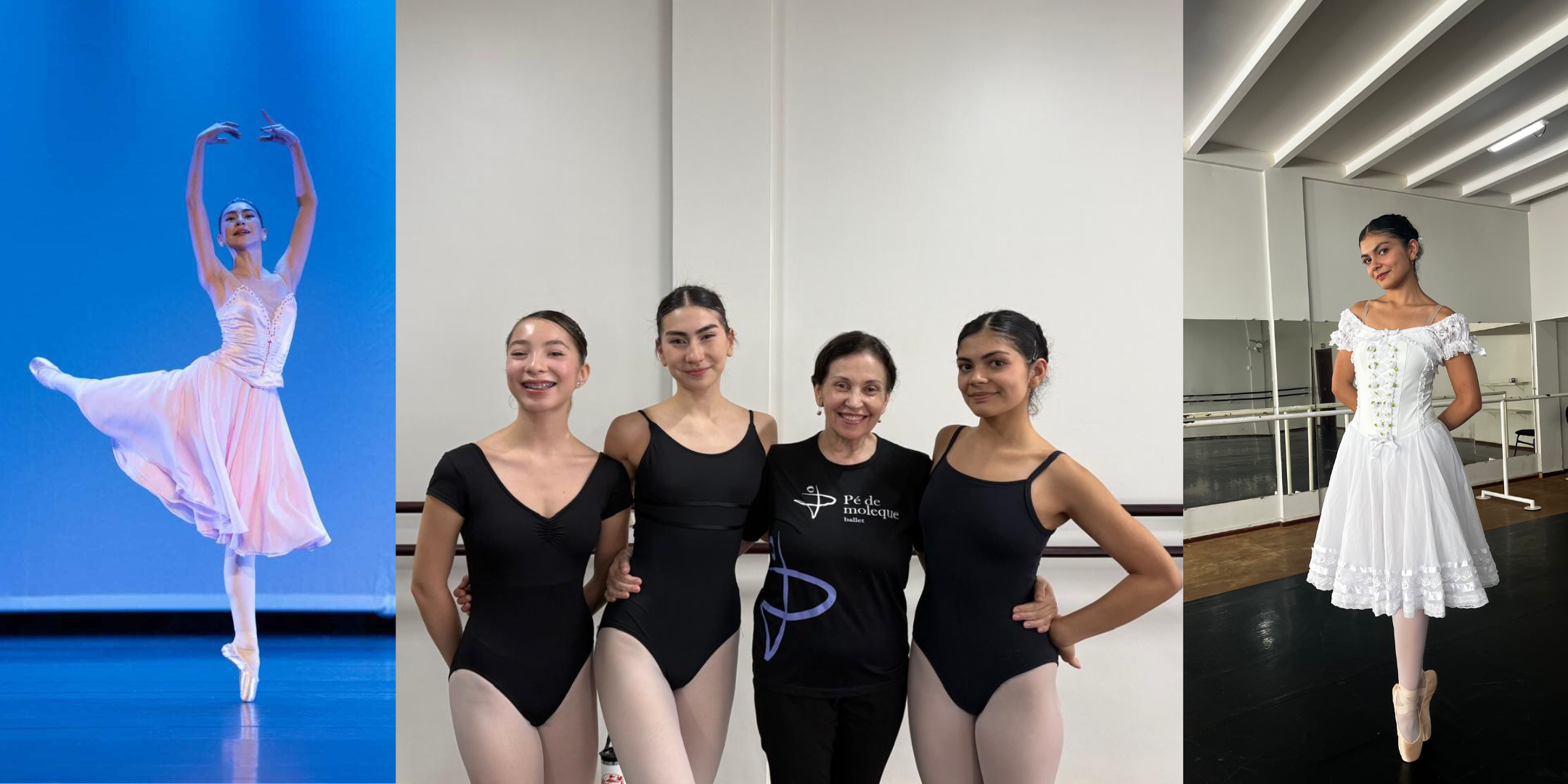
During a multi-week dance festival in January and February, Guiomar Boaventura, the director of Projeto Pé de Moleque Ballet, visited Chile and selected three students—Emilia Calquín (13), Patricia Roa (17), and Emilia Elgueta (17)—for advanced training in Brazil, giving them an opportunity they might never have dreamed was possible.
“In Pucón, I found very young people who are deeply sensitive, passionate about ballet, and willing to follow a path that demands discipline, dedication, and commitment,” Boaventura says. “That is what touched me the most.”
Lopes has always admired Boaventura’s work, and calls the advanced training opportunity “truly extraordinary.” “Seeing how she transforms the lives of children—the vast majority coming from low-income backgrounds—into internationally recognized ballet artists through discipline, love, and excellence has always been a huge inspiration to me.”
Boaventura, a renowned Brazilian dance teacher responsible for developing ballet talents such as Wictor Hugo Pedroso of Joffrey Ballet and Victor Caixeta, a principal with the Vienna State Ballet, offered the teens full scholarships, and they embarked on their new training path in February this year. The program is open-ended, and the girls can stay as long as needed to fully prepare them for a career in dance. All three were elated to be chosen and have vowed to savor the experience.
“This is a unique opportunity that I will embrace with all my heart. I am deeply grateful to my school and to the teachers who have guided me throughout this journey,” said Roa. “I know leaving my family is the hardest part, but I carry their love and support with me.”
“I want to make the most of every minute, learn as much as possible, and grow as both a dancer and a person,” said Calquín.
When Elgueta found out she was selected, she felt excited and nervous, but also much more. “Representing my school and southern Chile in an international opportunity means carrying my roots, my training, and everyone who has been part of my journey.”
Lopes believes Brazilians have a special ability to dream big, even when faced with seemingly insurmountable obstacles. “There is a very deep human strength in the way we bring art to people who often never imagined they could belong to this world. And I believe Chile can learn a great deal from this more human and transformative vision of art.”