Paul Taylor: Carrying the Torch for the Second Generation of Modern Dance

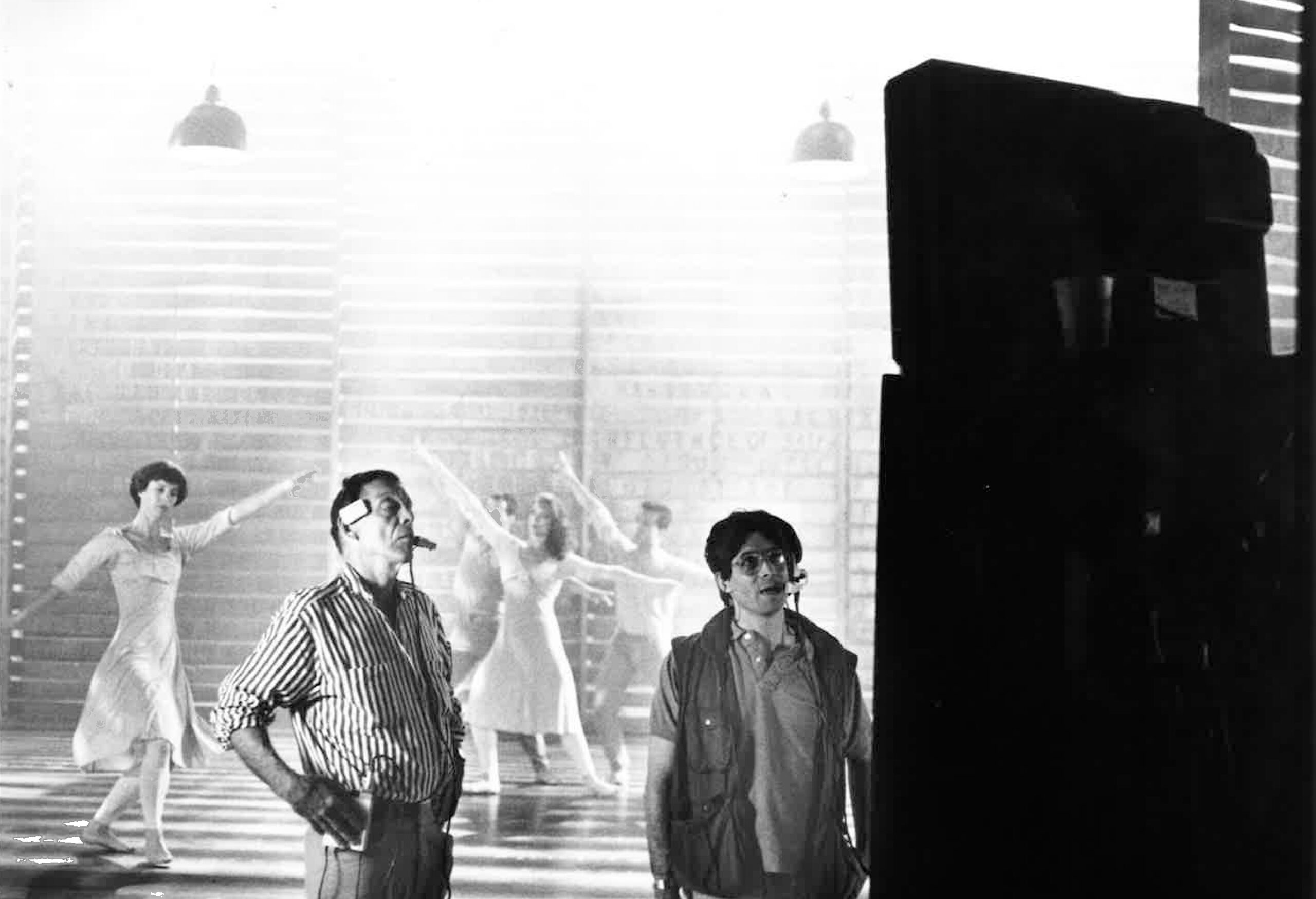
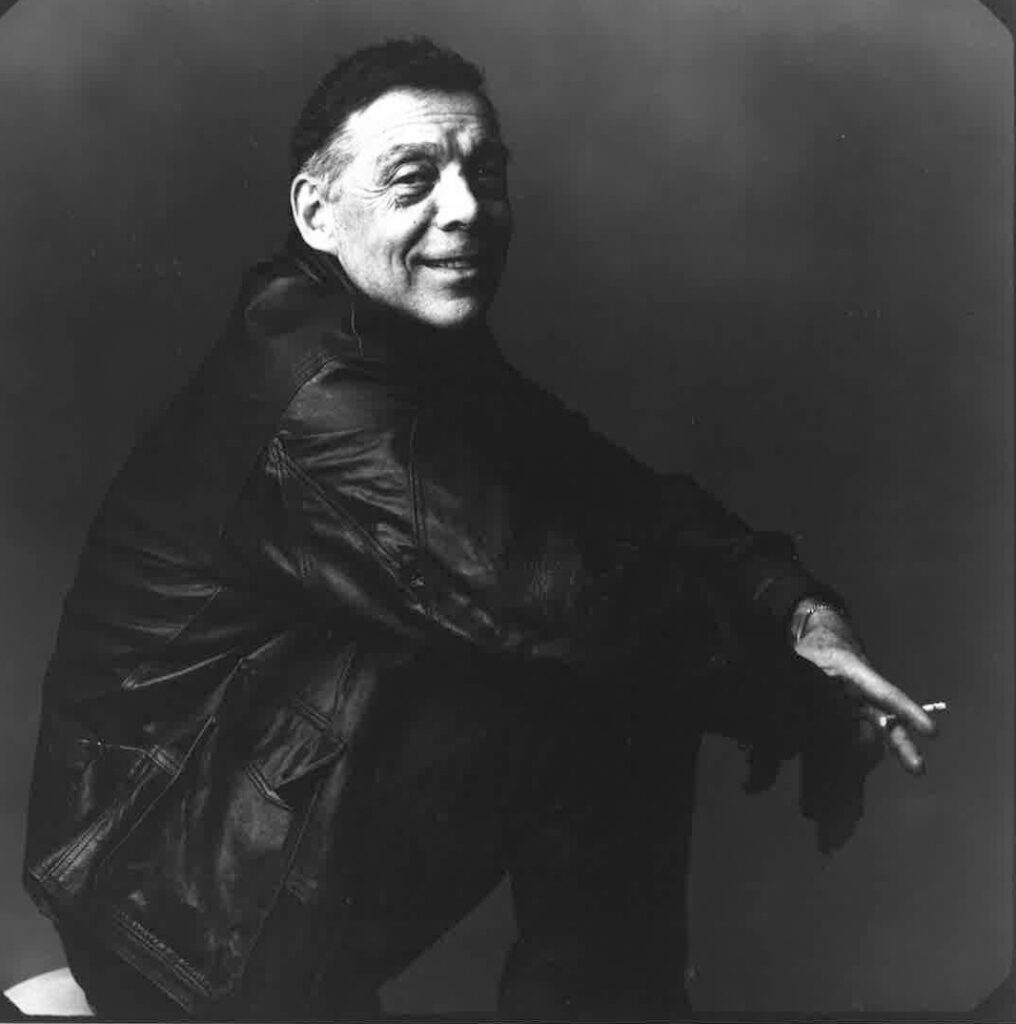
Paul Taylor was a prolific choreographer of the 20th and 21st centuries known for his often paradoxical take on modern dance, highlighting light and dark themes and balancing pedestrian movement with a sweeping lyricism.
Paul Belville Taylor Jr. was born in Pennsylvania, nine months after the 1929 stock market crash. After his parents divorced, he lived a transitory life—on a farm with a foster family; with his older sister’s family; at a boarding school—and developed a rich imagination as a result.
Taylor enrolled at Syracuse University in 1950 on a swimming scholarship but discovered dance in the library, poring over photographs and stories of famous dancers. He left Syracuse two years later and spent a summer at the American Dance Festival, where he met Martha Graham. Graham later invited him to join her company in New York City, which he eventually did in 1955.
Between 1952 and 1953, Taylor was in NYC, studying dance at Juilliard during the day, where he met Doris Humphrey and Louis Horst, who were on faculty. He spent his evenings dancing for Graham.
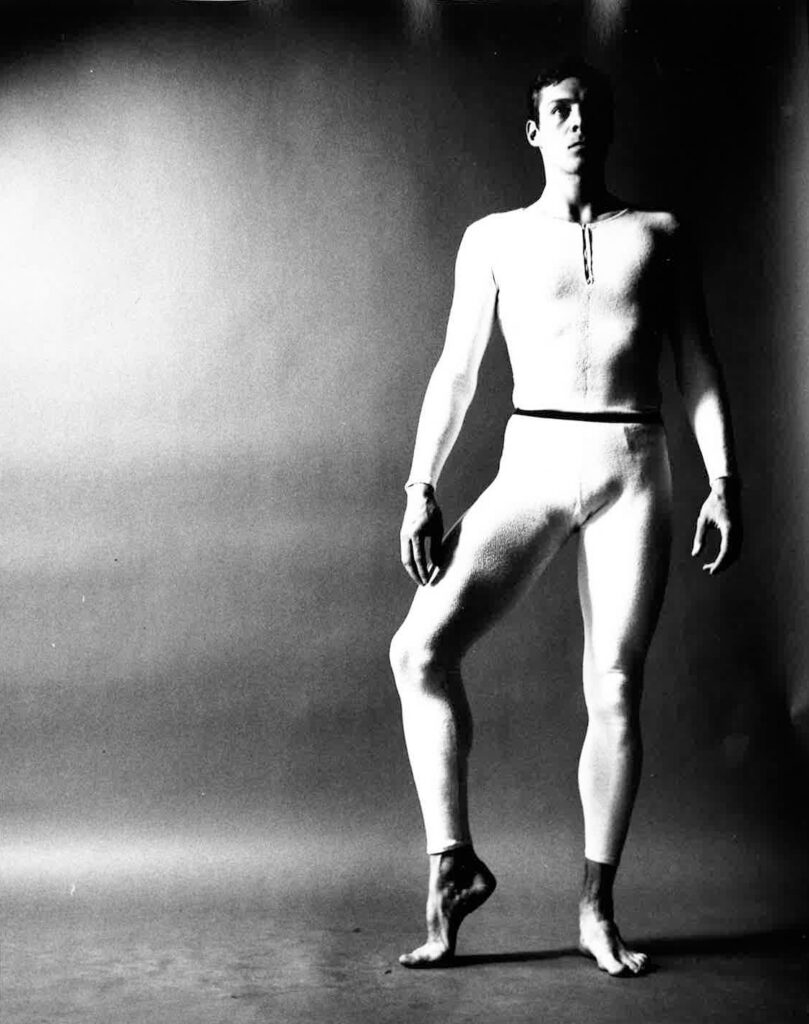
In 1953, he joined Merce Cunningham’s fledgling company and began developing his own work. His evening-length Seven New Dances (1957) gave him a reputation as an iconoclast in the modern-dance world. Eager to include stillness and pedestrian movement in his work, one piece featured him and a partner standing in silence to John Cage’s 4’33”; in another, Taylor moved minimally to the recording of a telephone operator’s voice on repeat. Horst infamously reviewed the evening in the Dance Observer with three inches of blank space.
In 1954, Taylor formed his own company, the Paul Taylor Dance Company.
1962 was another pivotal year for Taylor. The American Dance Festival commissioned Aureole, a lyrical piece that demonstrated a new choreographic direction: less pedestrian and more technical movement. Taylor also left Graham’s company after seven years to focus solely on his own work, creating well-received pieces such as the satiric From Sea to Shining Sea (1965) and the unexpectedly dark Big Bertha (1970).
In 1974, at age 44, Taylor stopped dancing in his own work. One year later, he created Esplanade, a rollicking octet inspired by the sight of a girl running for the bus, now considered by many to be his masterpiece.
Taylor created, on average, two works a year since 1986. He also published an autobiography (Private Domain, 1987), was the subject of two documentaries (Dancemaker, 1998, and Creative Domain, 2014), and wrote a book of essays (Facts and Fancies, 2013).
The Work
In his choreography, Taylor often contrasted light and dark themes such as war, sexuality, religion, loss, and even insects.
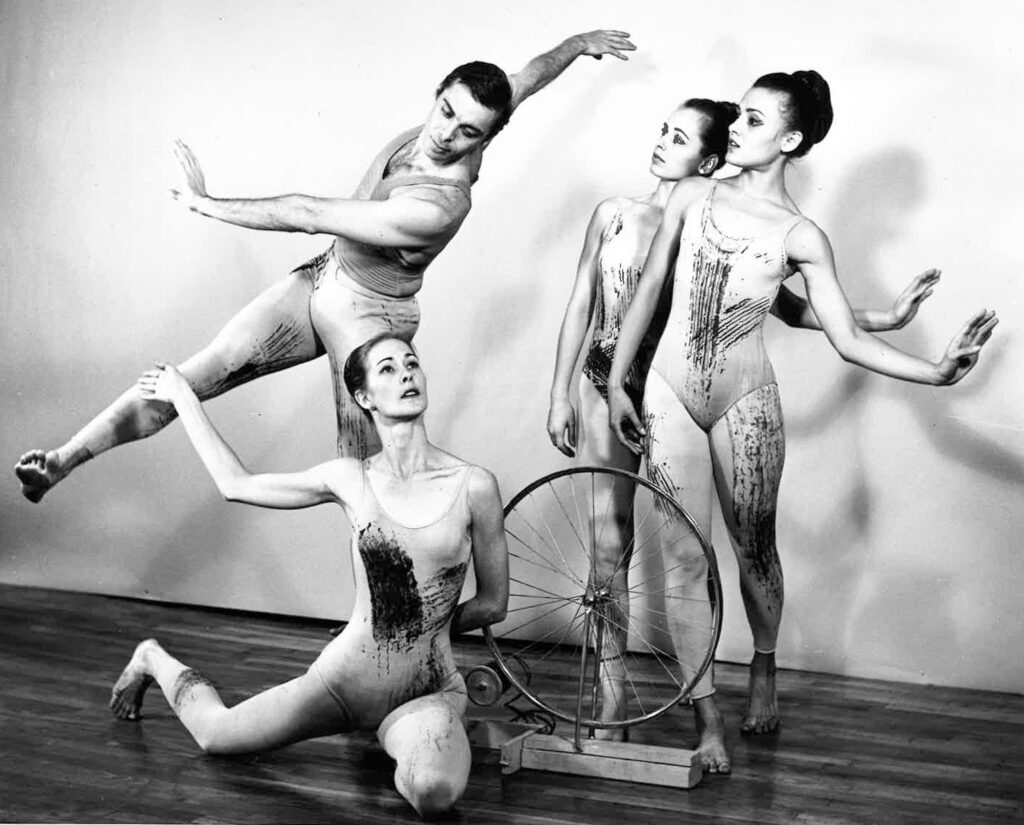
Aureole (1962) This jubilant, expansive piece, set to Handel, was an early foray into Baroque music for Taylor. Its musicality and detail caused many to term it a ballet.
Esplanade (1975) Set to Bach violin pieces, this was a return to Taylor’s earlier love of pedestrian movement, with walking, running, and skipping. In the exuberant finale, the dancers perform daredevil floor slides and leaps into each other’s arms.
Le Sacre du Printemps (The Rehearsal) (1980) With perhaps Taylor’s most linear (and humorous) storyline, this work is a pastiche of 1920s movie stereotypes and includes a detective story about a kidnapped baby.
Company B (1991) In this meditation on wartime attitudes, Taylor juxtaposed Americans’ high spirits in the 1940s with the sacrifices of World War II, set to the Andrews Sisters’ songs.
Style
Though there is no codified technique, Taylor’s style includes an open, spiraling torso, with fully extended arms and legs. Some popular steps have names, like the “scoop”—arms open in an elevated second position, with palms facing up—and the “high V,” in which palms face out. The “Aureole runs” require arm coordination and torso opposition and make it look as if the dancer is flying across the floor. The “Taylor walk” is a hallmark of both company auditions and his choreography: With an upright torso and open chest, the dancer walks forward, slowly and deliberately, with legs slightly turned out and arms static at the side.
Fun Fact
Taylor’s childhood imaginary friend, George Tacet, was often credited for costume and set design in his work.
The Legacy Continues
Between 1954 and 2018, Taylor made 147 dances, many of which are still performed by his main company, Taylor 2 (the second company, formed in 1993), and companies around the world, including American Ballet Theatre, San Francisco Ballet, and the Royal Danish Ballet. In addition to the Taylor dancers who have gone on to become directors of their own companies (Twyla Tharp, David Parsons, and Laura Dean), many have become influential educators: Carolyn Adams of The Ailey School; Ruth Andrien, former rehearsal director for Taylor 2; Linda Kent of Juilliard; and Raegan Wood, former director of the Taylor School.
Additional Resources
Print:
American Dance: The Complete Illustrated History, by Margaret Fuhrer, Voyageur Press, 2014
Fifty Contemporary Choreographers, Second Edition, edited by Martha Bremser and Lorna Sanders, Routledge, 2011
Why Dance Matters, by Mindy Aloff, Yale University Press, January 2023
Online:
Dance Heritage Coalition: “America’s Irreplaceable Dance Treasures”: danceheritage.org
“PBS NewsHour”: “What made Paul Taylor one of the most influential creators in modern dance.” August 30, 2018.
Editor’s note: This article originally appeared in 2016 March print issue of Dance Teacher.