How West African Music Shapes Adji Cissoko’s Teaching

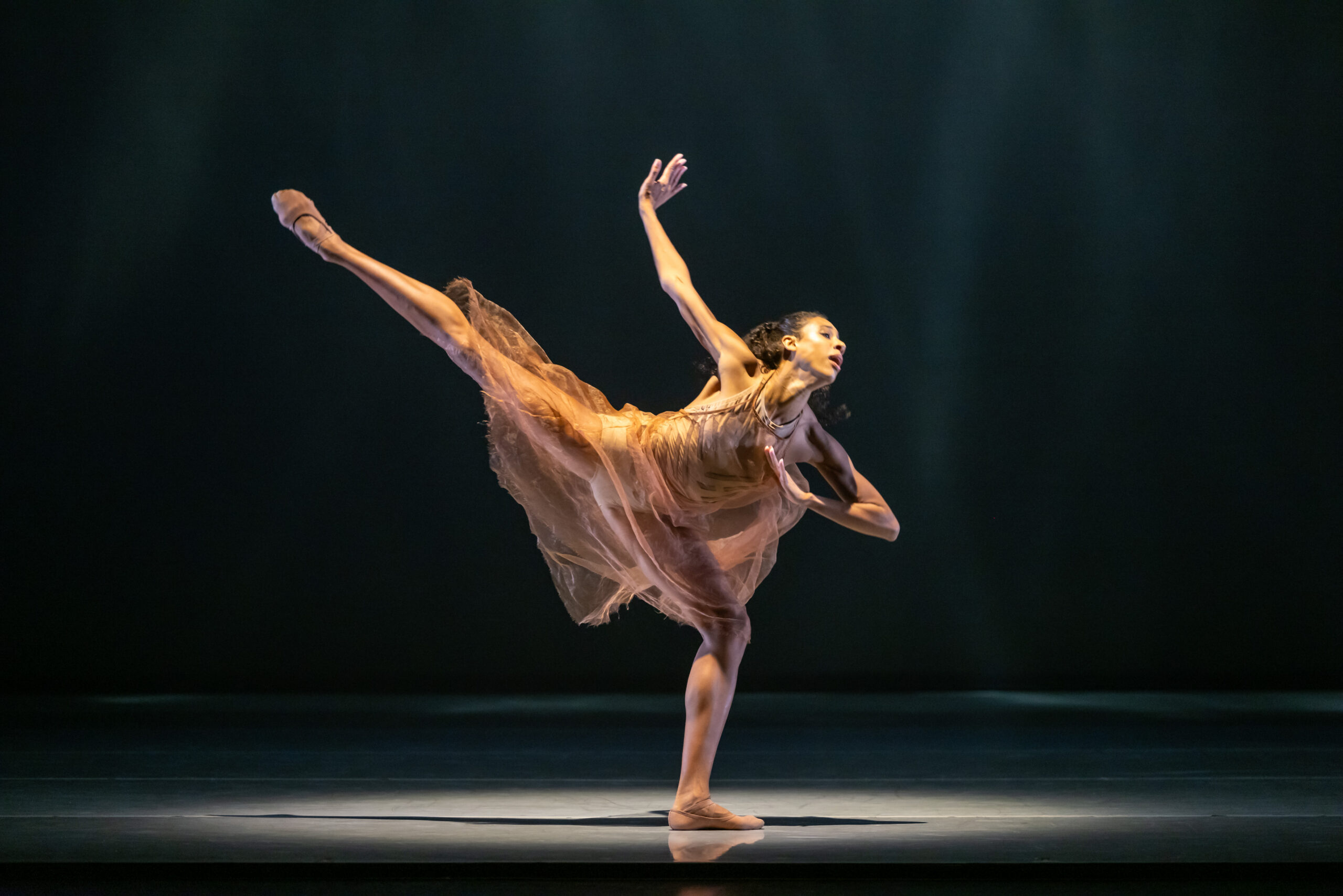
Music and movement are inextricably linked with storytelling for Adji Cissoko, Alonzo King LINES Ballet dancer and associate artistic director. In fact, Cissoko says telling stories through music and movement felt “inevitable,” something that was passed down through her Senegalese heritage.
“My family, my ancestors—we’re all storytellers,” Cissoko tells Dance Teacher. “We are called ‘griots,’ and in West Africa, they use the kora [a West African stringed instrument] to tell those stories.”
The bond between storytelling, music, and dance, however, didn’t come immediately. For years, Cissoko says, her classical ballet training and performance career felt very separate from the kora music she grew up hearing played by her Senegalese father in their home in Munich, Germany. But after leaving the more classical National Ballet of Canada to join the more contemporary Alonzo King LINES Ballet in 2014, Cissoko increasingly began to do collaborations with musicians onstage, which opened her eyes to the role music could play in her dancing and choreography. “I was like, ‘Wow, there is so much more that you can do with music,’ ” Cissoko recalls.
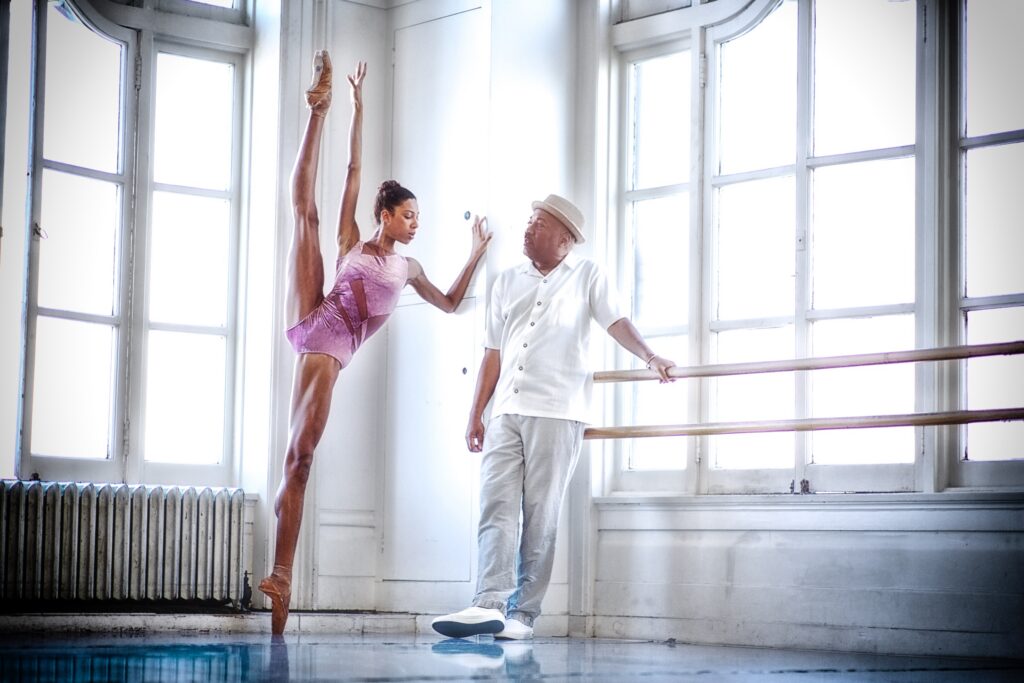
Then, during the COVID pandemic, Cissoko started immersing herself in West African music and the stories behind it, including taking lessons on how to play the kora. Understanding the instrument better not only deepened her relationship with music, it also informed her dancing—even in little motions, like a new awareness of how to use her fingers, and how the rest of the upper body reacts to that movement.
“Sometimes I’d tell my dad, ‘Wow, it’s so funny that I found my way to storytelling, to be a griot through dance and movement,’ ” Cissoko says. “And he’s like, ‘Well, of course! It’s in you. This is what you’re born to do.’ ”
But even if the lyrics in the music may be telling a specific story, Cissoko doesn’t see the movement as confined to any one storyline or narrative. For her, the relationship between a dancer and the music is also fluid—a constant conversation and dialogue, and it’s up to the dancer to interpret the story they find there through movement. It’s another way her approach to music changed after joining LINES.
“Alonzo really taught me a lot about the idea that music isn’t just ‘Here’s the structure and you follow it,’ ” Cissoko says of the LINES artistic director and co-founder. “I remember him telling me [that] actually, you’re a musician, too. Your body is an instrument, [and] you’re playing your instrument.”
Now, as a teacher, Cissoko wants her students to develop their own relationship with music and movement, both as a storytelling medium and as a conversation between dancer and song. In her movement exploration classes, Cissoko says, she encourages her students to interact with the music and discover different rhythm choices or paces of movement. She does this by switching up the speed of the music, or adding new elements, like drums, once the dancers have become accustomed to moving to a certain sound.
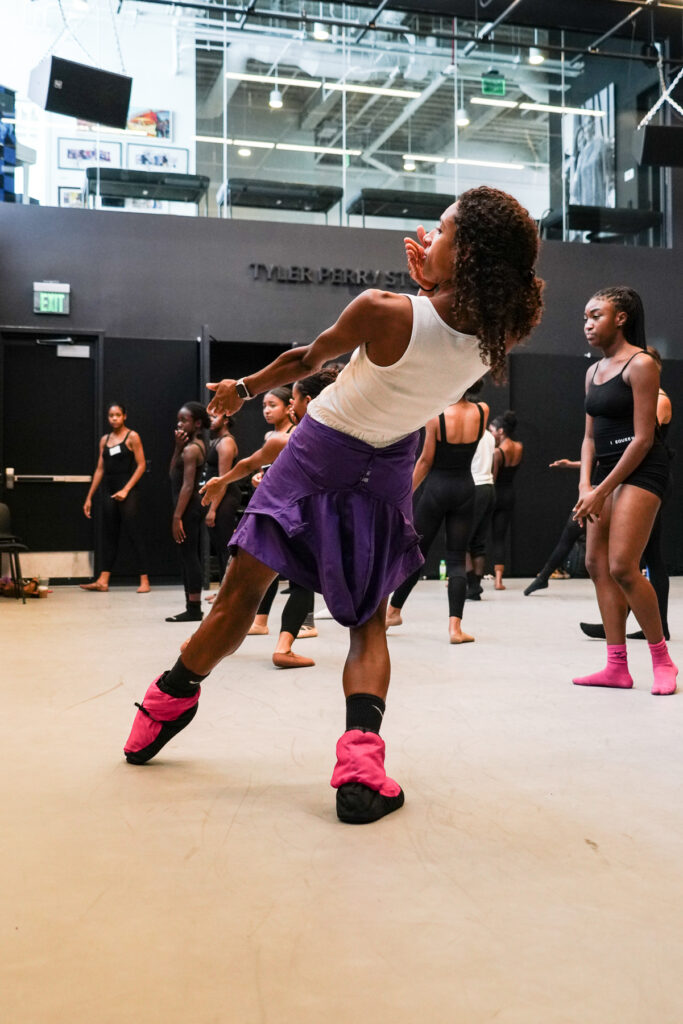
To help her students become their own storytellers through movement, she tries to give them ideas by asking probing questions, prompting them to think deeper about the choreography and what each gesture could mean: Like if a hand is placed on the chest, is it pounding the chest in a show of strength? Or lightly touching it in a loving or sad gesture? “By asking them questions, it sparks them to find answers for themselves. And everybody will have a different answer,” Cissoko says.
“I’m not trying to draw out one specific story,” she adds. “It’s more like, ‘Find your own story. Become your own storyteller.’ ”
Adji Cissoko’s Favorite Songs for Dance Class
While she may incorporate some of the same songs, Cissoko rarely uses the exact same playlist twice. “Somehow, I always start fresh,” she says. “I always want to build it from scratch to see how I feel and what I want to do in the class.”
She particularly loves introducing her students to music they may not be super-familiar with. “I’m definitely still in my era of exploring West African music a lot,” she says. “I like when there’s a little bit of voice, a little bit of singing, humming, anything. I feel like it adds another layer to it.”
“Labrador,” by Kora Jazz Band
Cissoko likes using this song by Kora Jazz Band (a fusion of West African music and American jazz) for something as simple as a tendu exercise to help dancers have fun with the music and get out of their heads. “This is exactly the music that I feel sparks joy in movement and just gets people to dance,” she says.
“Manga,” by Mayra Andrade
“I have really good experiences with people finding a little bit of their personality in dance with this song specifically,” Cissoko says of this track, noting that for many students there’s “a little bit of sassiness” that shows in their dancing when she puts it on in class.
“Sahel,” by Sona Jobarteh
This is Cissoko’s favorite song choice for practicing walking and focusing on the intricacies of that movement. “The music has this space in it,” Cissoko says, “and this idea of, You don’t have to worry about where you get to, but just about the journey.”