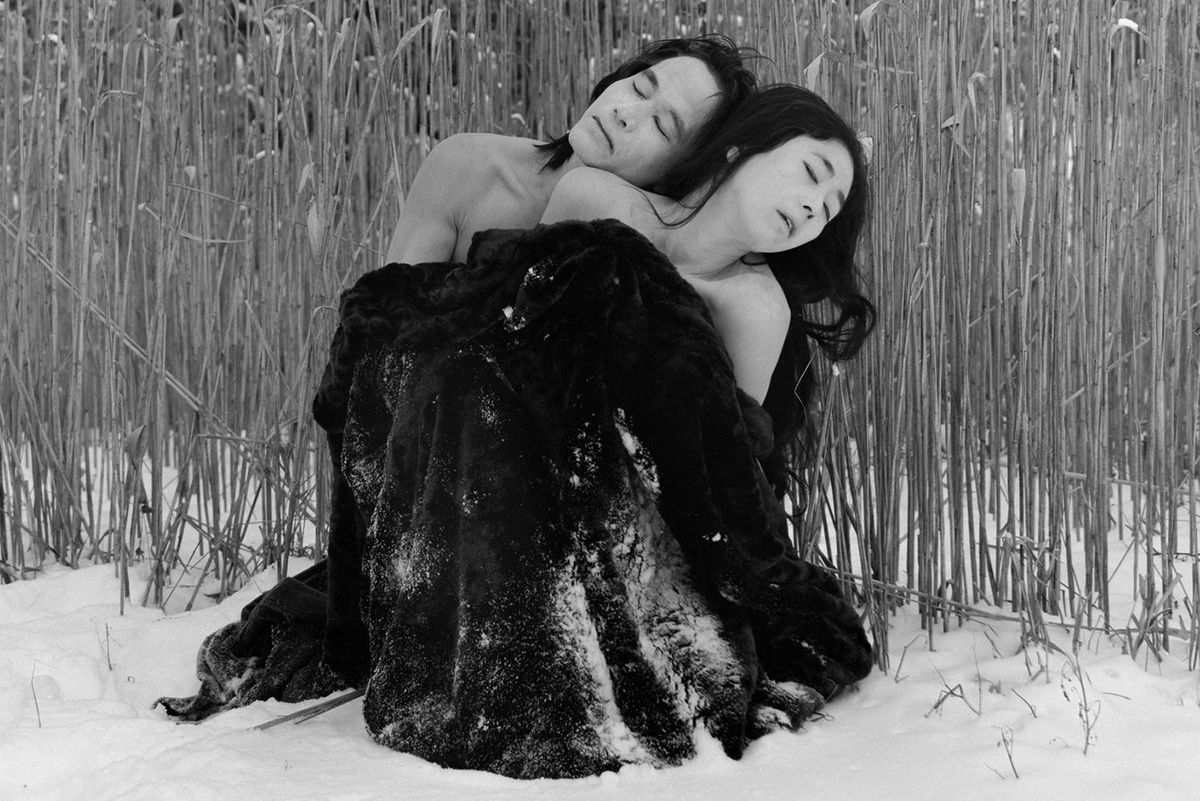
Eiko & Koma: Five Decades of Redefining Movement

Eiko Otake and Takashi Koma Otake are interdisciplinary performance artists from Japan who have been creating work together since 1972. Although they don’t consider their work butoh—a Japanese performance art recognizable for its intensity, control, and heavy white makeup—their creative aesthetic is strongly influenced by it. The work is distinctive for its extremely slow, minimalistic movement and their collaborative, hands-on approach to every aspect, from movement to costumes to sets.
Born and raised in post–World War II Japan, neither Eiko nor Koma studied dance in their youth. While in college in the late ’60s, they were drawn to the Japanese avant-garde arts scene. In 1971, they each ended up at butoh pioneer Tatsumi Hijikata’s Tokyo-based studio and soon joined his company. Hijikata paired them for a duet, and they developed an instant rapport. Three months after meeting, they left Hijikata to create their own work, and their creative and romantic partnership solidified.
Despite their limited performance experience, they created and toured their work throughout Japan and Europe for the next five years. They briefly studied with butoh master Kazuo Ohno, and later with Manja Chmiel, a disciple of German expressionist Mary Wigman, for a year. Chmiel encouraged them to simplify their movement and enrich their lighting design in order to deepen their work’s emotional impact.
After a trip to New York City in 1976, Eiko & Koma decided that the city’s experimental downtown dance scene was where they would thrive as artists. They moved there a year later and swiftly got to work creating new pieces. Two years later, they started splitting their time between New York and San Francisco.
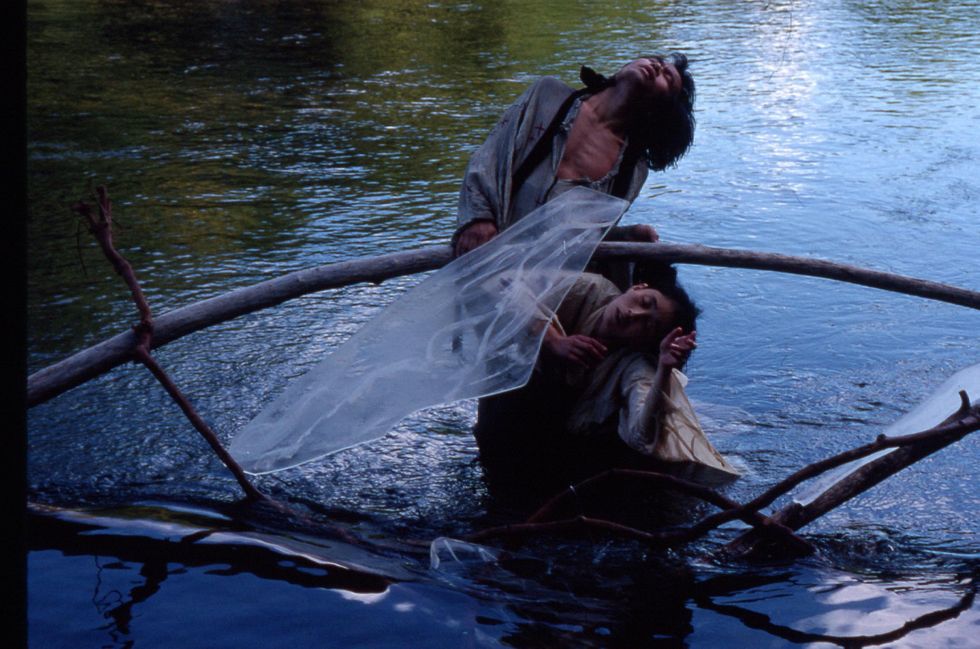
Over time, they evolved from performing on proscenium stages to embracing alternative spaces. Their works Breath (1998) and Naked (2010) were both living gallery installations in which they performed for the duration of the exhibit’s open hours over a one-month period. Pieces like Event Fission (1980) and Tree Song (2004) were site-specific works aimed to convey a message about the spaces they were performed in. Over the course of their career, they have created 43 performance pieces, three living installations, and several other multimedia works including video installations.
In recent years, the two have started working on solo projects. Eiko began performing A Body in Places, a 12-hour solo (performed three hours at a time across four consecutive Fridays), at a train station in Philadelphia in 2014. She has continued to perform the solo in cities around the world. In 2016, after two years of development, Koma premiered his first solo project, The Ghost Festival, in which he dances with his own paintings.
Style
Often dressed in tattered garments or naked and covered with heavy makeup (much like butoh artists), Eiko & Koma make themselves appear to be a part of their environment. Their work stands out for its slow pacing. Subtle changes in the crumpled shapes of their bodies or a deliberate walk through space happen excruciatingly slowly, making it feel as if time is slowing down. Their pieces frequently contain natural elements like dirt, water, or foliage. A married couple, Eiko & Koma collaborate on all aspects of their work: movement, sets, costumes, lighting, sound, and text.
Did You Know?
In 1996, Eiko & Koma were the first collaborative pair to receive a coveted MacArthur Fellowship.
Eiko & Koma were the first Asian choreographers to receive both the Dance Magazine Award (2006) and the Samuel H. Scripps American Dance Festival Award (2004).
In 2006, Eiko & Koma became the inaugural recipients of the United States Artists Fellowship.
Eiko Otake holds an honorary doctorate from Colorado College.
Additional Resources
Performance Videos
Access the video library here.
Interviews
Watch an interview with Eiko and Koma here.
Watch Speaking of Dance: Eiko and Koma (1995) here.
Watch Dancing in Water: The Making of River (Part 1, Catskills) here.
Articles
Asantewaa, Eva Yaa. “Dance Matters: The Art of Taking It Slow.” Dance Magazine. Posted October 25, 2010.
Perron, Wendy, “Eiko & Koma: The Unnatural Side of Communing with Nature.” Dance Magazine. Posted July 31, 2011.
Editor’s note: This article was originally published in the April 2017 print issue of Dance Teacher.