Teaching Dance Postpartum: Balancing Motherhood and a Career

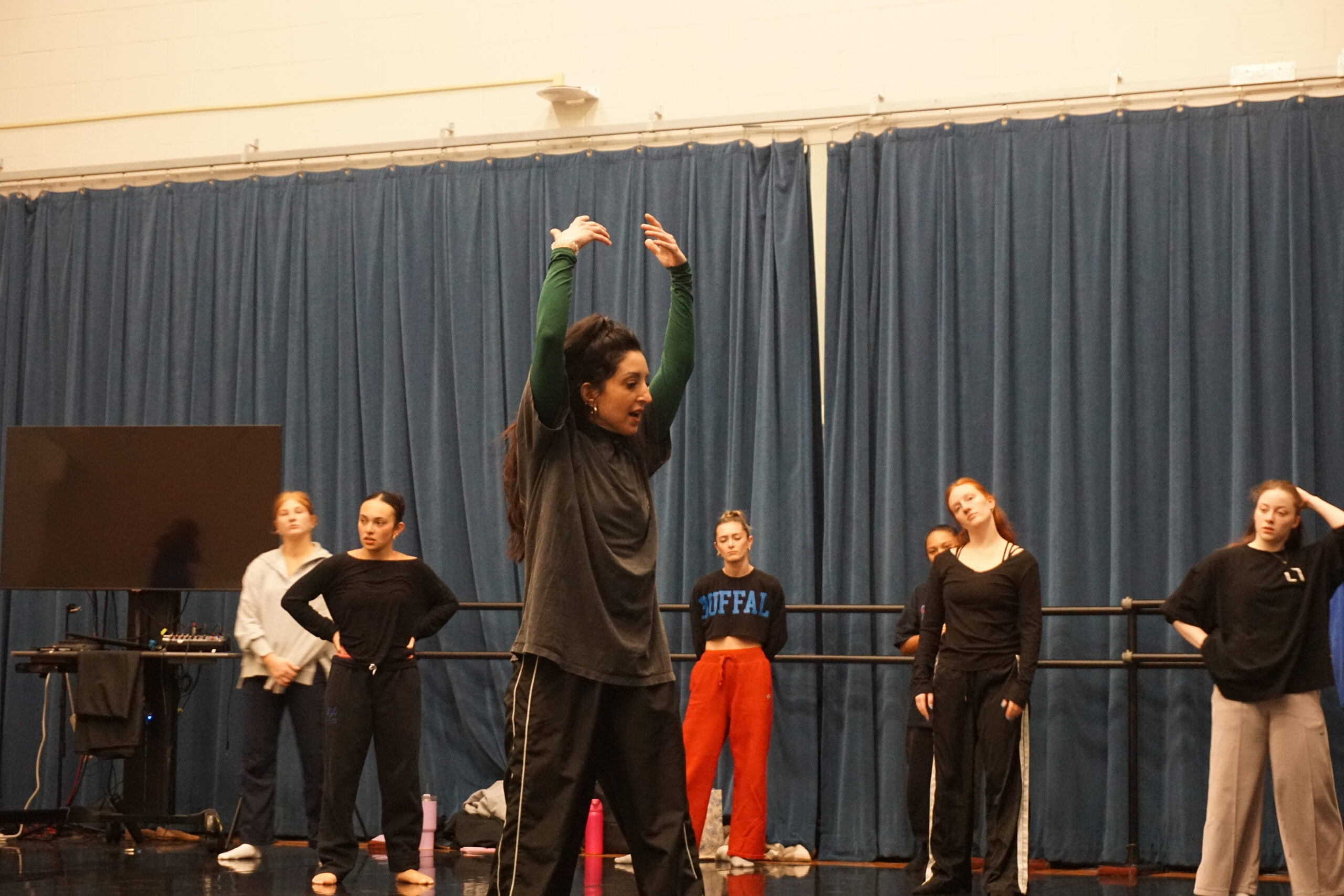
Samantha Klanac Campanile’s son was just 3 months old when she was offered a position teaching ballet at the University at Buffalo. Even as a sleep-deprived mother of three, the opportunity to teach in higher education felt like the perfect next step in her life as a dance educator. Faced with a moment that held both possibility and pressure, she had to ask herself what to do next.
Whether you planned to have a baby or not, the truth is, you are never fully prepared for what’s ahead. As teachers, we already give so much of ourselves to our students each day, yet motherhood calls for an even deeper, more constant kind of giving. And it raises a hard question: How do you hold space for both motherhood and the demands of teaching without losing yourself in the process?
My return to teaching was not a graceful one. I struggled with postpartum anxiety, and intrusive thoughts of “worst-case scenarios” took over the space that used to be filled with designing ballet adagios and across-the-floor combinations. On a cellular level, it felt wrong to separate from my baby. And between the hormone fluctuations, sleep deprivation, and overall postpartum anxiety, it was impossible to feel grounded.
By speaking with fellow dance educators who are also mothers, I learned that finding the right balance isn’t about dividing yourself evenly, but about moving through each role with intention and meaning.
Trust Yourself
For Campanile, a former Aspen Santa Fe Ballet principal, keeping a positive mindset was crucial: “I focused on gratitude every single day. I felt lucky to be in the world of teaching. I’m never going to be as prepared as I want to be, but I have to trust that 15 years of experience will guide me.”
This mindset becomes especially important in the unpredictability of both motherhood and teaching. You never know what energy will greet you when you walk into the studio, just as you can’t predict what might trigger a 20-minute meltdown from your toddler. In both roles, improvisation—despite routine—is essential.
Deepen Your Intuition
Thryn Saxon, a dance teacher at Gibney in New York City, noticed a significant shift in her energy postpartum. “Before motherhood, I operated as a very high-functioning individual,” she says, recalling how she would often engage in lengthy conversations whenever students asked questions. “I didn’t have room for that energy output anymore.”
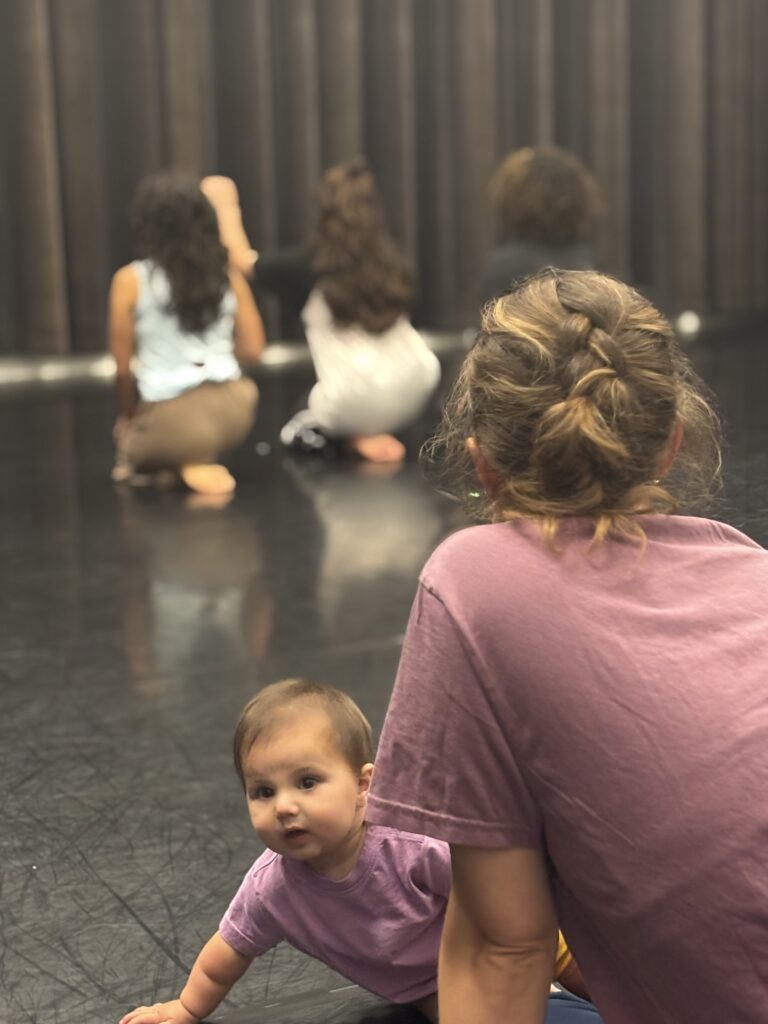
In response, Saxon began to shift her approach, inviting students to look for answers within their own embodiment and encouraging inquiry through play, exploration, and risk-taking. She notes that these are qualities she came to recognize and admire in her infant daughter.
“Let go of what other people are expecting from you and your class,” she says. “Honor where you are in the moment. As an educator, you always have permission to evolve.”
What emerged for Saxon was a different kind of clarity: the ability to uphold teaching values with greater efficiency, without compromising integrity. The guiding question became: “How do I do less but still keep the same core values and principles?” she explains. “It feels more intuitive now.”
Find Your Community
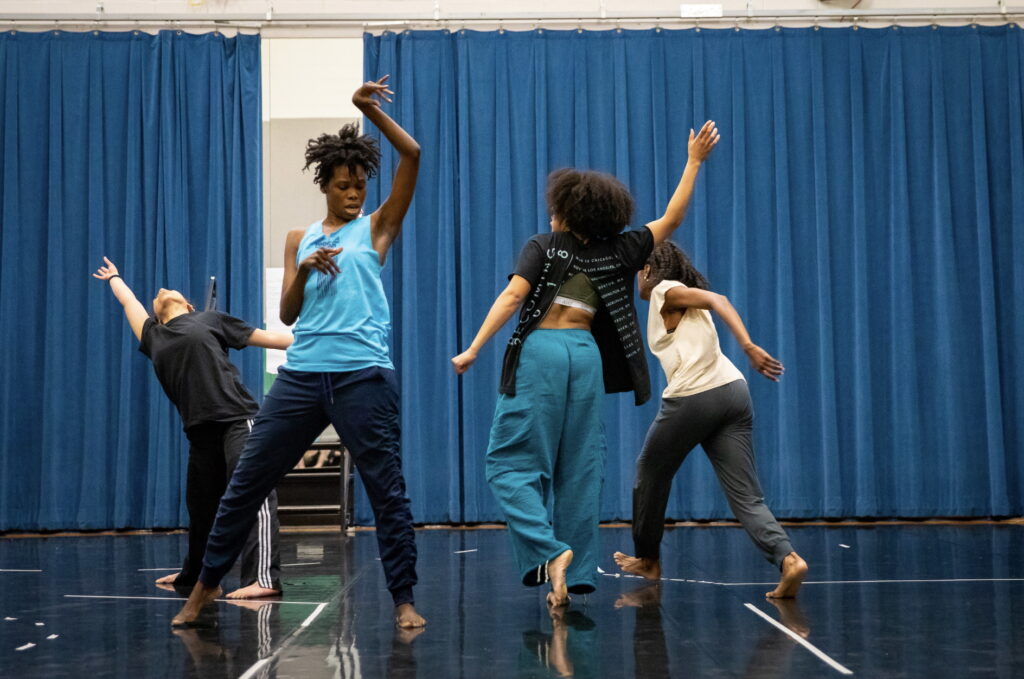
Chanon Judson, a former co-director and dancer with Urban Bush Women and current associate professor at the University of Buffalo, reflects on her early years of motherhood, saying: “I didn’t miss anything. There was a rerouting with motherhood, but it did not eclipse my access to the things I had before. Motherhood fed me as an organizer, educator, and a performer.”
During a dynamic performing career with UBW, on Broadway, and in commercial work, Chanon began a community arts program for children as a way for her and her 3-year-old son to create together. The initiative deepened her teaching practice, centering play, tactile movement, and multiple intelligences—elements that continue to shape her approach today. “It taught me how to honor the different pathways of learning inside any space,” she explains, adding, “There are all kinds of ways to negotiate dreams and childcare. It’s a puzzle. When fear arrives, seek community. If I had extended myself out to the community earlier, I would have felt grounded sooner.”
Studio Support
As much as managing a teaching career postpartum is an individual experience, it also raises a larger question for the spaces dance teachers work in. If motherhood reshapes how dance educators move through the world, then what responsibility do studios and institutions have in meeting them there? In other words, how can dance studios and communities better support teaching mothers during this time?
Much can be learned from UBW’s ethos, where children are embraced as part of the community. Often present in rehearsals and workshops alongside their mothers, the visibility of UBW dancers reflects a space where motherhood and art-making naturally coexist.
Saxon also promotes the importance of creating inclusivity and visibility within a studio’s marketing and communication materials: “A photo featuring a teaching mother with her child, and verbal language that demonstrates respect for an artist who is parenting, makes it clear that parenting is adding to their resumé, not subtracting,” she says.
Campanile also adds that “studios can help by offering virtual options to new mothers,” recalling instances of being able to Zoom rehearsals with her students so she could nurse her newborn from home. She also suggests that studio directors offer flexibility in scheduling to support a mother’s need to nurse and pump during this crucial time.
Ultimately, visual representation matters. Seeing motherhood coexist with teaching reminds us that “motherhood is not a role that needs to be tucked away to uphold professionalism,” says Saxon. It is about offering a variety of options to mothers that normalize and center the needs of both roles; motherhood and teaching.
Redefine Your Success
Balancing teaching and motherhood can feel challenging, but by improvising within your practice, leaning on community, and embracing your shifts in energy, you can begin to redefine what success looks like.
“Mothers need to be told they’re doing a great job,” says Campanile. “There is no applause at the end of the day, so you have to dive in and trust yourself.”