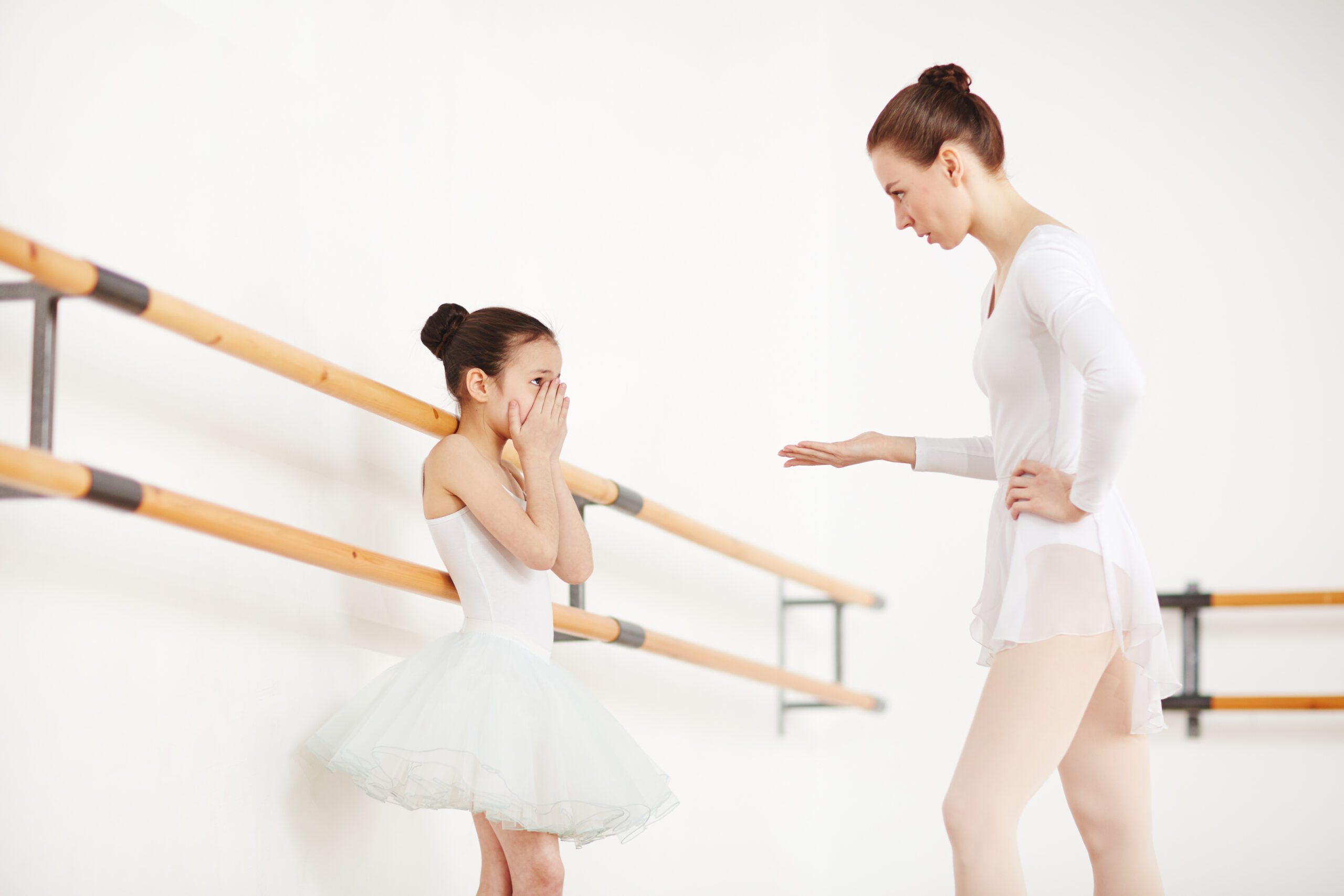
10 Toxic Phrases Heard in Dance Classes (and What to Say Instead)

A dance educator’s most powerful tool is communication. We move our bodies to demonstrate skills and patterns, tap into our imagination to conjure imagery and creative solutions, and vocalize to clarify details and offer feedback.
One of the greatest responsibilities in sharing our art form is to convey information with clear intention, leaving little room for misinterpretation. Of course, no teacher can be expected to speak perfectly at all times, especially given the demands of frequent classes. But it is important to stay cognizant, as students can feel hurt, demoralized, or even damaged by certain words spoken to them.
While often unintended, harmful language remains common, both inside and outside the studio. These words are frequently intended to motivate or inform. But if intentions are unclear or misconstrued, they can harm physical/mental health and foster unhealthy relationships with dance, teachers, peers, or oneself.
Most educators strive to do better for the next generation, to address the challenges, inequities, miscommunications, or harm they experienced or witnessed in their own training. With this in mind, let’s examine several commonly spoken toxic phrases (presented here in no particular order) and explore healthier alternatives, so we can continue building a stronger, more supportive future for aspiring dancers.
“You look good right now.”
Usually intended as a compliment, this broad comment leaves room for misinterpretation. It implies somebody looked bad previously. And if a dancer took unnecessary measures to look a certain way, it could reinforce harmful habits.
A better alternative: It is best not to comment on a dancer’s weight, regardless of intention. If a dancer has professional aspirations and there are concerns about how they look, a qualified nutritionist should be offered for consultation.
“Always give 100 percent.”
While this phrase’s intention may be to inspire greater commitment to one’s practice or perform at maximum energy, it is unrealistic for anybody to remain at their peak perpetually. Saying this can put dancers at risk of injury, overwork, or burnout.
A better alternative: “Pay attention to how much energy is needed here.”
“Nobody is irreplaceable.”
In most situations, everybody is replaceable. Pointing this out in a dance environment reads as a threat. Whether spoken with intention to prepare dancers for a career or to inspire somebody to step up, it still feels demeaning.
A better alternative: “How can I better support you to reach your goals?”
“Don’t be lazy.”
While the term “lazy” means lacking energy, saying this to a student in the studio implies they’re not trying. Whether meant to inspire harder work in class or more energy in rehearsal, or to improve attendance, this phrase lacks nuance and could promote apathy or injury. It isn’t lazy to stay home when sick, mark movement that causes recurring pain, or to leave class early in preparation for a long day of rehearsal.
A better alternative: “I’d like to push you today. Is there anything important to know before I do that?”
“I’m hard on you because I believe in you.”
This phrase is essentially a cover-up for bad behavior. Gaslighting is a form of psychological manipulation that makes one question the validity of how they perceive somebody is acting towards them. A teacher who truly believes in a dancer’s potential and abilities won’t gaslight them.
A better alternative: “I believe in you.”
“You will never be…”
Telling a dancer they will never achieve something they aspire towards isn’t offering a dose of reality. It is mean-spirited, harmful, and has high potential to cause a dancer to quit altogether.
A better alternative: Don’t make assumptions about a dancer’s possibilities. Nobody can foresee the future. The landscape of dance is constantly shifting and evolving. What may have been understood as a culture 5,10, or 20 years ago is unlikely to be the same today or tomorrow.
“You’re going to get out of shape.”
This language is confusing because it is unclear and can imply multiple things. Outside dance, being in shape most often means how one’s body looks. But in our community, this comment may describe body shape or conditioning. Additionally, it is important to acknowledge the human need for rest.
A better alternative: If this comment is about weight—again, don’t say it. Otherwise, learn why a dancer needs/needed time off, then strategize and develop a plan that includes length of rest, progressive conditioning exercises in preparation to return, and a class/rehearsal reentry plan focused on rebuilding technique and strength in class. This not only teaches how to take care of oneself, it brings into perspective the importance of caring for the person before the dancer.
“Why don’t you do it like [classmate]?”
Learning to dance and improving should be an individual process. Verbally comparing dancers is not only bad for the self-esteem of the dancer being called out, it risks creating a negative environment by pitting peers against one another.
A better alternative: “I’d like to offer an example of what I’m looking for.” Then, spread the wealth amongst every dancer in class at some point. Remember, an example doesn’t always have to be perfect; it can offer an opportunity to show a correction in action.
“If you really loved dance, you’d sacrifice everything for it.”
You can love something without giving everything else up. Balance and perspective are two of the most important qualities in a healthy human being. If dance is somebody’s everything, their happiness becomes dictated by skill, casting, and recognition. The key to being a great dancer is having a life outside of dance and bringing that experience and perspective into their artistry.
A better alternative: “I want you to love dance. But I also want you to be a well-rounded person. Let’s figure out a middle ground.”
“You’re lucky to be here.”
Regardless of intention, this disregards the value of an individual over an entity—whether being in the presence of a specific teacher or dancing with a school or company. It negates work already put in to be someplace and may also imply a dancer is ungrateful or unappreciative, without taking a multitude of factors into account.
A better alternative: “You are valued.” So often, dancers feel extremely expendable. Sometimes, a dancer just needs to hear they are appreciated in order to be inspired to push forward.