Warm Up With Ballet Tech’s Artistic Director, Dionne Figgins

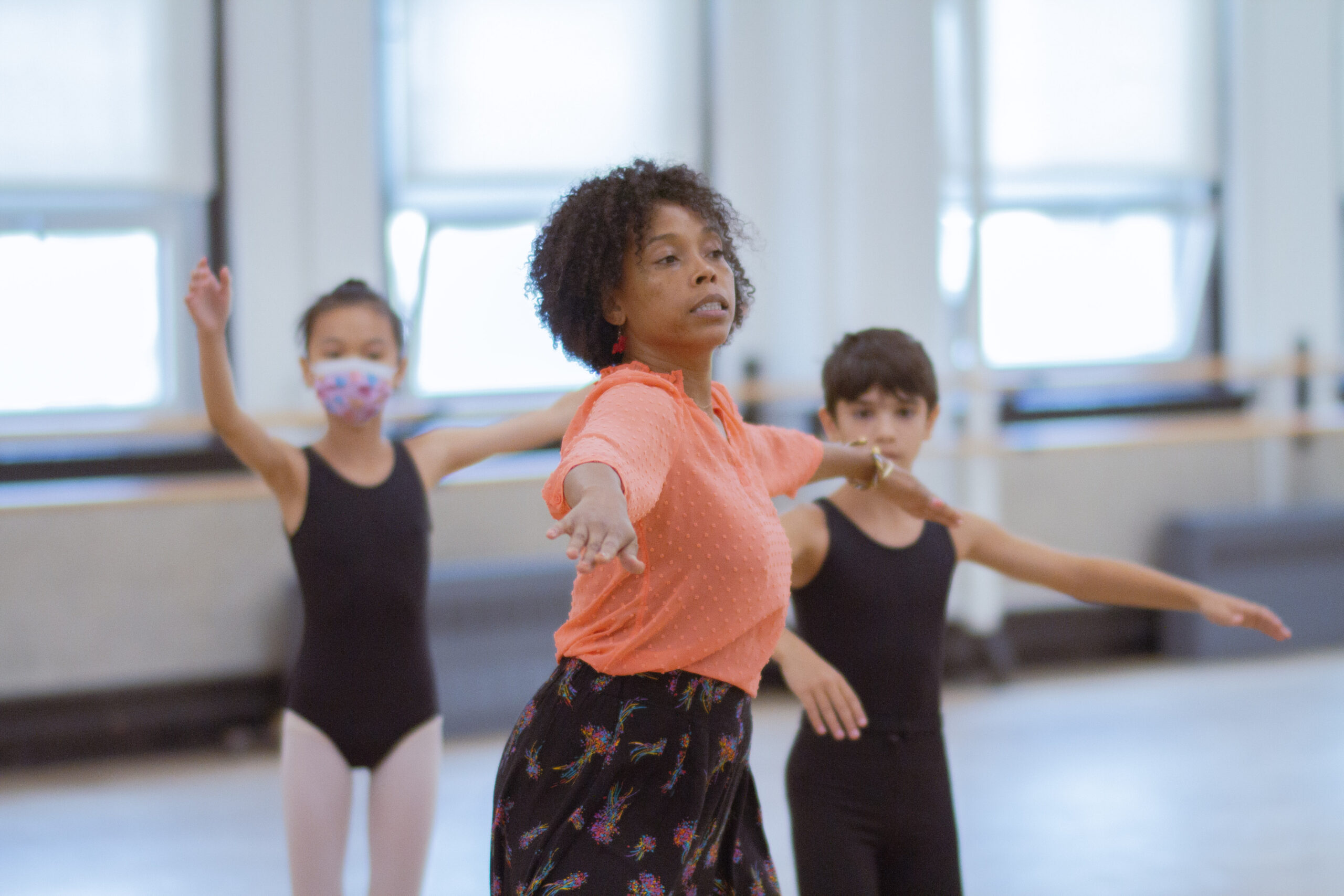
Before her students walk through her studio door, you can find Dionne Figgins in the room by herself. The lights are often dimmed, soft music is flowing through the space, and she is just moving. Sometimes she’s going through her Pilates mat exercises; other times she’s immersed in a full-blown freestyle, but she always takes the time to connect with her body before welcoming any students into the space. When the students arrive, Figgins has already set the tone for the room, and she encourages students to be just as present.
Dance teachers spend their careers reminding their students of the importance of warming up, preparing their bodies for the rigors of dance, but often forget that their own physical and mental preparation is the most important part of creating an impactful rehearsal environment. Teachers are dancers, too, and should treat their bodies like they’d treat their students: with care.

Like many professional-dancers-turned-teachers, Figgins used to think that her years of training were preparation enough. She would run through a few warm-ups, ones she would do frequently throughout her professional career, or pull together a “mishmash” of a few pliés, tendus, and some mat warm-ups. But soon she realized that wouldn’t be enough to sustain her, especially while teaching ballet class and running rehearsals in the same day at Ballet Tech. “I want to dance, to be able to demonstrate and move with my students,” she says, “and I can’t do that without a sense of preparedness before they come into the room.”
This realization led her to invest herself in a daily Pilates practice. Figgins’ daily ritual isn’t just about warming up her muscles; it’s about regulating her mind, which helps her arrive at the rehearsal room with intention. Pilates allows Figgins to center herself and focus on individual areas of the body, while also engaging the body as a whole. This process is meditative for her, and it also reconnects her with her first passion: being a student. “There’s something about being a student that focuses me and allows me to do my best work,” she reflects.
Try Figgins’ Warm-Up Routine
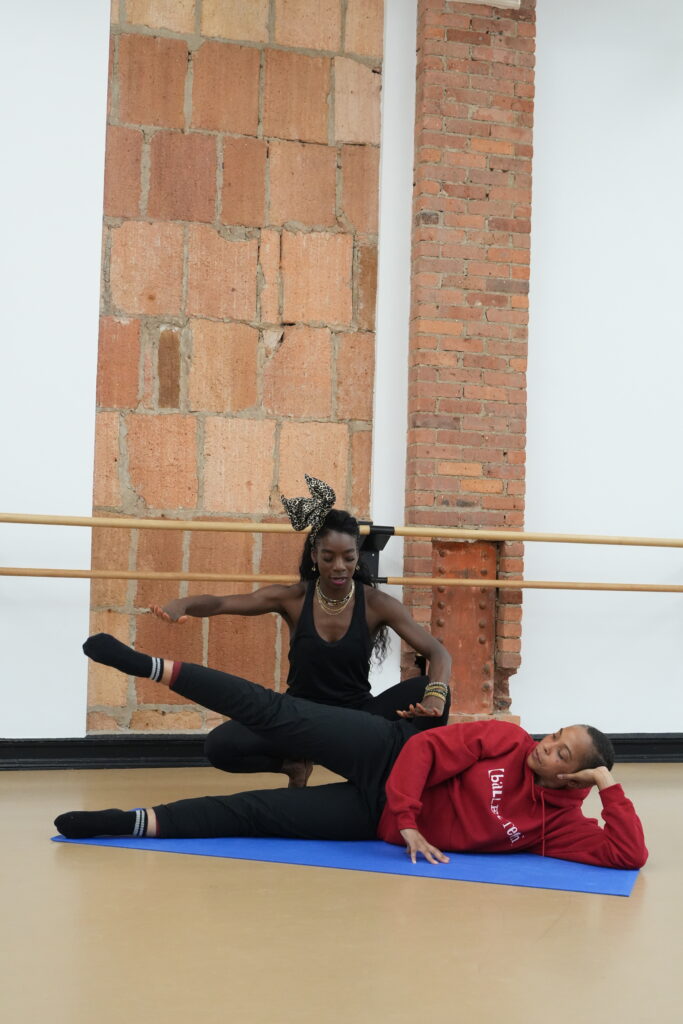
Side-Lying Leg Lift (Version 1)
Starting position: Begin by lying on your side. Extend your bottom leg straight out and bend your top leg in front of you. Support your head with one hand and place the other hand on the floor in front of you for extra core support.
Step 1: Slowly lift the straight leg slightly up and back down. Repeat 5 times.
Step 2: Keep the leg lifted and pulse it up and down without resting it on the floor. Repeat 5 times.
Step 3: Keeping the leg lifted, circle the leg slowly forward 3 times and backwards 3 times
Step 4: Hold the leg lifted for 3 counts and release.
Step 5: Repeat on the other side
Tip: Think of your straight leg as being attached to a small thread that’s pulling up your inner thigh as you lift and lower the leg, and always keep breathing.
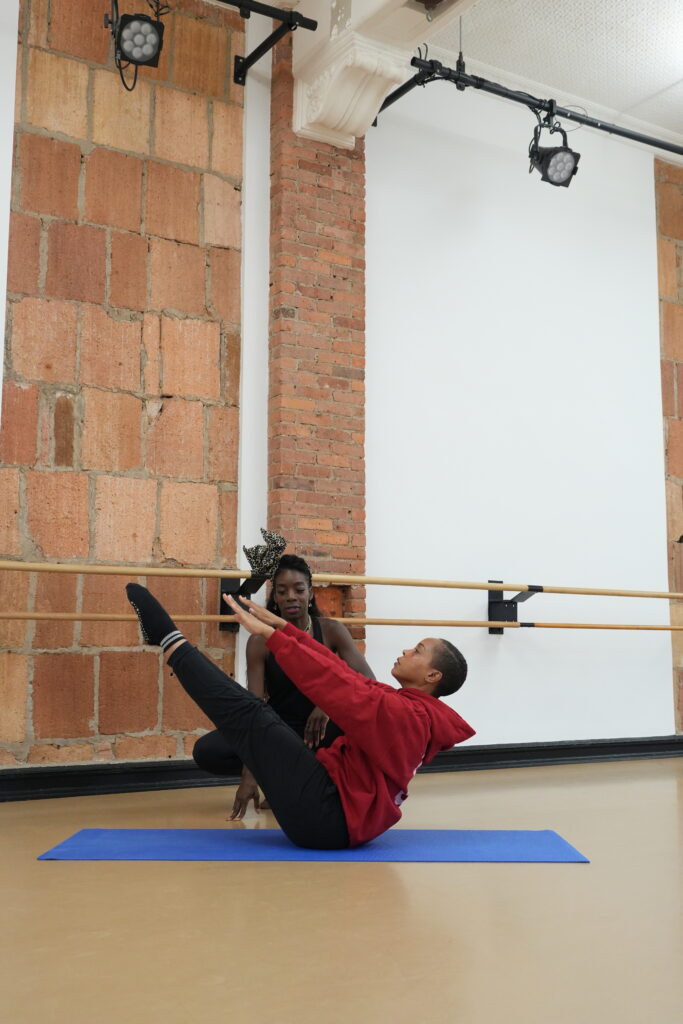
V Sits
Starting position: Start lying completely flat on your back.
Step 1: Peel your upper body up off the mat slowly; at the same time, lift both your legs and arms until your body is in a V position and hold at the top.
Step 2: Roll your body back down, vertebra by vertebra, until you are returned to your original position. Do this 3 times.
Step 3: After the third rep, hold the V position at the top and have someone grab your legs for support. Pulse your upper body slightly up and down 3 times for a more intense core workout.
Step 4: Hold at the top for 3 counts and have your partner let go of your legs. Lower down slowly and with control.
Tip: Raise and lower your body very slowly and carefully; feel each bone lifting and returning to the floor. This exercise is all about body control.
Side-Lying Leg Lift (Version 2)
Starting position: Begin by lying on your side and extend both legs straight out. Support your head with your hand and use the other hand to press into the floor for extra core support.
Step 1: Lift your top leg slightly, then lower it back down while keeping your hip flexors relaxed. Repeat this action 4 times.
Step 2: Lift your top leg slightly again and hold it there, then slightly pulse it up and down 3 times.
Step 3: Hold your leg at the top and flex and point your foot 3 times.
Step 4: Keeping your foot pointed, make 4 large backward circles with the foot, followed by 4 large forward circles.
Step 5: Lower your leg until your top and bottom legs are parallel, flex your foot, and push the leg forward into a lying-down battement. Then swing the leg back around, point the foot, and position yourself into a lying-down arabesque. Repeat this 3 times.
Step 6: With your foot pointed and still in the arabesque position, pulse the leg up and down 4 times.
Step 7: Repeat on the other side
Tip: Keep your movements small and controlled to properly target the inner-thigh work.
Watch Figgin’s training with her Pilates instructor, Marcia Meade, in the warm-up video below: