Why Friendships Matter, According to Dance Teachers and Students

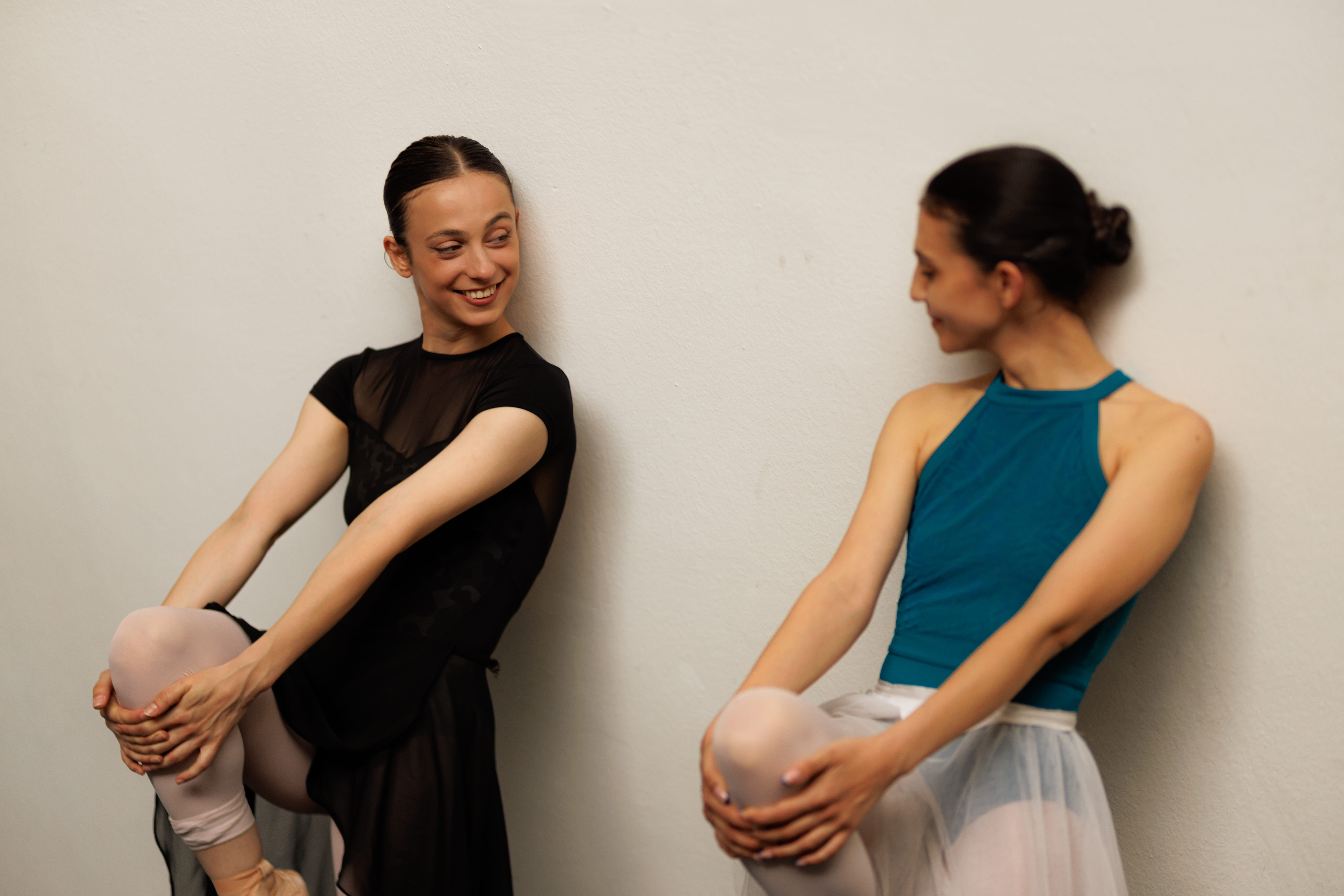
“Dance friendships are the best friendships,” says Keesha Beckford, Dance Lab Program liaison for the Grainger Academy of The Joffrey Ballet. “When you’re sharing an experience, especially an experience where it’s your whole self––physically, emotionally, and intellectually––you relate to people differently. It’s hard to translate that to someone who doesn’t have that kind of dedication or devotion.”
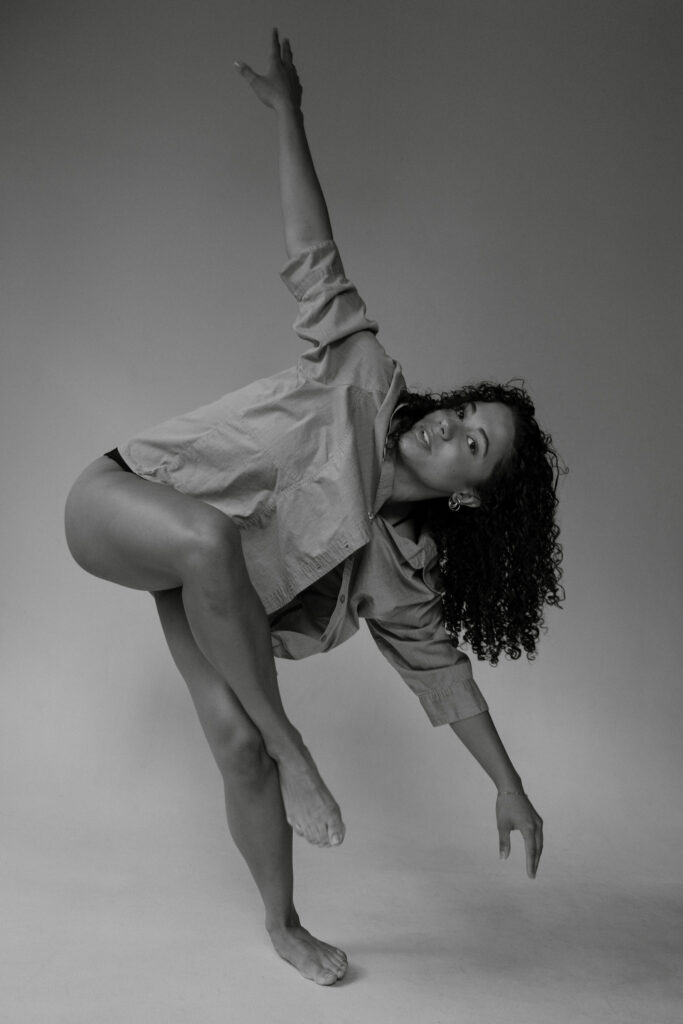
Whether it’s doing a triple pirouette or a Horton lateral T, dancing focuses our attention on an aspiration, and taps into transformative pursuits that solidify deep bonds.
Beckford’s observations are affirmed by research conducted by Amelia Salter, an undergraduate student at Northeastern University’s campus in New York City (formerly Marymount Manhattan College). During a course called Critical Approaches to Dance, Salter asked the question “Why are so many dancers friends with other dancers?” before reading theories about social identities and interviewing classmates. Her findings not only highlighted how friendships improve confidence and well-being, but they also revealed what teachers can do to support students’ healthy and balanced lives.
“I noticed that social tendencies are influenced by the structures and cultures of dance training,” Salter says. “I found that when teachers prioritize artistic excellence without fully acknowledging dancers as social individuals with emotional and interpersonal needs, dancers tend to be so drained they lack the motivation––or energy––to nurture friendships.”
Salter’s interviews confirmed these realities: “Students stated they have missed their own graduation, family time, partner’s birthdays, holidays, weddings, and time with friends. It’s so normalized for young and older dancers to miss important gatherings because that’s ‘the lifestyle we live.’ ”
Diving deeper into these time constraints, Salter interviewed a new student at her college as well as a recent graduate. Then a freshman BFA student, Mia Pichardo said, “My dance schedule is quite intense, so if some of my friends aren’t in class or rehearsals with me, then there’s a good chance I will only get to see them once a week, even though we go to school together and live in the same place.”
Marymount Manhattan College alum Dan Doran (class of 2025), added, “It’s an interesting thing, because you spend so much time with these people as dancers that work becomes the time to ‘socialize,’ leaving no energy or ability to socialize outside of the studio with anyone, dancer or otherwise.”
“Dan’s response shows that he now considers his ‘socializing’ a part of his work inside the studio,” Salter noted. The social, physical, and mental energy that dancing requires can be all-consuming, leaving little time to give others attention.
Salter also considered the work of scholars who have investigated how groups are formed based on shared interests. Social identity theory, developed by Henri Tajfel and John Turner, explains that people form their identities based on groups they belong to. These groups can provide a sense of community and support, but they can also lead to distance from other social circles.
“This explains why dancers often feel most comfortable with one another, as they understand the experiences of prioritizing rehearsals and performances over social events. But what about those class settings where students feel discouraged from interacting?” asks Salter. “Teachers could be creating more supportive and holistic environments that foster not only artistic excellence, but also personal well-being, social development, and meaningful connections.”
Rebekah Chappell, on faculty at Virginia Regional Ballet and Old Dominion University, agrees with Salter’s research: “At the heart of my teaching is the formation of community in order to create supportive, caring environments where students can thrive.” Chappell builds ways to scaffold “togetherness,” noting how “this creates a space where students are not only thinking about themselves as movers, and artists, but also thinking about the ensemble.”
Chappell’s approaches include arriving before a class starts so she can be with students in a lobby or studio to build togetherness. This also gives her time to notice who has a friend circle and who might be isolated. She sets aside class time for younger students, ages 5 through 8, to tell her something that happened in their week. “By building a relationship with me first, they get to know each other. Then I start to notice, as the year goes on, that they’re interacting with each other more and more. Plus, with little dancers, class time can be interrupted by students wanting to tell you something. When they know there’s this specific time in class to share, it helps them focus and be more present.”
Christina Carminucci, a New York City–based tap dancer and educator, notes: “Unless your goal is to have a completely solo career––and even then you’ll still need relationships with producers, lighting designers, venue staff, and other collaborators––friendships are essential! Not only do they provide emotional and mental support, but friendships often lead to opportunities. I think the word ‘networking’ can sometimes feel transactional or forced, making dancers feel like they need relationships with certain people. Instead, I encourage dancers to focus on building genuine connections.”
Carminucci has observed how authentic relationships tend to flourish. In her own career, the vast majority of her work has come through friends and mentors. “Equally important, friends help us grow,” she adds. “They’re the people who will tell you when you’ve missed something, offer constructive feedback, celebrate your successes, and push you to reach a higher standard. Good friends help bring out the best in each other.”
Salter agrees that teachers who foster students’ well-being are vital. Based on responses from interviewees, she realized that “dancers are not simply choosing dance over social interaction; rather, they are navigating a system that often requires extraordinary sacrifices of time, energy, and emotional labor.” Then a senior BFA student, Ashton Eatchel told Salter: “I don’t really have friends outside of dance to be honest. Dancing takes up a lot of time, so when I’m not dancing, I’m resting. I think connecting with dancers tends to be easier because we have more to talk about, but I’ve been able to connect with nondancers, as well. Nondancers sometimes don’t have a full understanding of what it is we do, so it can tend to be pretty surface-level unfortunately. Plenty of times I’ve felt misunderstood and even bullied for dancing, but it’s all been part of my growth as a human.”
Kelly Stolar, a dance teacher and the artistic director of Tap Essentials in Erie, Pennsylvania, says her role is “to create a positive, respectful environment where all students feel comfortable learning and progressing. I do not tolerate behavior that is disrespectful or exclusionary toward others.” While she does not involve herself in students’ friendships, she does “encourage interaction by changing lines and classroom placement, so dancers will work alongside different classmates. This helps build confidence, encourages mutual respect, and allows students to become more comfortable with one another.”
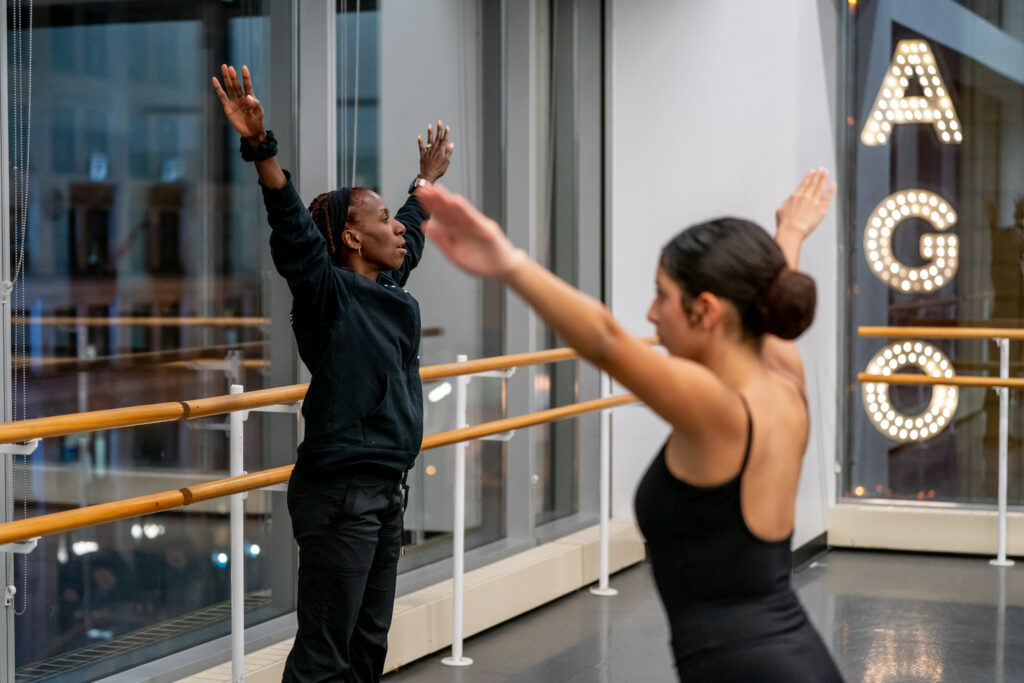
Similarly, at the Grainger Academy of The Joffrey Ballet, Beckford makes a priority of nurturing interaction and collective learning. When Beckford has a student demonstrate a phrase, she asks classmates, “Why was this person asked to demonstrate? What elements or concepts are they embodying?” Beckford says these prompts emphasize opportunities to learn collectively, rather than a teacher being the only authority or “thinker” in a studio. Beckford reflects, “These moments help mitigate students’ feelings of ‘This teacher doesn’t like me’ or ‘I am a bad dancer.’ ”
An element that distinguishes Beckford’s classes is her attention to designing environments where students are expected to respect and support one another. “I want my classes to be a community where students can and want to inspire each other. I want everybody to feel welcome, because we’re here to learn how to develop and share ourselves as artists, which we can’t do if we don’t feel comfortable.”
Karen Gayle, a Horton teacher at Montclair State University, The Juilliard School, and The Ailey School, says a simple exercise can reap multiple benefits: “One thing I always do for my classes is set aside a few minutes at the start of each month to do a circle. It doesn’t have to be long, and it doesn’t have to be a serious topic, but a quick go around the room asking each student to share their favorite ice cream, favorite musician, or the last performance you saw. Not only does this break tension and allow dancers to get to learn something about one other––and about themselves––it also humanizes the faces in the space and helps in discovering commonalities.”
Chappell shares a similar approach, noting that when “the focus is not just on ourselves, but how we are dancing with others, that’s what makes great storytelling. We want dancers onstage who are relating meaningfully to other people, whatever narrative or expressivity they’re inhabiting.” She cites writer adrienne maree brown, who has said “What we pay attention to grows,” and Chappell frames affirming each other as a practice that grows a supportive community. “When they’re looking at a classmate through a lens of success, it’s also easier for them to look at themselves through that same lens.”
Equally important, Chappell finds that togetherness can be modeled among teachers. This doesn’t mean that teachers need to be best friends, but rather “being mindful about the care we extend our colleagues, and the ways that we model figuring things out together, respectfully and collaboratively,” says Chappell. “Making that visible is also part of the work. I am really interested in how faculty model support for one another, so students know how to care for one another.”
Dr. Elisabeth Motley, an associate professor at Northeastern University’s New York City campus, extends this suggestion: “Dance schools and organizations should consider developing mission statements that incorporate values of collectivity and care amongst their communities. We know that the dance field continues to reinstate hierarchies that often pit dancers against one another. Teachers and facilitators in positions of power should consider what dancers may gain from working together rather than competing and striving for individual success. For example, dance artists who learn from different perspectives that may improve their approach to practice. Community and collectivity are integral support systems in a field that is increasingly challenging to develop a career in.”
Salter agrees with these teachers’ perspectives, saying: “Dance institutions and educators have an opportunity to foster spaces that encourage balance, support, and social well-being alongside technical achievement. Dancers should not have to choose between artistic success and meaningful human connection. Recognizing dancers as whole individuals rather than solely performers allows for a more holistic approach to education—one that values not only what dancers can produce onstage, but also who they are beyond it.”