Office Hours With Hari Krishnan

For Dr. Hari Krishnan, teaching and learning are inseparable. In his course at Wesleyan University, Queering the Dancing Body, students move, view, discuss, write, and create as they encounter queer dance artists from across the globe. It’s the kind of classroom where personal reflection meets academic inquiry—and where, Krishnan says, “the line between educator and artist” begins to dissolve.
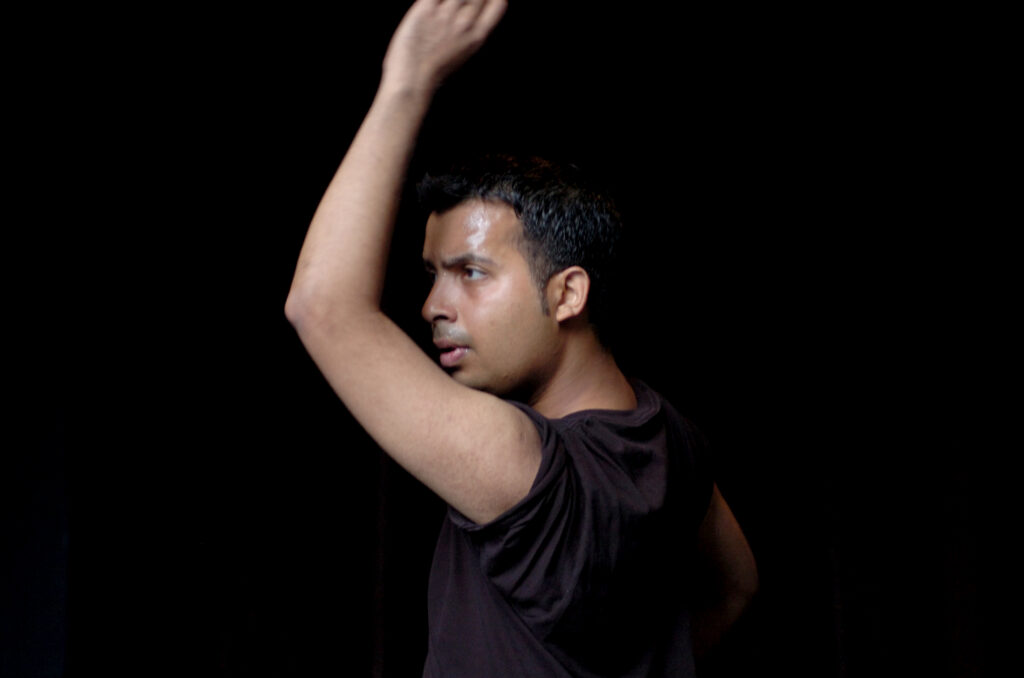
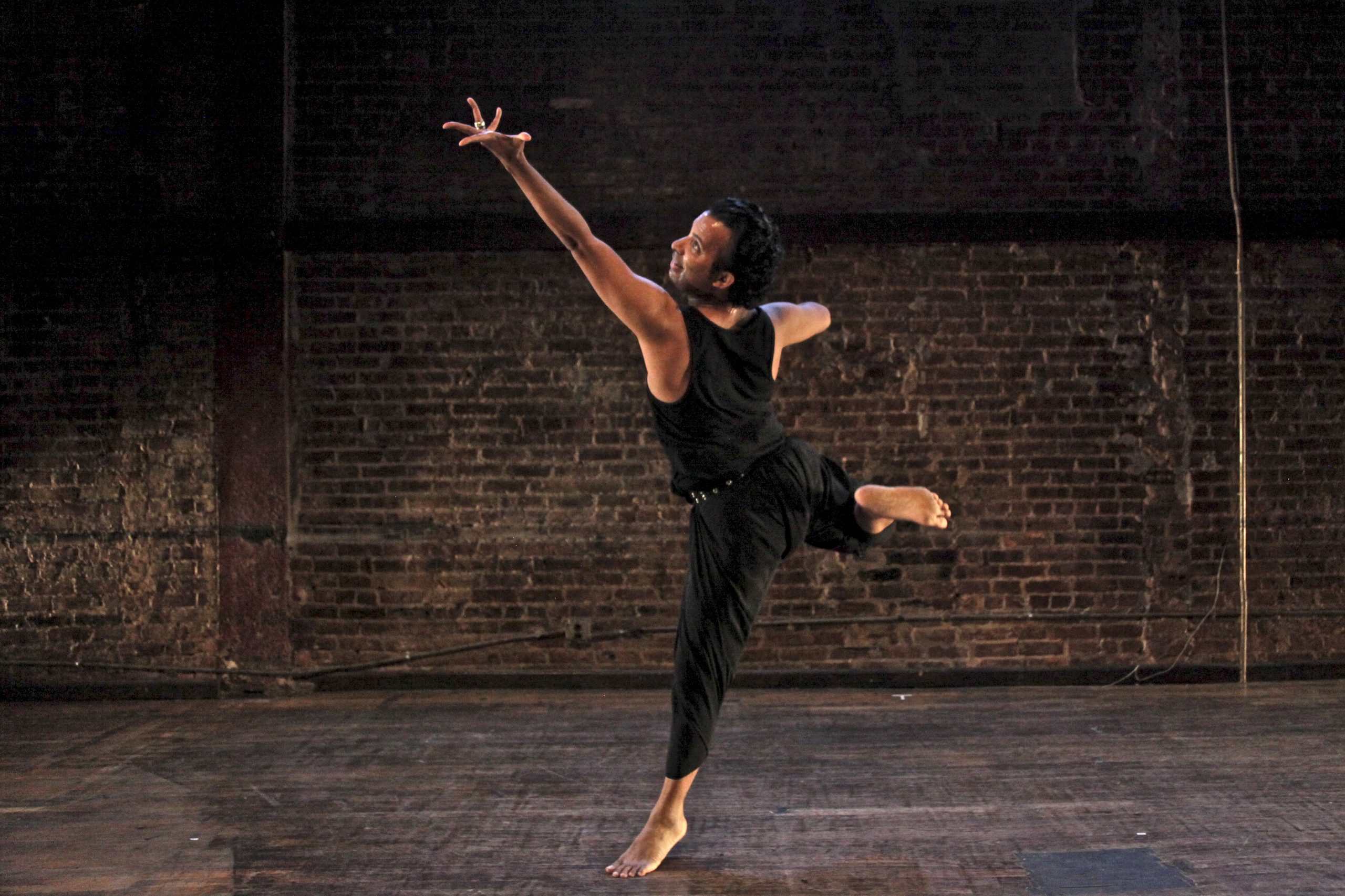
That blurring of boundaries extends across Krishnan’s career as a dancer, a choreographer, a scholar, and an educator. Krishnan, a professor of dance and feminist, gender, and sexuality studies at Wesleyan, as well as co-chair of Global South Asian Studies and artistic director of New York City–based company inDANCE, has built a body of work that interrogates the histories and accepted narratives surrounding bharatanatyam and contemporary dance from global perspectives, particularly through questions of queerness, caste, class, colonialism, and cultural identity. His scholarship—including his 2019 book, Celluloid Classicism: Early Tamil Cinema and the Making of Modern Bharatanatyam—and his often transgressive choreography recover obscured histories while asking how tradition can remain a living, contemporary practice. In the classroom, that same inquiry becomes pedagogical: Krishnan invites students into what he calls the “intricate, messy realities” of history while creating space for them to make knowledge—and movement—their own.
Dance Teacher spoke with Krishnan about challenging assumptions in the classroom, blurring theory and practice, and why a little disruption can be good for learning.
What makes a dance class truly successful—for both the student and the teacher?
When there is continuous, 360-degree cyclical engagement—when students internalize and adapt the material, making it uniquely and authentically their own.
What have you found most rewarding—and most challenging—about supporting today’s generation of dancers?
My greatest joy lies in weaving the body and movement into a larger ethos of a more curious human experience, where dance speaks directly to urgent social and political realities of our world. It is always challenging to catch the fleeting attention of young minds in the classroom and ground them in the present moment.
Do you have a role model in the dance education field? If so, can you talk a bit about how and why they inspire you?
Studying with my professors Penelope Hanstein and Linda Caldwell was a turning point in my academic development. They sparked a breakthrough realization: Choreographing a dance and writing a research paper share virtually the same process. Unlocking this identity as an artist-scholar has become foundational to my work as an educator.
What’s the best—and, perhaps, the worst—piece of advice you’ve ever been given about teaching?
Best advice received: Always value the process over the end product. Worst advice: Those who can’t do, teach.
Is there one thing that has become a signature of your teaching?
Releasing your inner diva! Everyone’s a star in my class.
Many of the themes you explore—including queerness, caste, class, and cultural identity—invite challenging conversations. How do you create classroom environments where students feel prepared to engage thoughtfully with those conversations?
Queerness, caste, class, and cultural identity do not exist in isolation; together, they form a complex, collective humanity. In my classroom, I try to activate this shared humanity by interrogating, dismantling, and reshaping critical modes of inquiry into meaningful new paradigms students can engage with. True knowledge building must be both intentionally cumulative and productively disruptive.
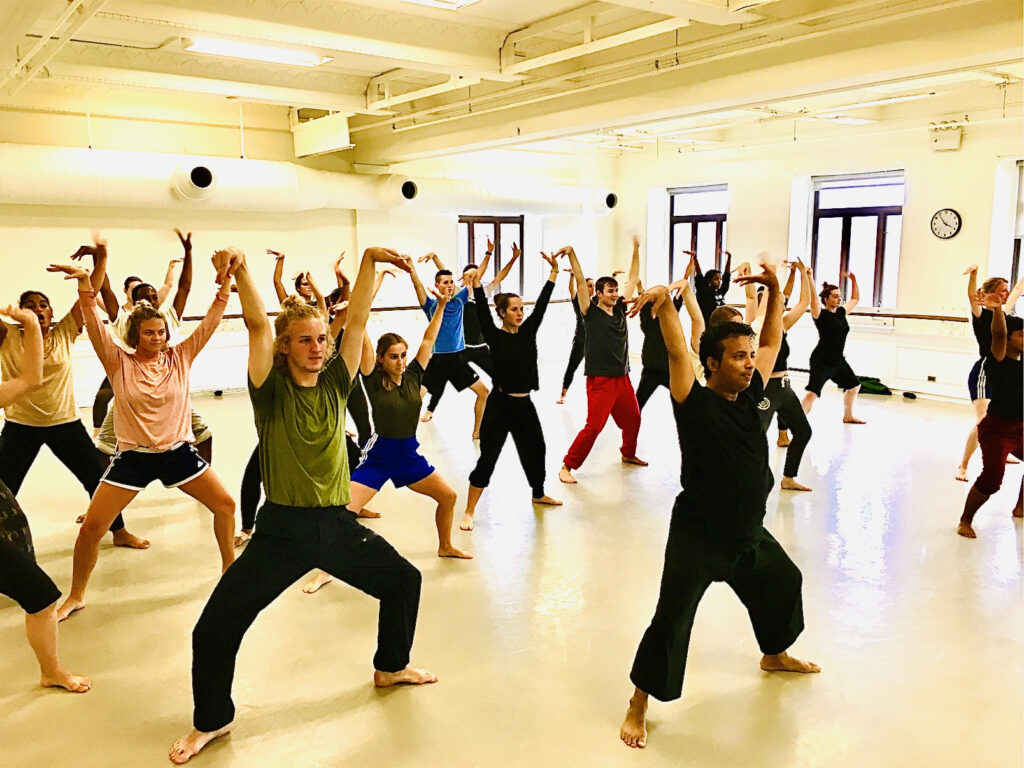
Wesleyan University’s Navaratri Festival [October 8–11] is rooted in the preservation and celebration of classical Indian arts, but Wesleyan has also expanded its programming to question and broaden the classical canon. How do you navigate that balance between preserving tradition and challenging ideas about what (or who) belongs within that tradition?
At Wesleyan, the Navaratri Festival operates within a progressive liberal arts environment. Here, artistic creation and performance are celebrated not merely as preserved cultural heritage, but as dynamic, living practices that remain accessible, relevant, and contemporary while being respectful of their historical “roots.” For example, pre- and post-show talks and Q&As help demystify and reassess clichéd—and often exoticized—assumptions of these “classical” art forms for the students and New England/American audiences.
Has leading your company, inDANCE, influenced the way you mentor dancers?
My work with inDANCE is deeply integrated with my teaching. Liberal arts education requires an inclusive environment where all students can safely explore technical skill and improvisation without judgment. To bridge academia and the field, I regularly host my company dancers as guest teachers and offer internships for students seeking professional development with inDANCE.
What do you think dance education is doing particularly well right now, and where do you see opportunities for growth in the years ahead?
Dance education is expanding more rapidly than ever today. Navigating our complex world requires educators to stay current with developments—not only in dance pedagogy, but also in broader global culture and the transmission of knowledge across disciplines. A big-picture discourse is absolutely necessary. Dance education today must always connect movement with critical history, contemporary society, evolving AI technology, and lived experience. Even amid these challenging times, I stay hopeful by building collaborative spaces centered on empathy, kindness, generosity, and compassion.
What message would you like to leave with today’s dance educators?
Teach, teach, or else we are lost!
Dr. Krishnan’s Reading List
Bhabha, Homi K. The Location of Culture. London: Routledge. 2004.
Muñoz, José Esteban. Cruising Utopia: The Then and There of Queer Futurity. New York: New York Press. 2009.
Soneji, Davesh. Unfinished Gestures: Devadasis, Memory, and Modernity in South India. Chicago: University of Chicago Press. 2011.
Taylor, Diana. !Presente!: The Politics of Presence. Durham: Duke University Press. 2020.
Wong, Yutian. Choreographing Asian America. Middletown: Wesleyan University Press. 2010.