The 250-Year Legacy of E.T.A. Hoffmann and His Influence on DanceBy Stephanie Kramer

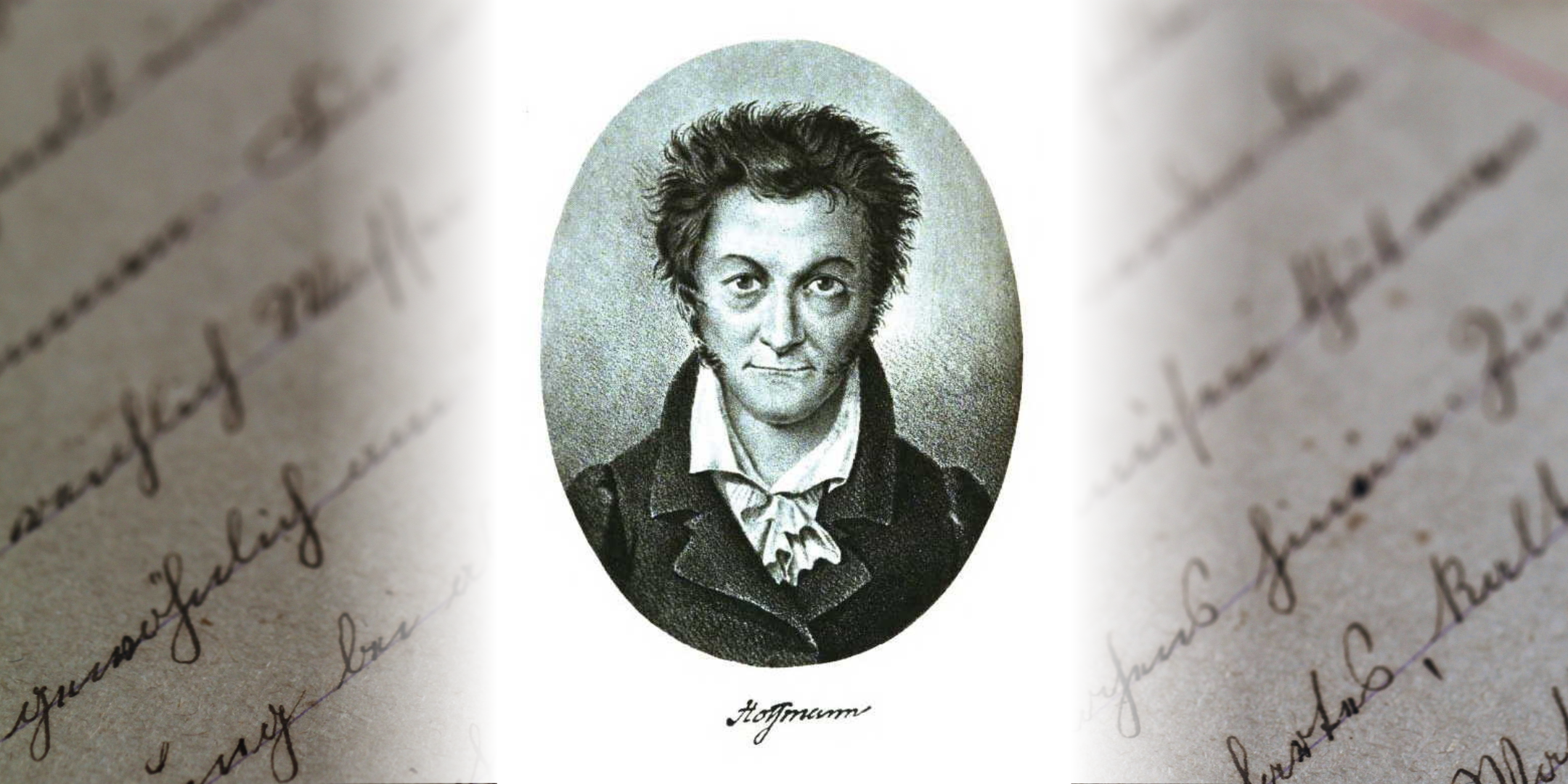
In the dance world, E.T.A. Hoffmann (1776–1822) is best known as the author of The Nutcracker and Coppélia, two staples of the ballet repertory. But he was more than an inventive storyteller: He was also a lawyer, composer, painter, conductor, and music critic. Hoffmann’s eerie and fantastical stories have been in print for 250 years and continue to inspire dancers and artists to this day.
E.T.A. Hoffmann was born Ernst Theodor Wilhelm Hoffmann in Königsberg in the Kingdom of Prussia. Coming from a musical family—his father played the viola da gamba, his aunt played the lute, and his uncle the piano—Hoffmann learned to play the piano, violin, and harp, and dreamed of becoming a composer.
Although he identified as an artist, he reluctantly chose a more conventional career as a lawyer, following in his family’s footsteps. While he felt “confined in the legal treadmill,” his career also took him to cities like Berlin, where he wrote his first play and took classes in composition. But his artistic ambitions were cut short when he was transferred to Warsaw, where he met his wife, Maria (“Mischa”) Thekla Michaelina, in 1803. The couple had a daughter in 1805, named Cäcilia, after the patron saint of music. Tragically, she died two years later.
Hoffmann’s life took another sudden turn after Napoleon invaded Warsaw and he lost his job. Refusing to work for the French Empire, his prospects were dim. He applied to the Theater of Bamberg (now known as the E.T.A. Hoffmann Theater Bamberg) in Germany and was unexpectedly hired as its music director. He worked there for several years before moving to Leipzig and Dresden, giving music lessons and becoming the musical director of an opera company. He also wrote a monumental review of Beethoven’s fifth symphony in 1810, without hearing the music. [He worked from the score alone.]
Hoffmann was a huge figure in German Romanticism, which rejected modernity and the scientific thinking of the Enlightenment. A theme running through his uncanny and sometimes gruesome works is “the discrepancy between surface reality and the mysterious depths beneath.” Widely read in the 19th century, his works inspired musical compositions by Robert Schumann and Jacques Offenbach, who wrote the opera Tales of Hoffmann.
But making a living remained a challenge, and in 1814 he and Mischa moved to Berlin, where he rose to senior judge while trying to reinvigorate his music career. In the meantime, Hoffmann had made a name for himself among artists and intellectuals, and his stories grew so popular that he was under constant pressure from publishers to produce more of them.
In 1816, he wrote The Nutcracker and the Mouse King, which was considered too frightening for children. The lighter, sweeter retelling by Alexandre Dumas from the 1840s was the book used for the ballet, which premiered in 1892 to music by Pyotr Ilyich Tchaikovsky, with choreography by Marius Petipa (finished by Lev Ivanov). But some scholars suggest that the forward-thinking Hoffmann was simply ahead of his time: He recognized that children have a rich—and often terrifying—imaginative life that they feel adults don’t comprehend. The Nutcracker offered them a way to overcome their fears.
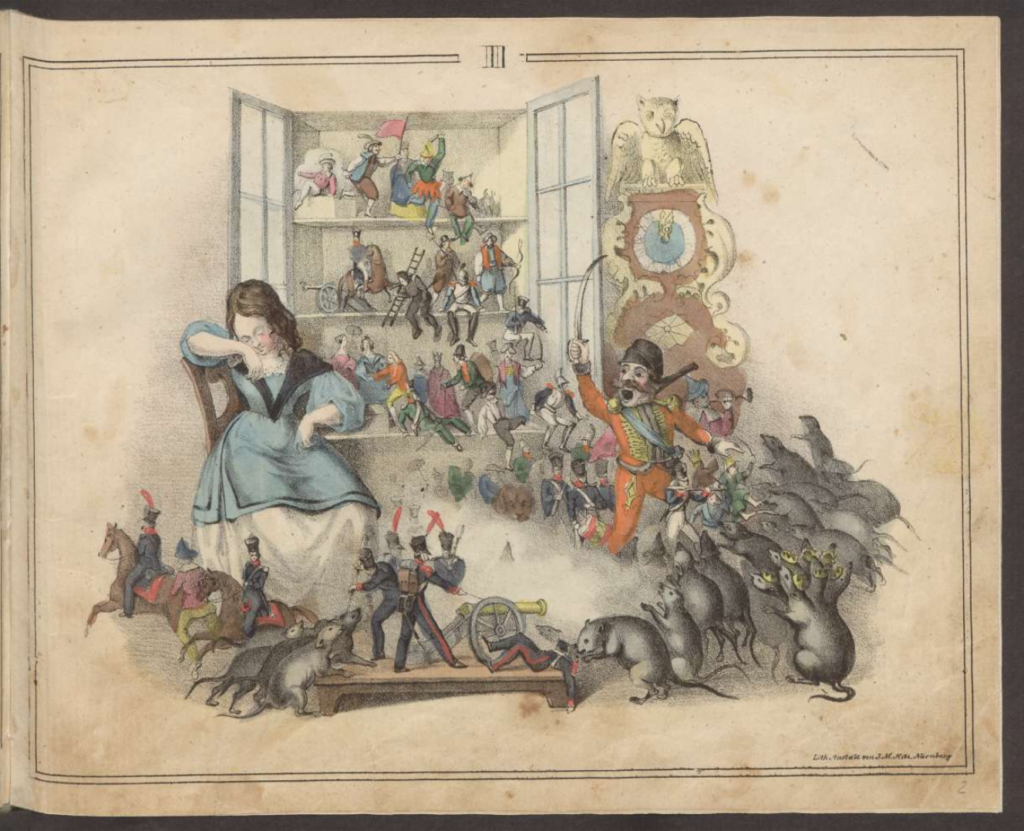
The story of The Nutcracker essentially follows Marie as she makes the journey from childhood to adult responsibility. But the original is stranger and more unsettling: the family is named Stahlbaum (meaning “steel tree”) rather than Dumas’ Silberhaus (“silver house”); and godfather Drosselmeier is a mysterious character who—like Hoffmann—leads a double life, as a judge and an eccentric inventor of toys. Hoffmann’s message was that we should not accept society’s reality, according to scholar Jack Zipes, but instead stay in touch with childlike imagination. Or as George Balanchine put it: “Actually, it’s not a dream. It’s the reality that Mother didn’t believe.”
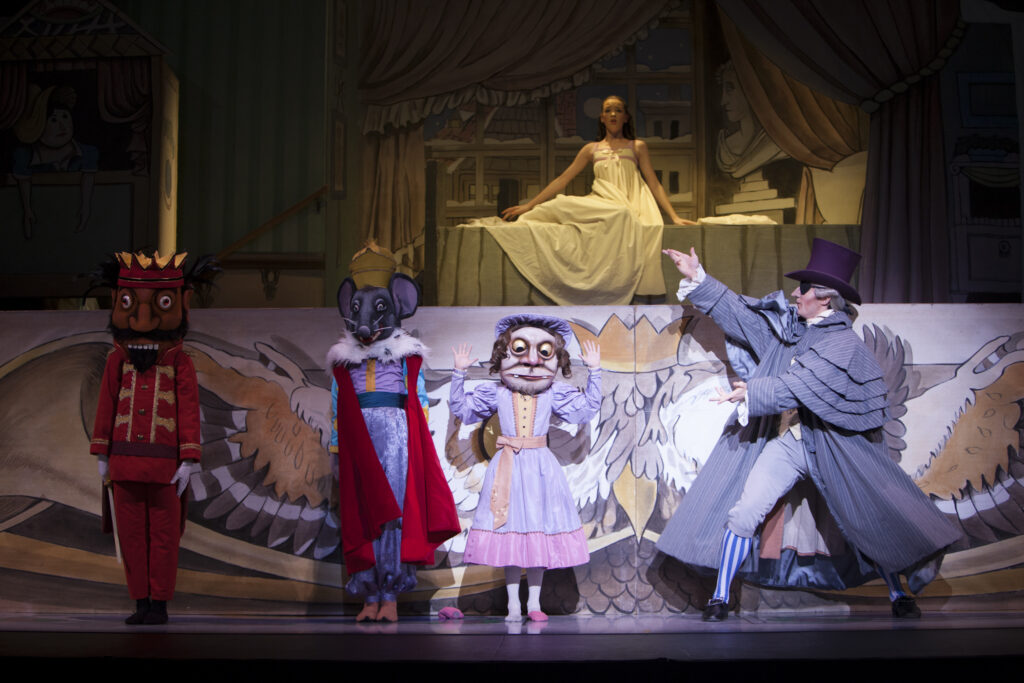
In 1983, Pacific Northwest Ballet’s Kent Stowell and Francia Russell wanted a fresh take on the holiday classic and reimagined a Nutcracker that would be more than merely a charming diversion. They collaborated with Maurice Sendak (author of Where the Wild Things Are), whose spooky sets and costumes evoked a menacing atmosphere and added an element of danger to Marie’s adventures. Their ending also diverged from traditional versions: Instead of Marie waking and realizing it was all a dream, the audience is left guessing. A massive success, it became world-famous and ran for 33 years before being retired and replaced by a new production of Balanchine’s Nutcracker.
Less often performed, Coppélia is another audience favorite and perhaps ballet’s greatest comedy. Choreographed in 1870 by Arthur Saint-Léon, its beautiful melodic score by Léo Delibes paints a sunny atmosphere. The charming story revolves around an evil inventor and caster of spells named Dr. Coppélius who creates robot-like dolls, one of which—his daughter, Coppélia—he intends to use to lure the unsuspecting Franz away from his fiancée Swanilda. Modern versions are only loosely based on Hoffmann’s bizarre story “The Sandman,” a sinister tale of genius and madness that was more horrific than comical.
Some scholars believe the dark undercurrents in Hoffmann’s stories arose from his own difficulties and inner conflicts; his contemporaries described him as having a “restless,” “unsettling,” and “uncanny” presence. Hoffmann died in 1822 at the age of 46.
Today his works are read worldwide and have been translated into numerous languages including Japanese, Yiddish, and Esperanto. To mark his extraordinary achievements, he is featured on German postage stamps this year, and exhibitions are being held in his honor at museums across Germany and in Paris.
Additional Resources
Books:
101 Stories of the Great Ballets, by George Balanchine and Francis Mason. Anchor, 1975.
E.T.A. Hoffmann, by Ritchie Robertson. Reaktion Books, 2025.
The Golden Pot, by Peter Wortsman. Archipelago, 2023.
The Wounded Storyteller: The Traumatic Tales of E.T.A. Hoffmann, by Jack Zipes. Yale University Press, 2023.
Article:
“The curious case of E.T.A. Hoffmann,” by Anna Ballan. The New Criterion, November 20, 2025.
Online sources:
Bamberg collection (in English): digital.bib-bvb.de/collections/SBB/#/collection/DTL-1753
E.T.A. Hoffmann Portal (German only): The largest collection of books, illustrations, and images in Germany. etahoffmann.staatsbibliothek-berlin.de/
History Quiz: E.T.A. Hoffmann
- What was E.T.A. Hoffmann’s day job?
- Who was his favorite composer?
- Which instruments did Hoffmann play?
- True or False: E.T.A. Hoffmann was a musician, music critic, caricaturist, writer, and conductor.
- How do his stories, The Nutcracker and Coppélia, differ from most adaptations for the ballet stage?
- Which theater hired him as music director in 1806?
- Hoffmann wrote a famous criticism of which piece of music?
- Which character in The Nutcracker is based on Hoffmann?
- Name three languages that his stories have been translated into.
- True or False: He is on the German euro coin.
Answer key:
- lawyer
- Mozart
- piano, violin, and harp
- True
- They are darker, more mysterious, eerie, and sometimes horrific.
- Bamberg Theater
- Beethoven’s fifth symphony
- Godfather Drosselmeyer
- Any of these (and others): English, Yiddish, Japanese, Esperanto
- False. He is on a German postage stamp.