
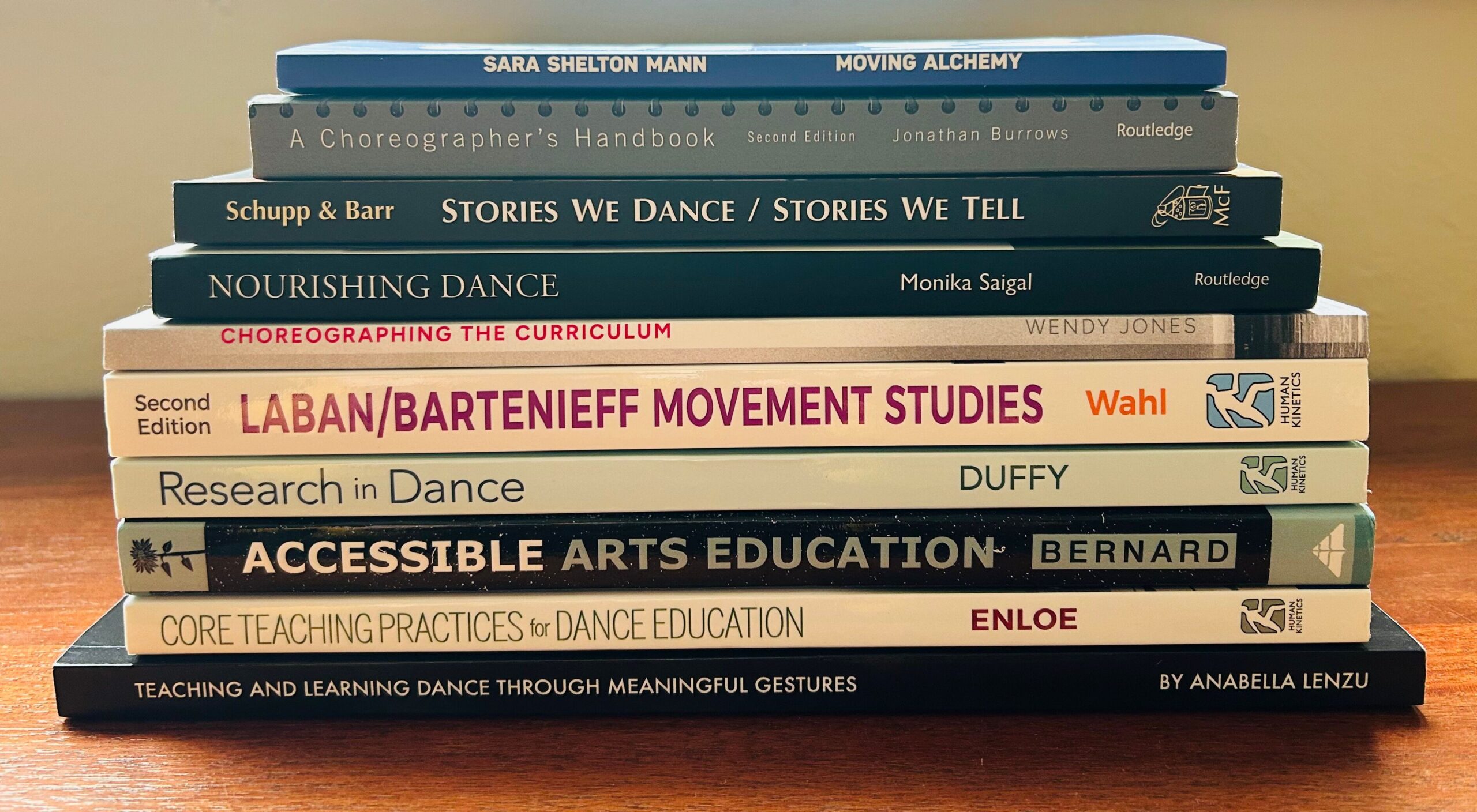
13 Dance Books to Inspire Your Teaching This Summer

Summer offers dance educators the chance to turn the page on fresh ideas, whether through personal reflection, new classroom resources, or a book club with colleagues.
It’s the perfect time to dive into a compelling collection of new books on dance pedagogy—the art, craft, and intention behind how we teach.
Below, we’ve selected 13 titles that explore timely topics, including teaching practices, equity, access, and the future of dance education, offering inspiration for educators at every stage of their careers.
Reference and Reflection
The four titles listed here are tailored towards seasoned educators looking for a book or two to encourage reflection, or a new spin on a familiar theme or lesson plan.
Anabella Lenzu’s Teaching and Learning Dance Through Meaningful Gestures has been 11 years in the making. A generous offering based on Lenzu’s 35-plus years of teaching, it is a great read for teachers well on their career paths. The book contains plentiful topics and questions for pedagogical reflection, plus activities to bring into the classroom. Lenzu dives into anatomy in detail, and inspires a moment for experienced educators to review and refresh on the material.
For educators teaching at the high school level, Wendy Jones shares her decades of experience teaching teens at a large public school in San Francisco. In Choreographing the Curriculum: Design a Dance Program with the Creative Process at Its Core, Jones hones in on creative use of time (given short class lengths) and how to cleverly build lessons that easily transform into dances and concerts. This book, too, contains wonderful pedagogical reflections questions.
Don’t be deceived by Amanda Clark’s briefly titled Dance Pedagogy. Upon reviewing the table of contents, you’ll discover a wonderfully dense book and a great reference to have on your shelf, whether looking up ideas about student motivation, learning styles, age ranges, or motor development. The lists of questions throughout the book could easily be used with your staff at a studio for ongoing personal inquiry.
And, finally, Humanizing Ballet Pedagogies: Philosophies, Perspectives, and Praxis for Teaching Ballet, by Jessica Zeller, is an exciting and vital book exploring critical dance pedagogy, specifically within the ballet form. Zeller examines the role of teachers in shaping the pedagogy of the class, offers openings for student autonomy, and highlights the concept of “ungrading” in college courses. All dance teachers tackling concepts of power, voice, agency, and equity in dance classes will take away so much from this text, whether you teach ballet or another style.
Accessible Dance Education
The two titles below share valuable teaching concepts for access and engagement for all learners in your classes.
Rhoda Bernard’s Accessible Arts Education invites us to reflect on our teaching practice and classroom environment. She shares how to set up everyone for success, engagement, and agency. Written for arts educators of all forms, the information is highly applicable for dance educators. It includes discussion of sensory processing and overload in the classroom, too—a common puzzle in the dance class environment.
Paired with Accessible Arts Education, The Practitioner’s Essential Guide to Teaching Seated Dance Across the Lifespan, by Samantha Jennings, is an incredible addition to our continued exploration of access and pedagogy for dance classes. Jennings explores multimodal learning and offers a window into her experience and expertise, crafting the field of seated dance for dancers of a variety of ages.
Choreography and Process
Any dance book coming out in a second edition reveals continued interest in the material by readers, and continued curiosity and evolution of the topic by its author. Check out Jonathan Burrows’ new edition of this playful, compact book of topics, questions, and quotes called A Choreographer’s Handbook. Each concept spans a few pages, from “Specificity” to “Audience” to “Text.” You can read it from start to finish, or flip to a page for inspiration during rehearsal or a day in the studio with grad students. A Choreographer’s Handbook is a good companion to Rick Rubin’s recent book The Creative Act: A Way of Being.
Moving Alchemy is a gift of a book, offering scores, prompts, and exercises drawn from decades of Sara Shelton Mann’s work in improvisation and choreography. A legendary figure in the San Francisco Bay Area dance community, Mann invites readers into her creative process with a resource that is equal parts inspiration, practical guide, and artistic invitation. These titles are great for professional dancemakers and are also strong selections for graduate-level choreography courses.
Inspiration for College Courses
As you plan for your courses in the coming year, you’ll likely enjoy reading Stories We Dance/Stories We Tell: Essays on Dance in Higher Education, edited by Karen Schupp and Sherrie Barr. Schupp and Barr curated a wonderful collection of first-person stories from professors around the country—educators and leaders exploring dance through the lens of race, gender, queerness, and more. The collection is honest, grappling, and reflective. It’s an incredible new addition to support, affirm, and uplift the challenges of professors today and a welcome window into the higher ed field for MFA students.
Additionally, Colleen Wahl’s second edition of Laban/Bartenieff Movement Studies: Contemporary Applications is a dense book, chock-full of illustrations and activities. So much of the Laban/Bartenieff language is infused in modern and contemporary classes.
Plus, Core Teaching Practices for Dance Education, by Emily Enloe, and Research in Dance: Methods, Processes, and Practical Applications, by Ali Duffy, offer clear guidance for beginning dance educators and beginning dance researchers.
Essential Reading for Student Well-Being
Monika Saigal’s Nourishing Dance: An Essential Guide on Nutrition, Body Image, and Eating Disorders offers valuable advice to inform our work with our students, build awareness and empathy, and suggest needed topics and workshops within our classes and courses. In addition to eating disorders (and how to prevent them), topics include underfueling, messaging, and body image—creating a comprehensive picture and vision for shifting dance culture towards body acceptance, compassion, and care.
Quick Tip
As you explore this list, keep in mind that many of these books are priced like college textbooks, often costing $40 or more. If you have access to a professional-development budget or school funding, consider requesting that a few titles be purchased for your department or library. Even a modest allocation of $100 to $200 can help build a valuable collection of resources to support your teaching throughout the school year.


