10 New Books on Dance History, Artists, and Careers

What can we learn about dance by looking back? This latest crop of books offers a rich mix of history, personal stories, artistic processes, and career journeys—offering new ways to understand where dance has been and where it might go next.
For dance teachers, these 11 titles can be a starting point for further exploration, whether that’s introducing students to a new artist’s work or watching several archival films in class.
Journeys
Three new books take us through explorations of careers, the life of a work of art, and decades making art in a particular space.
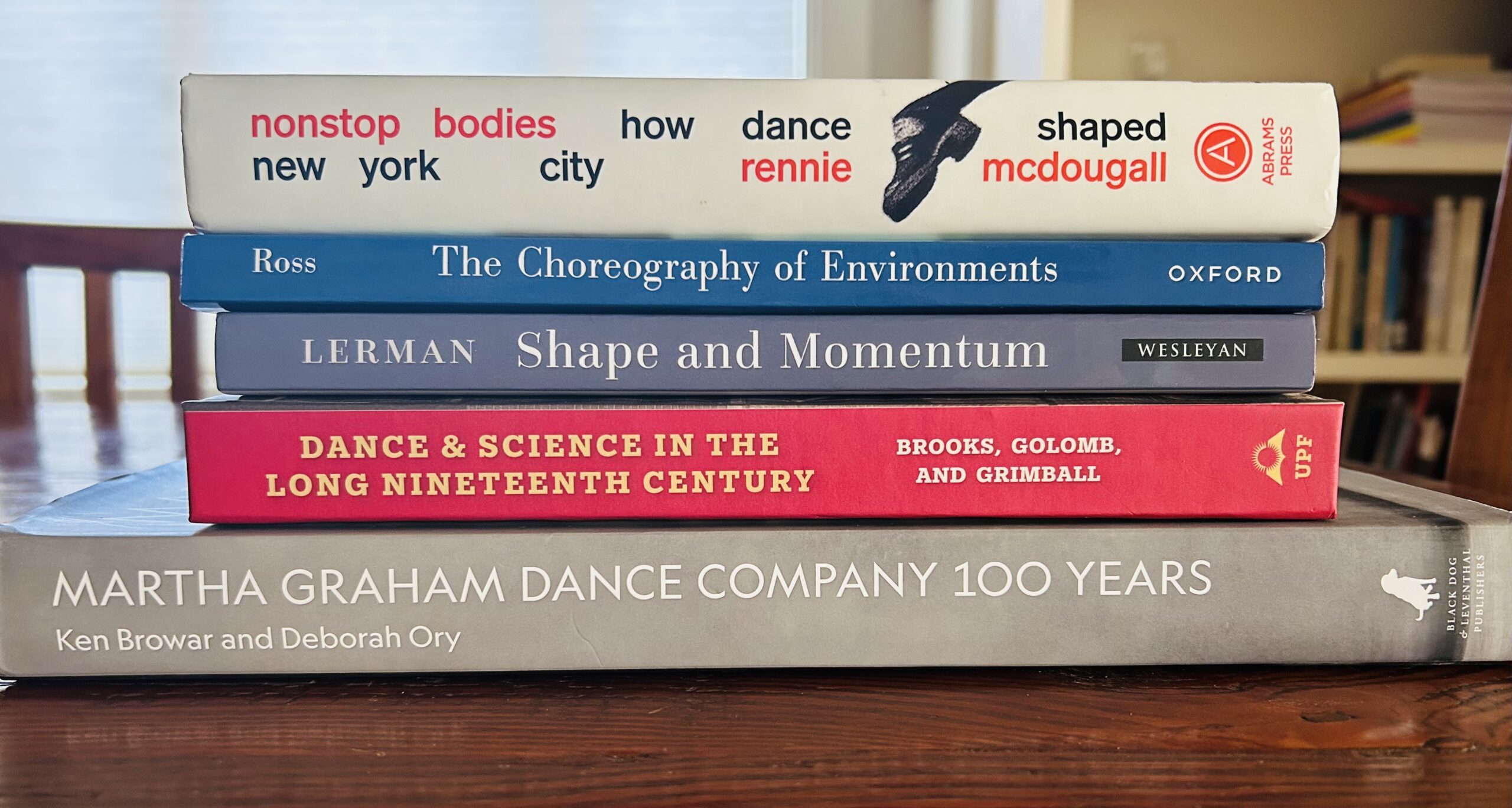
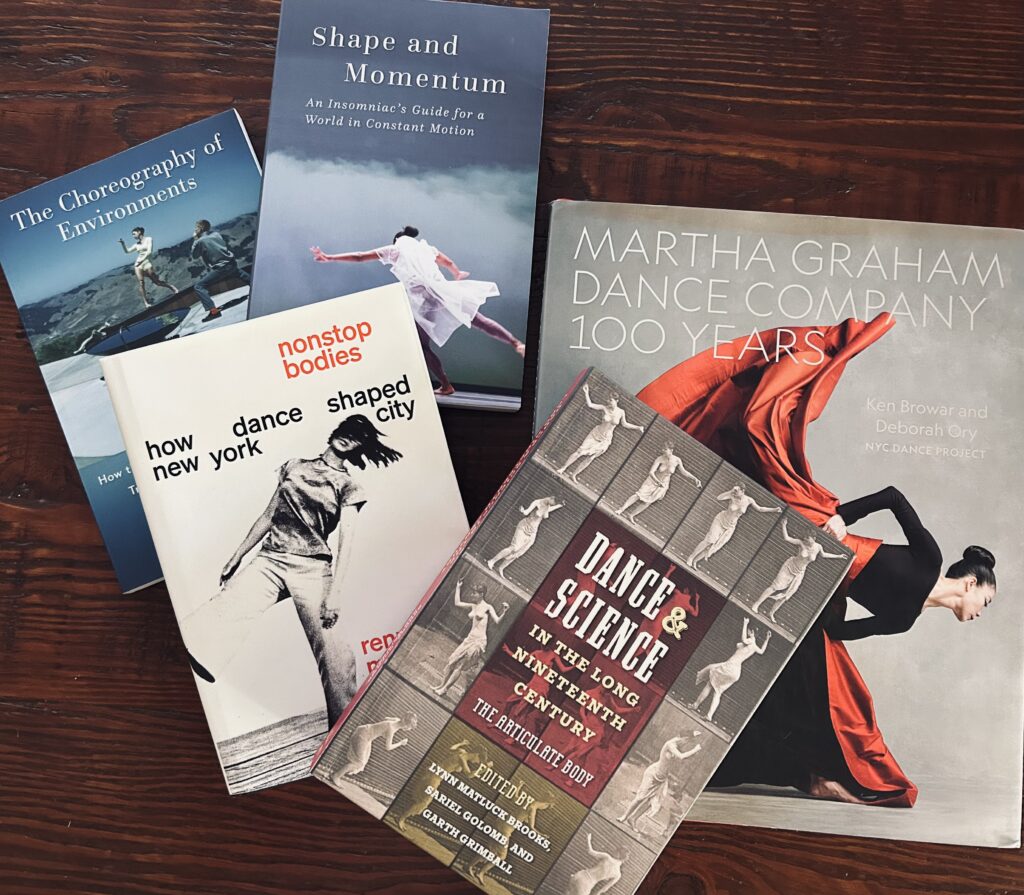
If you enjoyed the essays in Liz Lerman’s 2014 book Hiking the Horizontal: Field Notes from a Choreographer, check out her latest compilation, Shape and Momentum: An Insomniac’s Guide for a World in Constant Motion. Through both essays and artistic tools, Lerman continues to generously share her artistic path through inspired stories and probing questions. In the author’s note, she states: “I write for people who are trying to grasp an understanding of movement practices, transdisciplinary border crossings, and creativity itself, all of which exist within the stories and description of tools that can be harnessed for making a world, a life, a dance.”
Next up, explore the backstory and journey of The Sleeping Beauty production. Nicolai Serguéeff and The Sleeping Beauty: A Living Ballet Tradition, by Maureen Gupta, chronicles Serguéeff preserving the notation of the ballet, leaving Russia, and transmitting the choreography over the years. The book captures five productions of The Sleeping Beauty and discusses its preservation and evolution across the centuries.
Plus, The Choreography of Environments: How the Anna and Lawrence Halprin Home Transformed Contemporary Dance and Urban Design invites us into the world of postmodern icon Anna Halprin and her husband, Lawrence (architect and landscape designer). Longtime dance scholar Janice Ross chronicles their years at their home in Marin County, California. The book focuses on four ideas: staircase, deck, chair, and window. It’s about space and objects informing an artist, and the dancers who spent time with Halprin at her studio home experimenting, choreographing, and sharing experiences.
Dance and Science
These two new titles document specific time periods in our history to capture the curiosity and study of the moving body.
As shared in the introduction to Dance & Science in the Long Nineteenth Century: The Articulate Body: “With the passage of time and experience, we newly appreciate the reach and influence of the nineteenth century on contemporary discourses about anatomy, bodily autonomy, and bodies as means to social, artistic, and political ends.” This ambitious volume includes three editors (Lynn Matluck Brooks, Sariel Golomb, Garth Grimball) and 19 contributors. One aspect of the book to highlight is its fresh take on the academic book format, with some of the essays as responses to other essays in the book, further expanding the dialogue on topics and relevance into our current studies of the art of dance and of dancers. From human anatomy to science-inspired ballet stories, to so-called “race science” and the burgeoning field of anthropology, the turn of the century was a time focusing on differences of subjects and categorization.
Whitney Laemmli was one of the contributors in Dance & Science in the Long Nineteenth Century and also recently published her own book about the early 20th century, Making Movement Modern: Science, Politics, and the Body in Motion. This book looks at recording movement through Labanotation, and how Laban-inspired systems and programs had wide-ranging uses around the world, which informed how we looked at movement, described movement, controlled people, and collected data. This is a valuable book for dancers and researchers alike who are curious to dive into the work of Rudolf Laban and his influence politically, artistically, and scientifically.
Artist Spotlights
Four new books amplify and celebrate individual artists: Jack Cole, Buddy Bradley, Merce Cunningham, and Martha Graham.
Jazzed: Jack Cole and Twentieth‑Century American Dance, by Debra Levine, contains personal and professional accounts of an icon who changed Broadway and film with his choreography over four decades. Cole was a standout performer in his own right and also worked with stars like Marilyn Monroe, Jane Russell, Gwen Verdon, and Chita Rivera.
Maureen Footer’s biography, Feel the Floor: Restoring the Life and Legacy of Jazz Choreographer Buddy Bradley, involved five years of research to bring to light the incredible career and impact of Black artist Buddy Bradley in both London and the U.S. Reading about Bradley, dancers will gain an exciting understanding of his deep and wide influence on tap, jazz, ballet, and Broadway musicals.
First-person accounts of working with Merce Cunningham, sharing about the technique and the compositional scores, are the focus of the new book on the icon, The Artistry of Merce Cunningham: Choreography, Technique, Creativity, by Daniel Roberts and Karen Eliot. Prompts and choreographic inspiration are also included.
Last, the big coffee-table book Martha Graham Dance Company: 100 Years, by Ken Browar and Deborah Ory, is a beautiful book experience. It’s modern-dance history in your hands, in both black-and-white and color photography. Twenty-four Graham dances are highlighted, with contemporary photos paired with historic images.
Highlight on the List
Of particular note is Rennie McDougall’s 384-page Nonstop Bodies: How Dance Shaped New York City. Within 14 chapters, McDougall explores people, styles, and spaces, from Lindy Hop to Martha Graham to the start of the Rockettes. He chronicles postmodern dance, hip hop, voguing, and more, reflecting culture, politics, and social change. This book is an incredible addition to dance history courses, and another bonus is that there’s an audiobook version. Enjoy listening to the 15 hours while commuting or over the course of a semester to soak in the details.