How Annie Rigney Uses Music To Get Students Out of Their Heads and Into Their Bodies

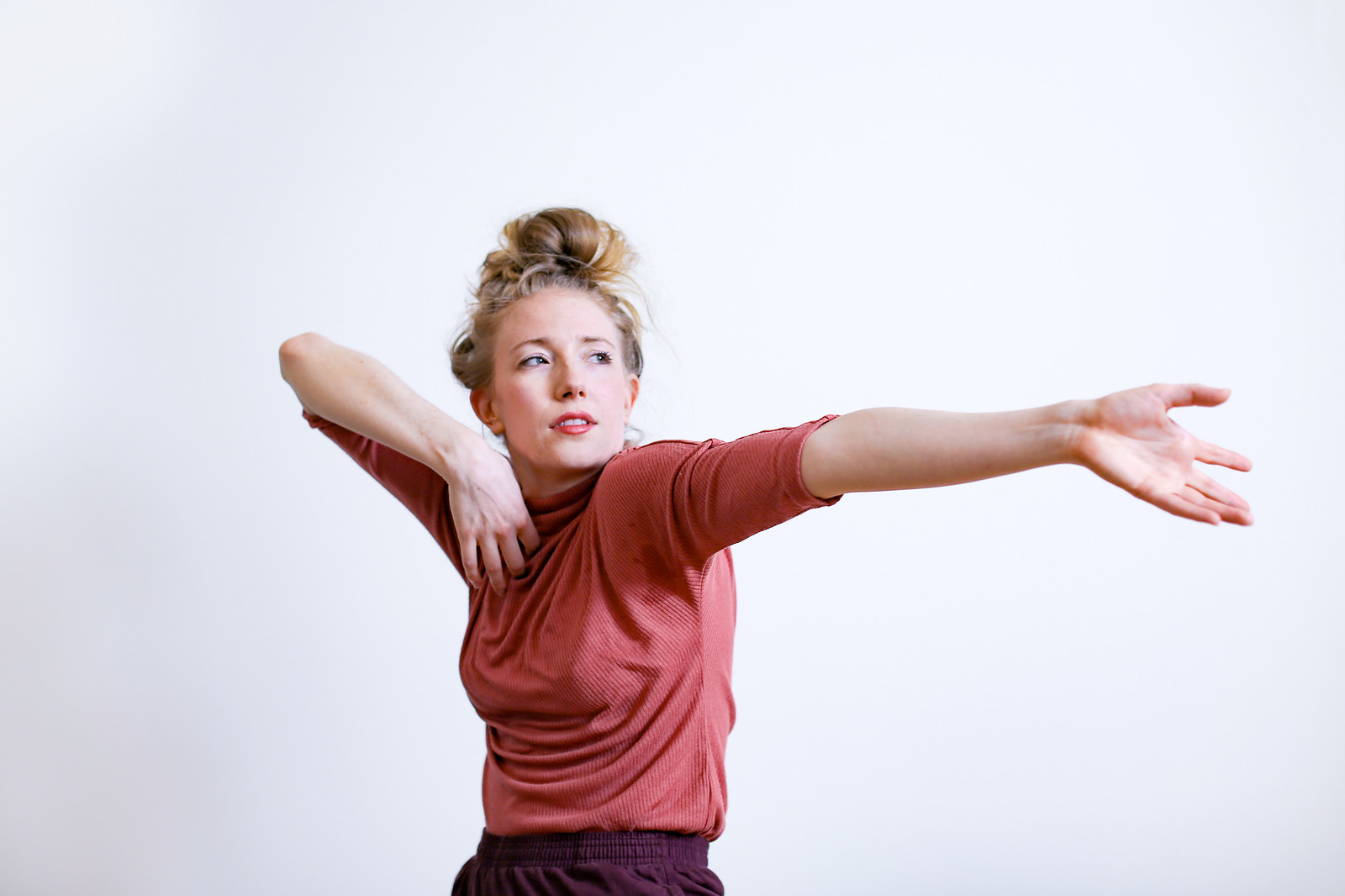
Annie Rigney believes the right song can expand the way dancers move. Whether she’s giving a Gaga class or teaching her own contemporary technique, she chooses music that will help students discover new qualities, rhythms, and syncopations in their bodies—and also get them out of their heads.
“I use music to help facilitate an emotional, expressive experience rather than only a physical experience,” she says. “Really important is figuring out—especially when we improvise—how to be in this sensory space rather than in our critical, logical, I-want-to-dance-well, let-me-make-some-cool-steps space.”
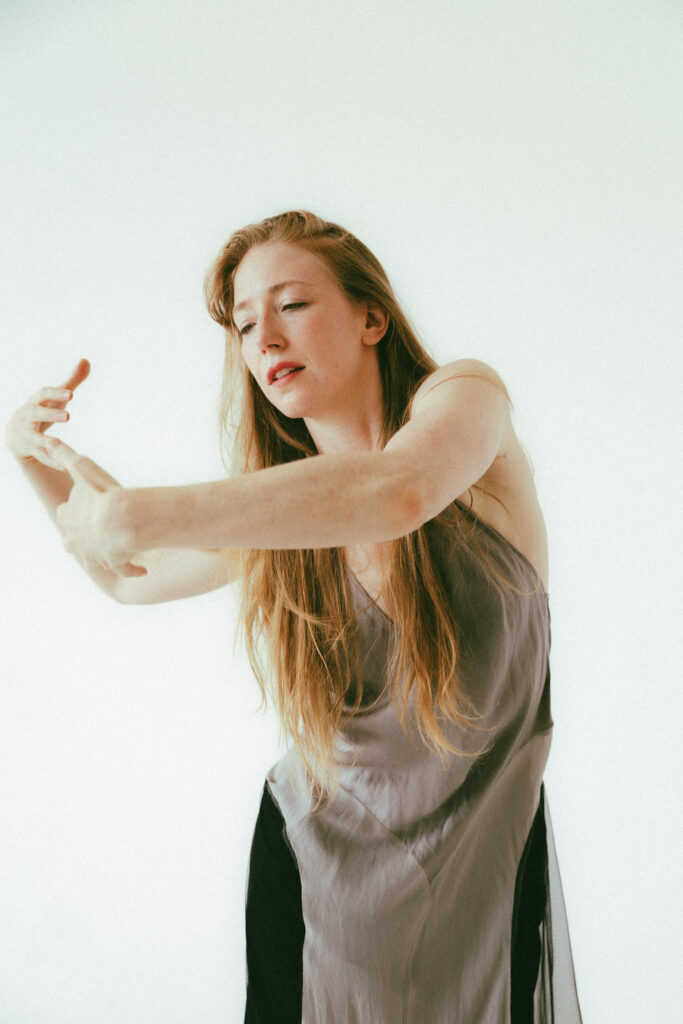
Growing up surrounded by music (her dad is a fiddle player and used to record albums next to her bedroom), she learned to appreciate its emotional capabilities from a young age. For instance, one go-to track for class is Samuel Barber’s Adagio for Strings. ”It has such a heightened, expressive emotionality, and it helps you physically tap into this feeling of abandon, just letting the music carry you,” she says. “It’s not dramatic in a silly way, but it allows you to go over the top in your sensation and your emotional experience.”
In particular, she likes to have students play with the scale of their movements in relation to this kind of theatrical accompaniment. “We can try to match the grandiosity of the sound, or we can move in a very minuscule, delicate way,” she explains. This, she finds, can encourage dancers to respond to music in more thoughtful, unexpected ways. Along similar lines, she’ll also have students dance the same phrase to pop, rap, ambient electronic, or even Bulgarian folk music to discover how various sounds bring out different movement qualities, giving them more ideas and options to work with.
One element she encourages students to experiment with is their timing. “It can feel like we dance because of the music, but it can also feel that we are the instigators and the sound is being brought by our bodies,” she says, explaining this was something she learned while performing in Sleep No More.

Another quality she’s found herself emphasizing lately is how rhythm is connected to gravity. She might instruct students to lift their arms above their heads and let them drop, then do the same action twice as fast or half as slowly, feeling how they need to let go of tension or harness their muscularity in order to manipulate that. “It’s quite interesting to start to understand how we can divide and subdivide time by falling in either smaller pieces that are moving more quickly or larger pieces that have more weight and fall more slowly,” she says.
The end goal? To help students make more intentional, creative choices in how they interact with a score. “We have so many choices to make all the time,” she says, “and there’s not always one correct way to hear or respond to the music.”
[subhed] Her Go-To Tracks for Teaching
Here, she shares a playlist of some of her top songs for class and explains why she included a few of her favorites:
“Welcome,” by Jon Hopkins
“It’s a really stretchy, chewy, ambient work. There’s a feeling of tension and oppositional forces. And we’re able to feel this sort of layering or pixelation within the body where we can have one long movement, but also have many small movements inside of that. It also just really creates a feeling of outer space or floating that I think focuses everyone in a really specific way.”
“Says,” by Nils Frahm
“It’s a quick, electronic, bubbly piece. It’s a great way to accelerate the movement quality in the room and for us to find our speed and our forward motion.”

“Gongs and Bells Sing,” by Kronos Quartet and Laurie Anderson
“I love this whole album. And in this track in particular, there’s this forward propulsion. I’ll use it at the point in class when I am teaching improvisation. It lends itself well to syncopation and stillness, so it’s a great way for the students to understand the choices of when I want to be moving and when I’m not.”
“Partita for 8 Singers: 4. Passacaglia,” by Caroline Shaw
“I am finding myself drawn to her music a lot lately. She has this great way of slipping in and out of chaos and order, clear form and linearity, and then this abandonment of form. She also uses harmony and dissonance in a really powerful way. I approach movement in a very similar way to what she’s doing with voice. So I love to let the students just embody what they’re hearing to understand how we can move between clear form and a more amorphous, less technical way of moving.”