Teaching Dance to Nonmajors

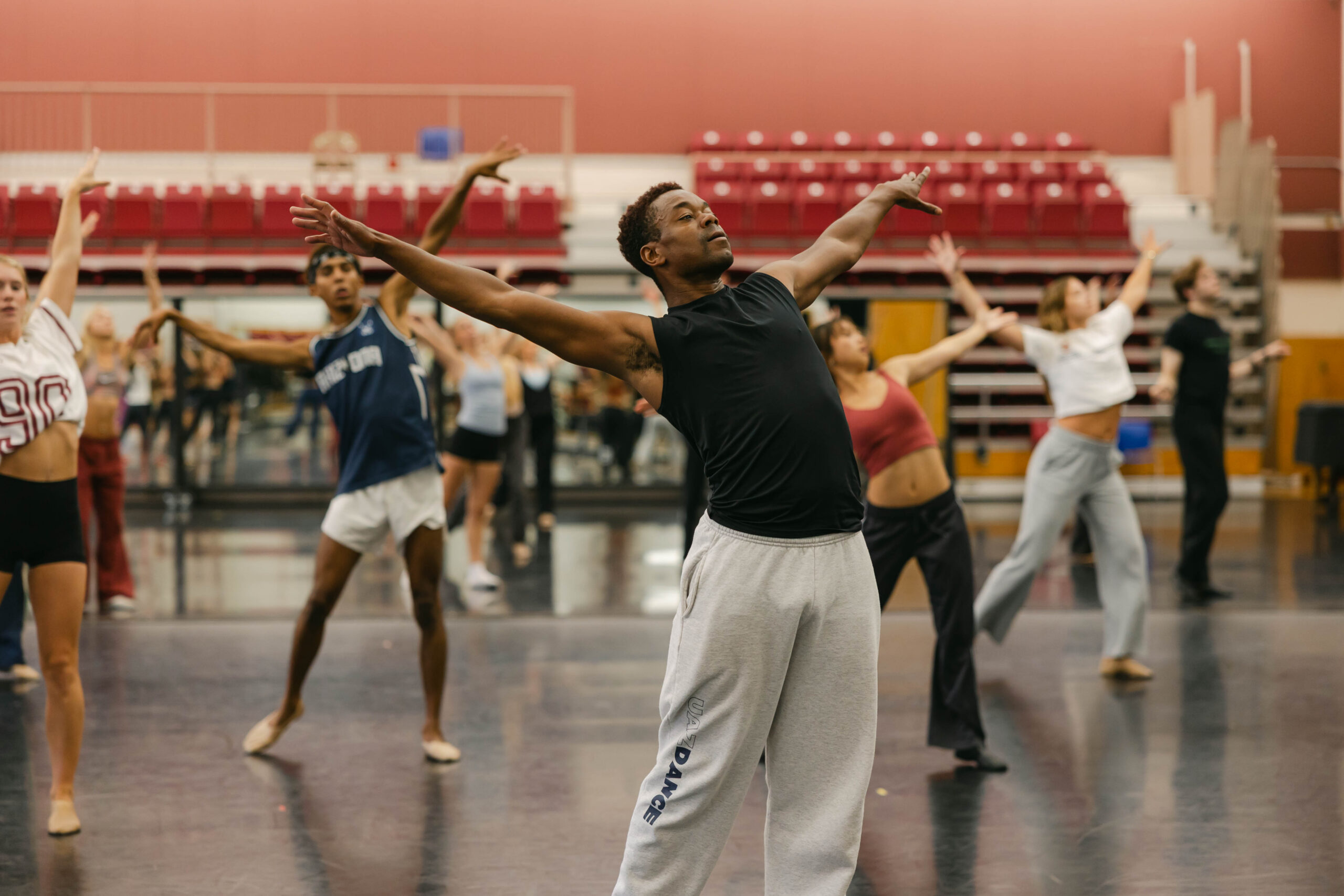
When a student in the Reserve Officers’ Training Corps (ROTC) enrolled in Marquez Johnson’s beginner hip-hop class at the University of Arizona, the student had no idea he had a sense of rhythm—let alone that, by graduation, dance would become “one of the highlights of his collegiate career,” recalls Johnson, an assistant professor of practice at the university’s School of Dance.
It’s the kind of transformation that makes teaching nondance majors uniquely rewarding—and uniquely challenging. Students may arrive without formal training, a working knowledge of movement vocabulary, or even a sense that dance is something they can do.
For educators, meeting students where they are requires rethinking some of the assumptions that underpin formal dance training. In practice, that can be a delicate balancing act.
Navigating the Learning Curve
For Gillian Finley, a senior lecturer who has taught ballet to nonmajors at the University of Southern California Glorya Kaufman School of Dance for the past decade, one of the central challenges is introducing the technique to students who haven’t spent years developing its foundations.
Most ballet teachers, she notes, learned the fundamentals as children, but beginner college students often approach the process differently. “They want to understand the why behind what they’re doing,” Finley says. That means finding ways to explain alignment, turnout, and coordination without overwhelming students with information.
For instructors accustomed to correcting students, knowing when intervention is productive—and when it becomes counterproductive—presents another challenge. “If we correct every detail, students can become so focused on what they’re doing wrong that they lose the pleasure of dancing,” Finley says.
The challenge can also be one of translation, Johnson adds. “I have to find references and descriptions that make sense to each group of students when I’m explaining dynamics, musicality, or the quality of a movement.” The task is to make unfamiliar movement intelligible without losing the intention or energy behind it.
Adapting the Approach
Betsy Brandt’s response to these challenges might sound counterintuitive: “Amp up the rigor,” she says. For Brandt, an associate teaching professor and director of the nonmajors program at the University of Illinois Urbana-Champaign, that doesn’t mean introducing material students aren’t prepared to tackle. It means recognizing the intellectual and physical capacities they bring into the studio. “Remember that they may be beginning dancers, but they are not beginning humans,” she says.
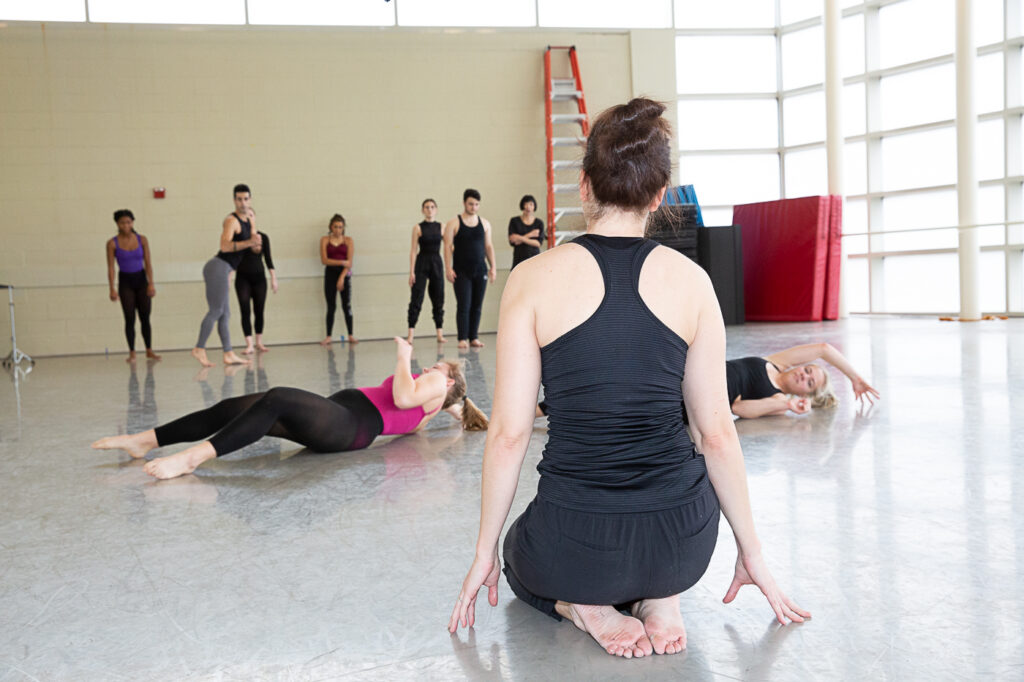
In practice, that might mean incorporating more-complex spatial patterns, building stamina through repetition, or connecting choreographic assignments to concepts from students’ primary fields of study. Brandt also encourages instructors to teach the histories, artists, and cultural contexts that inform a dance form rather than limiting instruction to its physical vocabulary.
For Finley, maintaining rigor means creating different pathways into the same material. While the fundamental principles of ballet remain unchanged, Finley adjusts the pacing and complexity of exercises to accommodate different levels of experience. A beginner might be learning to understand weight placement and foot articulation while a more experienced student refines coordination and musicality. The work looks different, but the expectations remain high.
Johnson similarly offers variations that allow students to explore greater difficulty or take more time as needed. His reasoning speaks to a larger principle: “Accessibility does not mean lowering expectations,” he says. “It means creating different pathways for students to reach those expectations.”
Making Room for Risk
Of course, even the most thoughtfully structured class can fall short if students are too self-conscious to participate. For beginners, the vulnerability of learning something new is compounded by the fact that every misstep happens in full view of their peers.
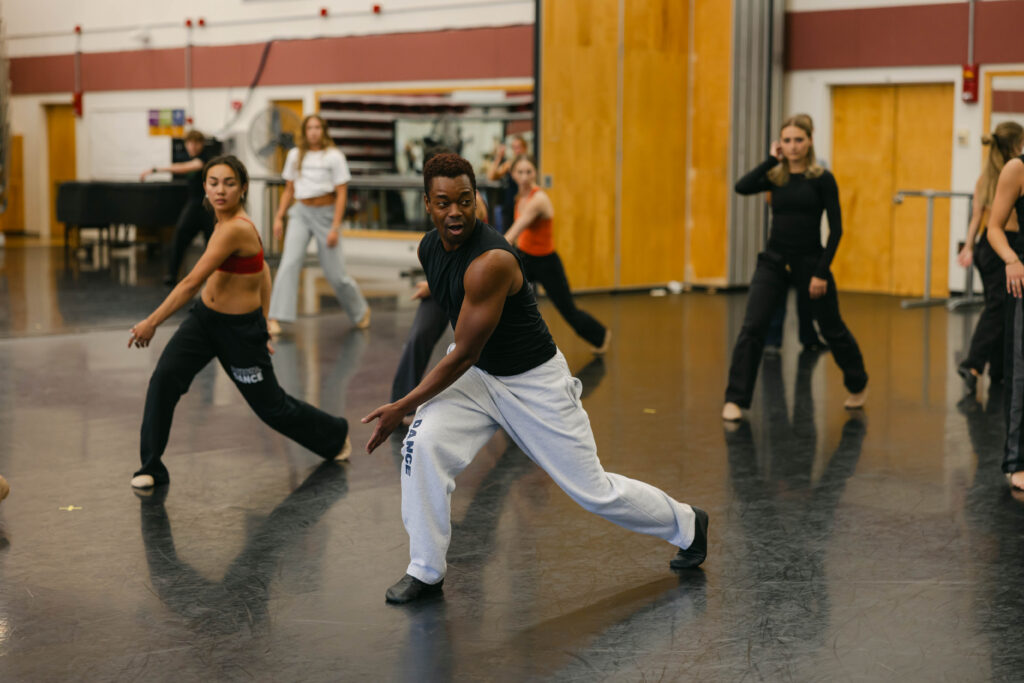
Johnson addresses that vulnerability by dancing alongside his students rather than simply observing them. “I want them to feel that they are experiencing the movement with me rather than being judged on the other side of the room,” he says. He also encourages them to identify one positive takeaway from each class so that students accumulate small successes throughout the semester.
Brandt makes progress visible as a way of building confidence. She develops sequences that gradually increase in complexity and offer students what she describes as a ladder to climb. In the first week, they might manage only a few rungs before losing their bearings or running out of breath. By week eight, they can recognize how much further they’ve come. Along the way, mistakes become part of the shared experience rather than something to conceal. “We laugh when we all mess up together, and we can cheer the folks who got it right,” Brandt says.
And sometimes, the most meaningful risks happen beyond the classroom. At the end of each semester, Brandt coordinates a showing for the university’s nonmajor technique classes. Students invite friends, arrive with flowers, and perform for packed audiences. Although the prospect initially makes some nervous, many later identify the experience as a defining part of the course. For Brandt, it’s an example of a principle that extends well beyond the stage: “When students feel seen,” she says, “they will see you back.”