Sara Brians Teaches a Cincinnati and Paradiddle Exercise

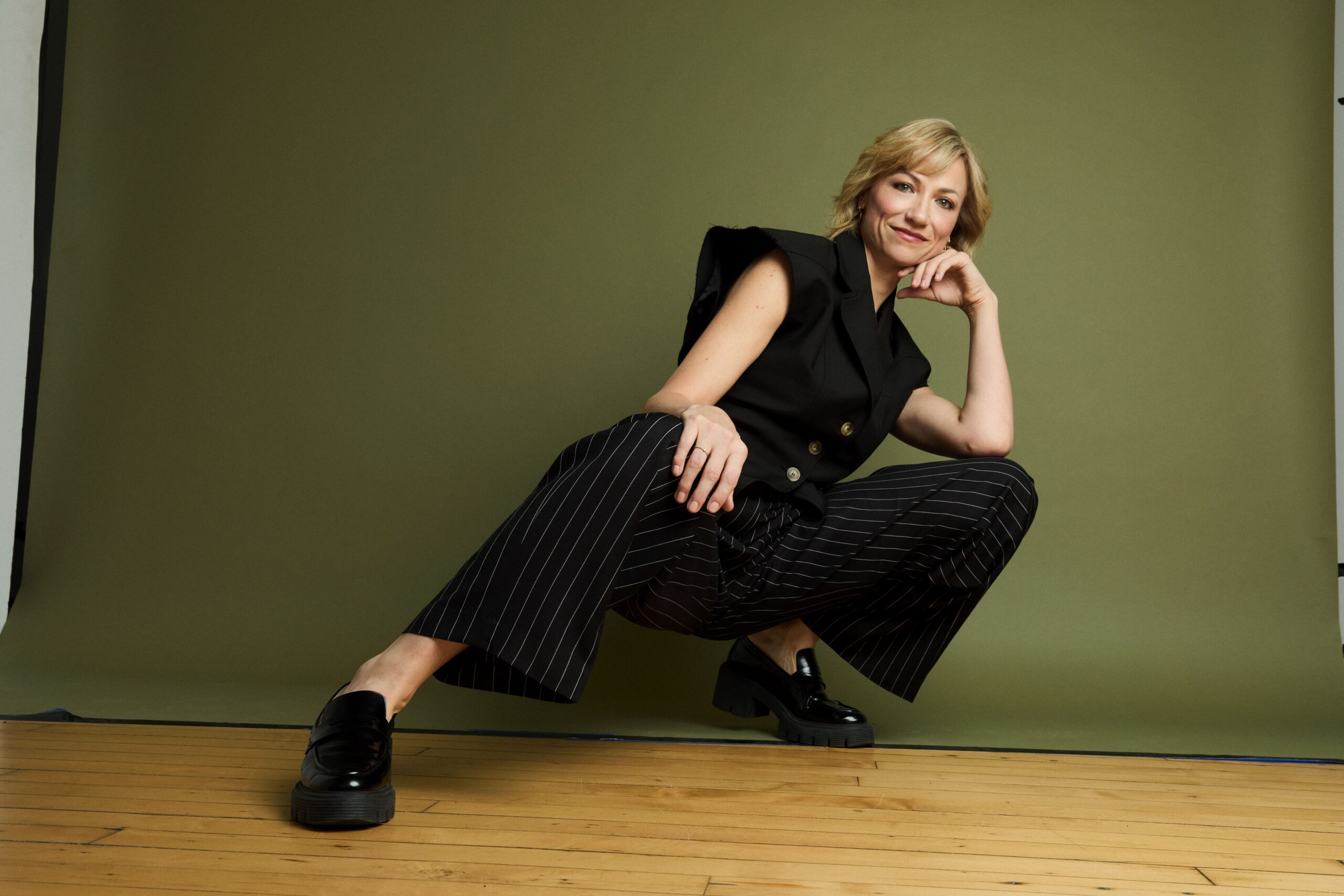
Norman, Oklahoma, has a much different vibe than New York City, which is perfect for choreographer and educator Sara Brians, who is currently based in both.
“The lifestyle is obviously calmer, and I have more space to focus on my creative work,” says Brians, an associate professor of dance in the School of Musical Theatre at the University of Oklahoma.
Living in a college town is a new experience for Brians, a California native, who deferred her acceptance to Marymount Manhattan College to pursue a professional performance career as a Radio City Rockette. At 19, she left Marymount after her first semester and made her Broadway debut as a swing in the revival of 42nd Street, choreographed by Randy Skinner.
It was the beginning of a decades-long relationship with Skinner, who also cast her in the stage adaptation of Irving Berlin’s White Christmas. She later became a dance captain and assistant choreographer for the production, which she mounted in England, Scotland, and Wales. “He saw something in me at an open audition and gave me a chance that changed my life,” Brians says. “It was a partnership that was meant to be.”
She also worked with another celebrated Broadway choreographer, Peter Darling, on Matilda and Billy Elliott. For the latter, she trained boys for the role of Billy and was the resident choreographer for the first national tour.
More recently, Brians was the associate choreographer of the Tony-nominated play The Hills of California. She also had the chance to present her own vision for White Christmas when she directed and choreographed the show last year at Gulfshore Playhouse in Naples, Florida.
When she learned of a vacancy at the University of Oklahoma following the retirement of longtime professor Lyn Cramer in 2025, Brians was intrigued. With her experience leading open classes at Steps on Broadway at Broadway Dance Center, as well as teaching in adjunct positions at New York University, Pace University, and Manhattan School of Music and as a guest artist at Duke University, she had been seeking a more permanent role. “I knew that I loved teaching, and I was interested in having students for a longer period of time where I could nurture their growth as dancers,” she says.
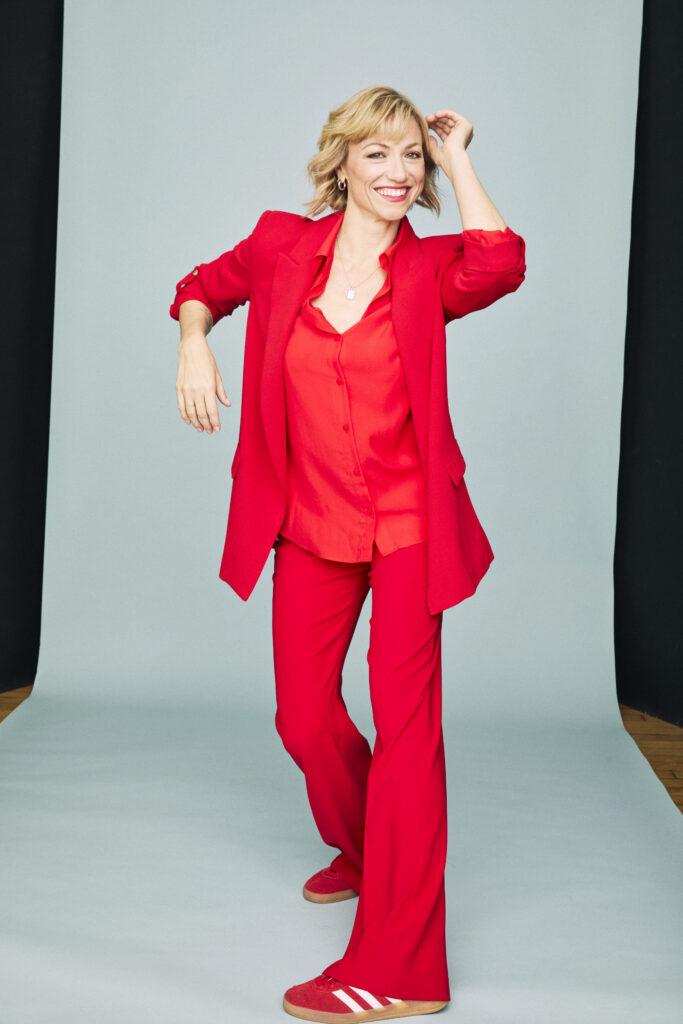
While Brians understands the appeal of New York City, where she continues to work, she insists that a smaller town like Norman is a great destination for aspiring performers. “I would highly recommend OU to any young person seeking to go into this field,” she says. “There are so many performance opportunities, and you have the ability to just focus on your craft and on your learning.”
Brians recruited a recent OU graduate, Ari’el Barmor, to assist with her lesson plan. Her exercise features paradiddles, riffles, and Cincinnatis, with a focus on clear articulation and use of plié
Step by Step
Step 1: Begin with your weight on your left leg. Dig your right heel on the count of 8, followed by a double Cincinnati (&a1&a2). This phrase has a triplet rhythm. Continue with a single Cincinnati, otherwise known as a triple drawback, beginning on the left side. Brush your left foot back and drop your right heel (a3), then shuffle and step on your left leg (&a4). Repeat the pattern by brushing back with the right foot to begin another double Cincinnati (&a5&a6), then a single Cincinnati that brushes back on the left (a7&a8).
8 & a 1& a 2 a 3 &a 4
Dig spank heel shuffle heel step spank heel shuffle step
R R L R L R L R L L
& a 5& a 6 a 7 &a 8
spank heel shuffle heel step spank heel shuffle step
R L R L R L R L L
Step 2: This step combines paradiddles (also known as paddles) and double Cincinnatis. Brush your right foot back and drop your left heel (a1) to begin a double Cincinnati in a 16th-note rhythm, ending with a heel drop on the right side. Dig your left foot and repeat the pattern, now ending with a heel drop on the left. The pattern repeats again on the right side until the count of 5. In that moment, shuffle your right foot and drop your left heel twice in a row (e&a6e&), step and drop your right heel, then paddle on the left to finish the phrase on the count of 8.
a 1 e& a 2 e & a 3 e& a 4 e & a 5
spank heel shuffle heel step heel dig spank heel shuffle heel step heel dig spank heel
R L R L R R L L R L R L L R R L
e& a 6e & a 7 e&a8
shuffle heel shuffle heel step heel paradiddle
R L R L R R L
Step 3: This last step uses a traditional three-and-a-break structure with riffles and paradiddles. The first phrase alternates between a riffle with your working (right) leg and a heel drop with your standing (left) leg. When executing the heel drops—on the counts of 1, 3, and 5—you should feel grounded, not bouncy. Finish the phrase with a paradiddle, then reverse the step by riffling on the left foot.
The second phrase also begins with a riffle heel, now followed by a five-count paddle:
8&a 1 2&a 3 4&a 5 &6&7‹‹
riffle heel riffle heel riffle heel paradiddle [then reverse]
R L R L R L R
8&a 1 & 2 & 3 & 4&5& 6&7& 8
riffle heel dig spank heel step heel [x3] paradiddle paradiddle dig
R L R R L R R L R L
Watch the full-length video tutorial below.